A stablecoin is a cryptocurrency whose value is expected to track a specific asset. Most track the value of the US dollar, but there are also stablecoins tied to, for example, the euro and gold. The advantage is that the value stays stable over time. This ultimate guide is 3,500+ words long and includes 3 videos.
Learn everything about stablecoins: how they work, the different stablecoins and what they’re used for
See where you can buy stablecoins
Navigate by clicking a chapter below →
What is a stablecoin?
What is a stablecoin and how does it work?
In 2014, the cryptocurrency Tether (USDT) launched and became the world’s first established stablecoin. It is pegged to the US dollar, which means 1 USDT is expected to be worth $1. The cryptocurrency was launched to make it easier to trade and transfer value on the blockchain.
Since then, a wide range of stablecoins have launched, and their total value has grown sharply. This is clearly visible in two periods, 2020–2022 and 2023–2025 (see the chart below). According to the Bank for International Settlements (BIS), the total market cap of stablecoins was around $320 billion at the end of May 2026.
Total market cap of all stablecoins, 2015–2026:
(Image source: Coinglass)
The value tracks its peg
The idea is that a stablecoin should always have the same value as its peg. For example, USDC and USDT are expected to be worth exactly $1. When trading is extremely heavy, however, situations can arise where the value moves to $0.995 or $1.005. The difference is so small, though, that it shouldn’t affect how the currency works.
The reason the value is expected to hold its peg is that an arbitrage opportunity would otherwise arise. Arbitrage means that an asset can be bought at a low price in one place and sold at a higher price in another.

Example: If USDC were selling for $0.95 on an exchange, an investor might buy it in the hope of selling it closer to $1. The price may stay below the peg, and fees can reduce any gain.
Some other stablecoins can also be redeemed at the value of their peg under the issuer’s terms.
However, this assumes that people trust whoever issues the cryptocurrency and in some way backs it. If that trust disappears, investors will no longer count on being able to redeem the cryptocurrency for, say, US dollars, which can cause a stablecoin’s price to crash.
How the value is expected to be stabilized, and how it is backed, is explained under the following headings.
Different types of stablecoins
There are mainly three things that differ between stablecoins:
Which blockchain it runs on
Whether its peg is a fiat currency or another asset
How the cryptocurrency’s value is kept at the right level
Below, we present 5 different types of stablecoins and how they track the price of an underlying asset, such as the US dollar.
Backed by fiat currency
A backed, centralized stablecoin is issued by a company or a group of companies. They are expected to hold the same amount of the underlying asset as the value of their stablecoin. So if $6 billion worth of the stablecoin is in circulation, the companies are expected to hold $6 billion in bank accounts. Each coin is therefore “backed” by the same amount in fiat.
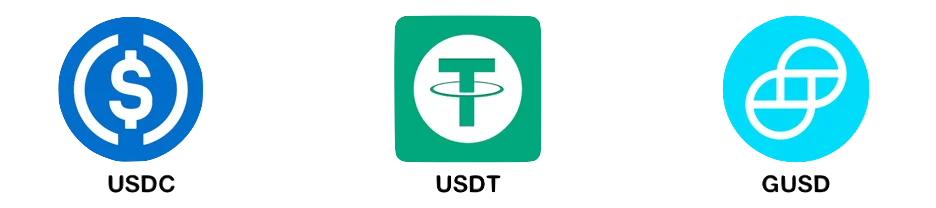
Holders may be able to redeem these coins under the issuer’s terms. One of the best-known cryptocurrencies in this category is USDC, which is issued by Circle. Circle’s terms describe how eligible holders can redeem 1 USDC for $1. Redemption of USDT is subject to Tether’s terms, including eligibility and applicable fees. Examples of stablecoins in this category:
Backed by another centralized asset
Most stablecoins are pegged to a fiat currency, mainly the US dollar. But there are also coins pegged to another specific asset. One example is gold.
In this case, the issuer is expected to hold physical gold equal in value to the coins it has issued. A stablecoin like this becomes a kind of “receipt” showing that the holder owns a certain amount of gold, so its value tracks the gold price. One of the best known is PAX Gold, where each coin represents 1 ounce of gold.
Because the gold price is highly volatile, these cryptocurrencies can’t be used for exactly the same purposes as a cryptocurrency pegged to the US dollar. They do, however, make it easy to invest in, store and send gold.

Backed decentralized coin
A decentralized, backed stablecoin has no central party (a company or a state) controlling the currency. Instead, it is built on smart contracts that, in various ways, keep its value stable against its peg.
One example of a stablecoin in this category is DAI. DAI is created mainly by locking Ether (or certain other cryptocurrencies) in a smart contract.
The collateral must always be worth more than the DAI that is borrowed. The requirement varies depending on which asset is locked, and 150% is a common example. This means that Ether worth $150 has to be locked in the contract before $100 in Dai can be withdrawn. In this way, DAI is backed by the value of another cryptocurrency.
If the value of Ether falls and the loan-to-value ratio gets too high, however, the position is automatically liquidated. It can therefore be compared to a loan where crypto is used as collateral.

Algorithmic stablecoin
An algorithmic stablecoin has no capital “backing” its value. Instead, the value is expected to be maintained through various contracts that give users incentives to value the currency at its peg – usually the US dollar.
Historically, this has been the most unstable solution. There are several examples where the peg held for a long time, but when the network came under extreme conditions, or rumors eroded confidence, the peg could not be maintained.
Examples of algorithmic stablecoins include:

Bitcoin-linked reserves
Some stablecoin projects hold assets with indirect exposure to Bitcoin in their reserves. One example is preferred stock issued by companies that hold Bitcoin.
Apyx and Saturn offer products with this type of exposure.

What are stablecoins used for?
Their main advantage is that they aren’t as volatile as other cryptocurrencies. This means they can be used in areas such as the following:
Trading
Cryptocurrencies are known for extreme volatility. The price of the larger coins can move up or down more than 10% in a single day, and considerably more for smaller coins. They are therefore not stable assets. The exception is stablecoins, as their value is tied to their peg.
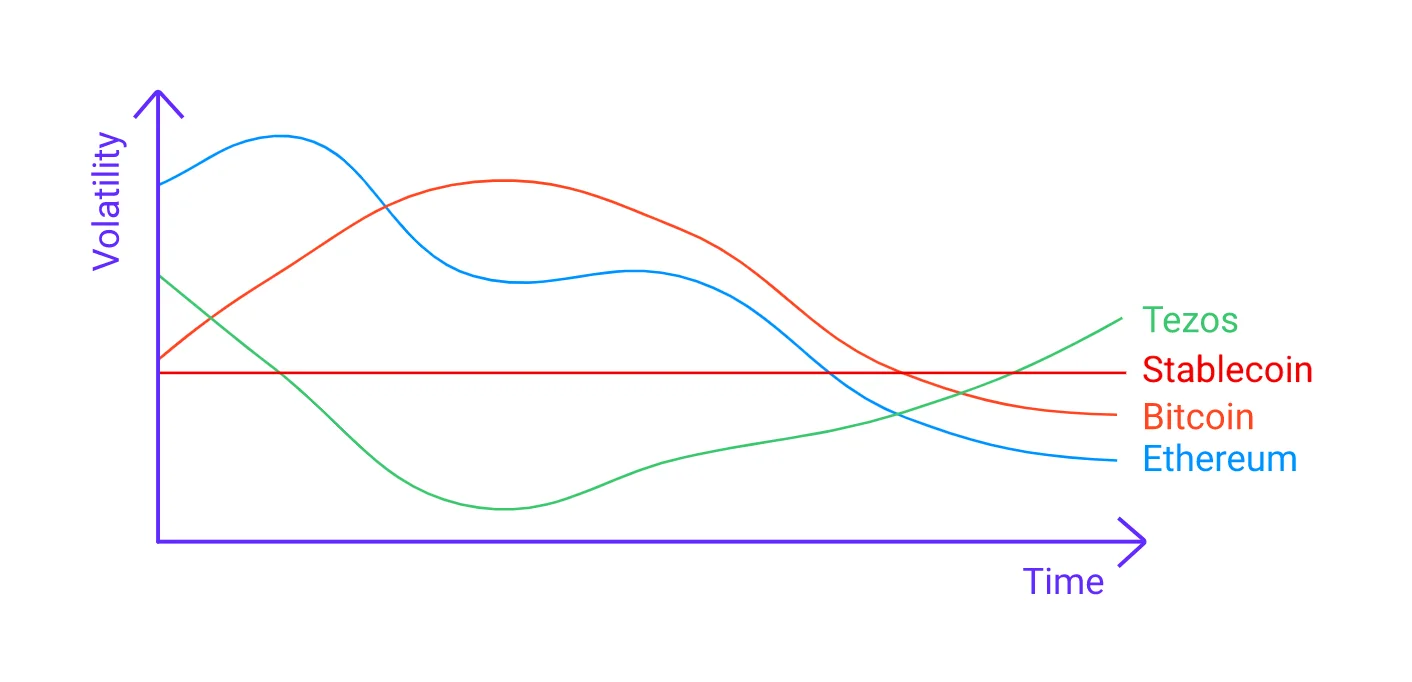
That’s why trading very often happens to and from a stablecoin, as a way to get “in or out” of the market without having to convert to fiat currency. This applies, for example, when trading on a decentralized exchange, where fiat can’t be traded.
Another reason may be that the person wants to keep control of their assets in their own crypto wallet instead of trusting a crypto exchange or a bank.
Means of payment
Because cryptocurrencies are so volatile, it’s hard to use them for reliable payments. If 0.1 bitcoin is to be paid, its value can vary considerably from one day to the next. For debts, or when paying for goods, it can be easier to pay in stablecoins.
Since crypto transactions are much faster than fiat transactions, stablecoins can also be used for fast transfers without any loss of value.
Higher returns
In crypto, you can generally earn a higher interest rate on, for example, USDC than you would get on US dollars in a savings account. Some people therefore choose to convert US dollars into stablecoins to earn a higher return.

(Image source: Medium – APY)
However, as shown under the heading “Risks,” some stablecoins have collapsed. All investing in cryptocurrencies therefore involves high risk.
Risk adjustment
Investors are always looking to diversify in order to maximize returns over the long term. Stablecoins can be used in several ways to create this diversification in a portfolio.
Lending – Lending these cryptocurrencies via decentralized lending platforms (such as Aave) provides a stable interest income.
Liquidity pools – They can also be used in liquidity pools on several different decentralized exchanges.
This way, risk can be spread not only across different cryptocurrencies but also across several services and exchanges. With stablecoins, it’s possible to earn a good return even when the entire crypto market falls sharply.
10 popular stablecoins
Top stablecoins compared side by side:
There are several different types of stablecoins. They’re all based on the same idea, but they differ in both technology and philosophy. Below, you can read about some of the best-known stablecoins available to trade.
1. USDC

USDC launched in September 2018 and is one of the most widely used cryptocurrencies in this category. It was created by Circle, a US company. USDC is designed to track the value of the US dollar, i.e., 1:1.
2. USDT
USDT (Tether) was created by the company Tether Limited. It was one of the first cryptocurrencies with a value tied to a fiat currency.
Tether isn’t backed by exactly as many US dollars as the value of its coins. For example, in 2019 the company stated that each USDT was backed by $0.74 in cash. In 2021, a report was published stating that the figure was only 2.9%. The rest was said to be backed by securities. This has drawn some criticism of the company.
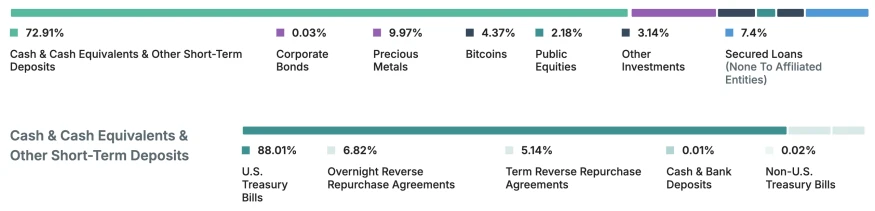
In its Q3 2026 report, Tether reported that 72.91% of its reserves were in cash, cash equivalents and other short-term deposits. The image below shows the reserve breakdown as of September 30, 2026:
Breakdown of USDT’s reserves:
(Image source: Tether Q3 report)
3. UST

UST was an algorithmic stablecoin used on the Terra blockchain. In short, the peg was supposed to hold because 1 UST could always be used to buy $1 worth of the cryptocurrency Luna – and vice versa.
In spring 2022, however, UST came under extreme pressure (possibly a coordinated attack) through very large sell volumes. As a result, it lost its peg and confidence collapsed quickly, which made the situation even worse. Within a day or so, UST was worth practically nothing, and several billion dollars in value “went up in smoke.”
4. DAI

DAI launched in 2017, but its history goes back to 2014, when MakerDAO was created – that is, the organization that created the cryptocurrency and is able to influence its development. In 2024, MakerDAO rebranded as Sky and launched its successor, USDS. DAI is still around.
5. PAX Gold

PAX Gold is pegged to the price of gold, as each token represents 1 oz of 24K gold. The company Paxos holds the gold that backs these coins.
PAX Gold is traded on the Ethereum blockchain. The company is regulated by the New York State Department of Financial Services. PAX Gold can always be redeemed for gold, or US dollars, with Paxos.
6. BUSD

BUSD is a stablecoin used on BNB Chain. It is backed 1:1 by US dollars and issued in partnership with Paxos, the same company that issues PAX Gold. However, Paxos stopped issuing new BUSD in 2023, so it can be seen as a historical example of a dollar-pegged stablecoin.
7. True USD

True USD is described as one of the world’s first regulated stablecoins fully backed by US dollars. The currency can be used on Ethereum, TRON and BNB, among others.
8. Diem

Diem is the name of the stablecoin Facebook started developing. It was originally called Libra but was later renamed Diem. After working on the project from 2019 to 2021, the company decided to end development.
9. AMPL

AMPL is meant to be worth $1 through algorithms that increase or decrease the supply. If the value is $1.05 on a given day, for example, all AMPL holders receive additional coins. If the value is $0.95 instead, the number of coins in their wallets decreases. Adjusting the supply is expected to change the value as well.
10. Apyx

Apyx’s stablecoin apxUSD is backed in part by dividend-paying preferred shares from companies that hold Bitcoin. Those dividends help fund the yield on apyUSD, the separate token users receive when they deposit apxUSD in the Apyx vault.
Buying and swapping stablecoins
The easiest way to buy, sell and swap stablecoins is on a major crypto exchange such as Coinbase. You can also buy on a decentralized exchange (DEX). Both options are described in detail below.
Buying and swapping on a centralized exchange
You can buy USDC on Coinbase. One advantage of this exchange is that it’s very user-friendly. USDT is among the stablecoins Coinbase restricts for retail customers in the EEA.
1. Create an account
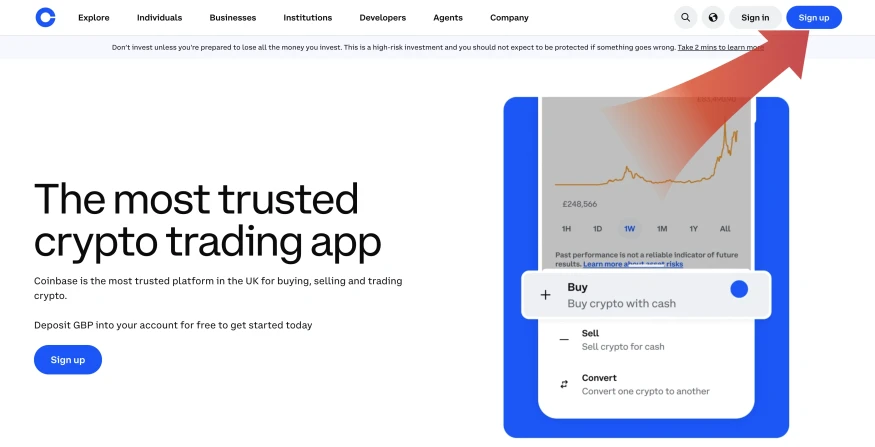
To create an account on Coinbase, all you need is an email address and a password. After that, your address and identity need to be verified before you can trade. This is done by uploading a copy of your ID to the platform. Verification is usually approved within a day, after which you can start trading. Start by going to their website and clicking “Sign up.”
2. Deposit funds
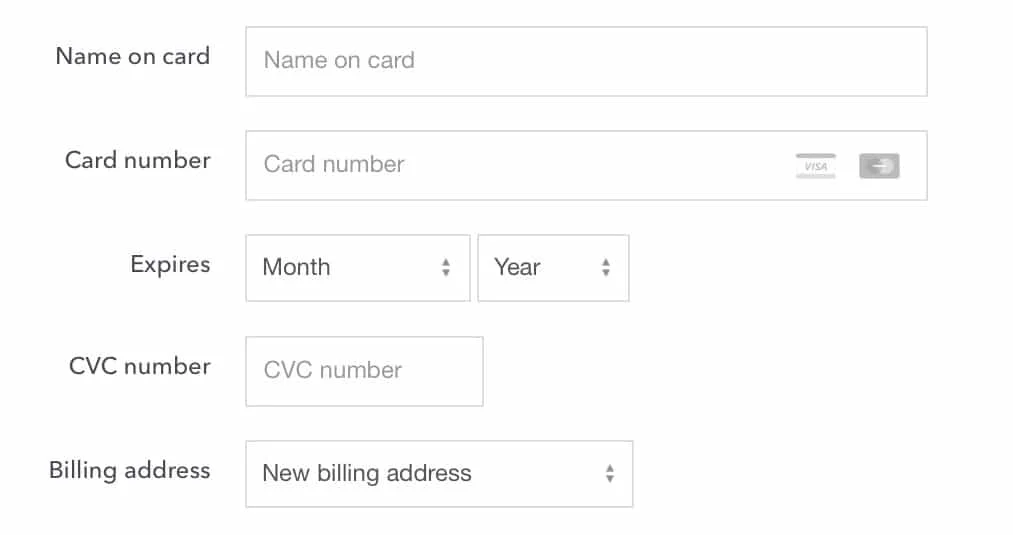
Go to “Settings” and then to “Payment Methods.” There, you can choose from several payment options. Card payment is the fastest option, as the money can be used for trading within 1–2 minutes.
3. Card approved
If your card is approved, this will be shown directly on the website. You can then make a deposit with the card.

4. Buy USDC
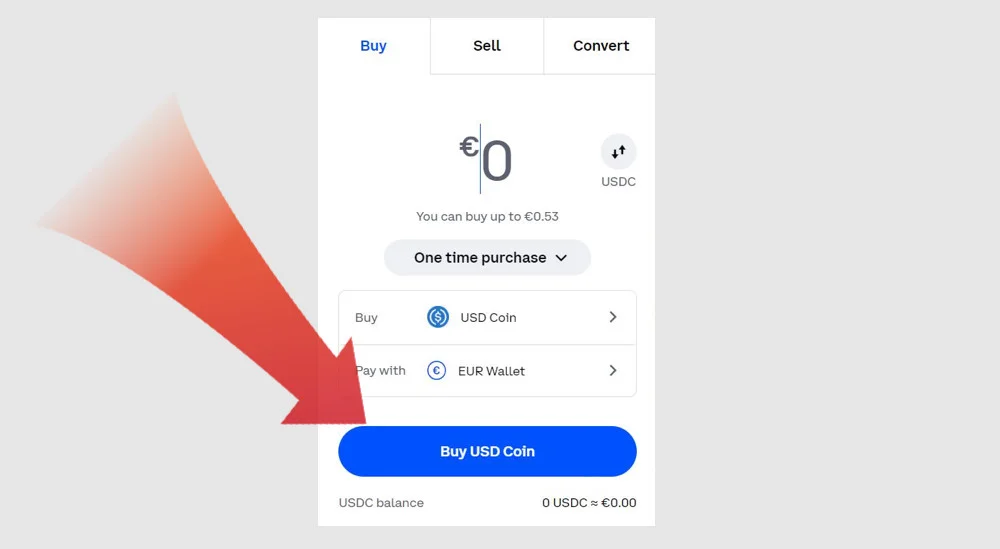
Click “Buy/Sell” at the top. The trading window shown below will appear. Click the cryptocurrency symbol and select USDC.
Choose a payment method under “Pay With.” If you already have money in your Coinbase account, you can select the cash balance the platform displays for that account – in the example on screen, “EUR Wallet.” Otherwise, you can pay by card if it is available for your account. Preview the purchase and confirm it.
5. Send USDC from Coinbase
Many people use Coinbase as their crypto wallet and send and receive crypto through that account. To send USDC, select “Send & Receive” at the top right.
Remember to check the recipient’s address before sending USDC. A completed transaction can’t be reversed or changed. If you’re sending to another Coinbase user, their registered email address or phone number may be enough.
Buying and swapping on a decentralized exchange

On decentralized exchanges (DEXs), you can’t buy cryptocurrencies with fiat. Instead, all trading takes place in pairs between two different cryptocurrencies.
For example, if you have Ether, you can swap it for USDC via Uniswap or Sushiswap. All trading on decentralized exchanges is done by using a web wallet to interact with the exchanges.
Risks of stablecoins
Stablecoins – Safe or a massive crypto risk:
It may seem safe to buy cryptocurrencies whose value is tied to the US dollar or another fiat currency. But it’s important to understand the risks involved.
Regulation
In several countries, there is concern about how stablecoins could destabilize the financial system. Without regulation, basically anyone could create a stablecoin and claim that it is backed – something that can be hard to prove. That means private individuals and companies end up “creating” money, something that states and banks have had a monopoly on.
How are stablecoins regulated in the EU and the US?
In 2022, the EU put forward MiCA (Markets in Crypto-Assets Regulation), a common regulatory framework for crypto-assets in the EU/EEA. Among other things, it covers stablecoins. The MiCA rules became fully applicable in the EU in 2024.
Under MiCA, USDC and USDT, for example, count as e-money tokens (EMTs). Tokens linked to a basket of currencies or commodities instead count as asset-referenced tokens (ARTs).
In the US, stablecoin regulation has also moved forward. In July 2025, the GENIUS Act was signed into law, making it the first comprehensive federal regulatory framework for stablecoins in the US.

The algorithm doesn’t work
With algorithmic stablecoins, there is a risk that the algorithm doesn’t work. It may look stable in theory, but it’s only when the market gets turbulent that you see in practice whether the peg really holds. In spring 2022, UST failed for exactly this reason.
What made UST unique was that 1 UST could always be exchanged for $1 worth of Luna. In the same way, $1 worth of Luna could be exchanged for 1 UST. When this happened, the supply of one currency decreased (burning) and the supply of the other increased. This always created an arbitrage opportunity if UST traded above or below $1.
Example: If UST were trading at $0.95, investors could buy 100 UST for $95 and then exchange them for LUNA worth $100.
This incentive was expected to stabilize the peg. And for a long time, the peg did stay at the right value. But the algorithm turned out not to be sustainable if extreme selling pressure arose.
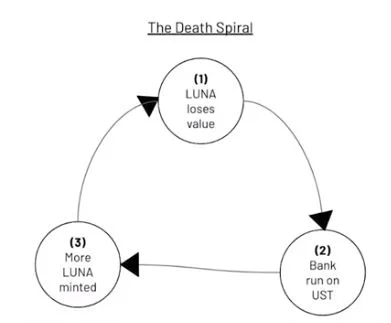
In spring 2022, both stock markets around the world and the crypto market “crashed.” LUNA fell quickly in value, which created fears in the market that its “sister currency,” UST, would also be dragged down and lose its peg. It’s not unusual for stablecoins to lose their peg slightly in volatile market conditions, but in this case the algorithm created a steep downward spiral.
(Image source: Coinbureu)
When UST was exchanged for Luna, the supply of UST decreased while the supply of Luna increased. A larger supply leads to a lower price – in a market that was already crashing. With very heavy selling pressure on UST, Luna’s inflation became extreme, which only accelerated the crash.
On top of this, there are rumors that a coordinated attack was carried out to exploit the weakness that did exist in the algorithm – specifically, by creating massive selling pressure on UST to force down the price of LUNA as well. There were even explanations on Twitter of how such an attack could be carried out, published long before the crash. In other words, it was a vulnerability that some people had discovered and pointed out, but that the developers behind Terra and UST ignored.
Centralized coins – The companies decide
A centralized stablecoin is issued by a company (or several companies), which means they have the power to influence the currency. You therefore have to trust those companies. One solution is to choose decentralized stablecoins instead.
When the backing doesn’t exist
Tether is sometimes criticized because its cryptocurrency isn’t fully backed by US dollars. Instead, the company holds bonds and other securities.
Compared with USDC, for example, Tether is considerably less transparent about the value of the assets it holds to back the currency.
If it turned out that the company doesn’t have full backing for the USDT it has issued, confidence could fall and many people would try to redeem their coins. If that in turn weren’t possible, confidence would sink even further, and so on.
So if there is no reliable backing for the currency, its value can fall far below the asset it is pegged to.
CBDC vs Stablecoins
CBDC stands for Central Bank Digital Currency – in other words, government-issued money managed on a blockchain. CBDCs have already been issued in several countries.
CBDCs in brief
Today, most digital payments, whether an invoice payment or a card payment, go through a bank or another payment provider. If a bank, card issuer or payment processor has technical problems, the payment can’t go through.
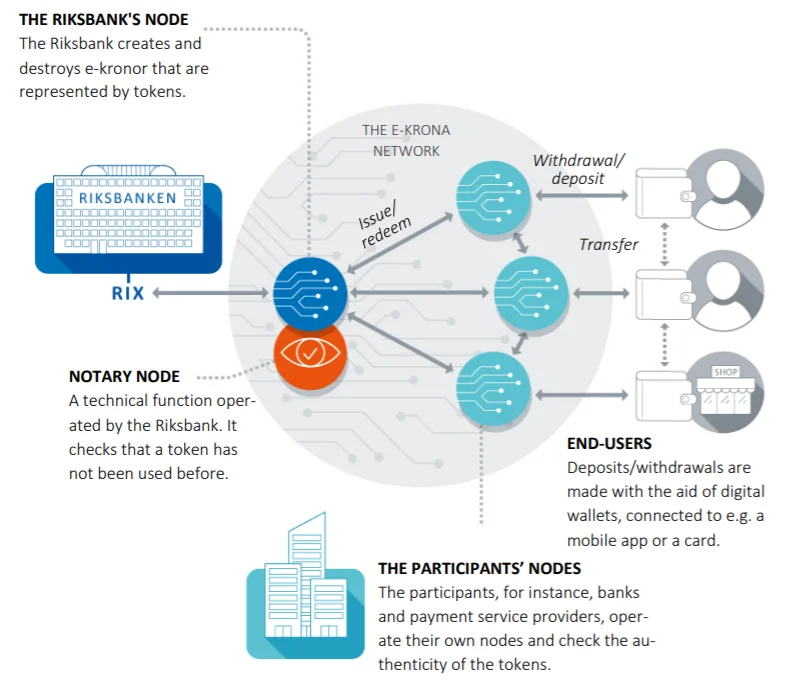
A CBDC is a digital form of a country’s own currency, issued directly by its central bank. Depending on how it is designed, it could work as a government-backed payment option that doesn’t depend on commercial banks, filling a role similar to cash.
(Image source: Finadium)
The difference between CBDCs and stablecoins
There are a few key differences between CBDCs and stablecoins.
The same thing – or equivalent value
A CBDC is the same thing as fiat. For example, a unit of central bank digital currency would have the same face value as a unit of the same currency held in a bank account. A stablecoin, on the other hand, tracks the value of another currency. For example, USDC tracks the value of the US dollar, but it isn’t exactly the same thing.
Issuer
CBDCs are issued by states and are therefore controlled by them. The state decides the supply, who gets access to the service and possibly what can be bought with the currency.
A stablecoin can be issued by a company, an organization or a loosely organized group. Those who trust them will then use the cryptocurrency at the set value. For example, a DAO can create and use its own stablecoin.

Important: DAO = decentralized autonomous organization. It can be compared to a loosely organized group of people who communicate only digitally and work toward the same goal (share the same interest). Changes that affect the development of the shared project are voted through via smart contracts.
Centralized or decentralized
A CBDC is controlled by a central party – in this case, a state. This also means that every transaction can be traced to a specific individual, in the same way that card payments can be traced today. One criticism of CBDCs is therefore that states would gain even more control over how citizens spend their money.
Stablecoins can be fully decentralized and therefore open for anyone in the world to use. As a result, they more clearly reflect the ideology behind, for example, bitcoin.
Stablecoins or CBDCs
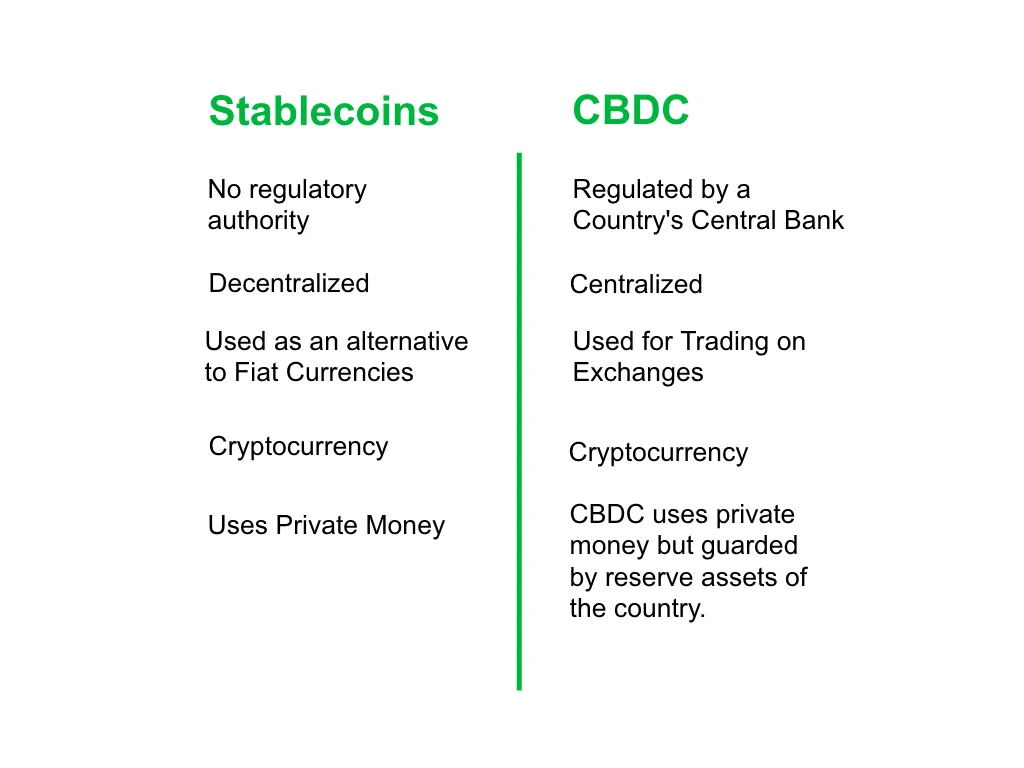
In the image below, you can read about the differences between stablecoins (decentralized) and CBDCs (centralized).
Pros and cons
Pros of stablecoins
 More stable value than other cryptocurrencies – Cryptocurrencies are highly volatile, meaning their price can change very sharply over a short period. It’s not unusual for bitcoin to move up or down 2–4% in a single day. Stablecoins, on the other hand, have a stable price, as their value tracks a fiat currency, for example.Easier for payments and transfers – If a store is to accept cryptocurrencies as payment, pricing becomes very difficult. An item that costs $100 will cost a different amount every day depending on the current bitcoin price. For payments and transfers that require a stable value, stablecoins can be used.Convenient for trading – Stablecoins are widely used in trading, for example to move in and out of the crypto market easily without having to convert to fiat. That way, a regular crypto wallet can still be used to hold the assets. Read more about crypto wallets here.
Cons of stablecoins
 Requires trust in the issuer – In theory, anyone can create a stablecoin: a cryptocurrency that its website claims has the same value as, for example, the US dollar. For these cryptocurrencies to keep their value, however, people need a great deal of trust in the issuers. Can you trust that the currency is backed, or that the algorithm it uses works?Some stablecoins have become completely worthless – Several stablecoins have become completely worthless. These are mainly coins whose stability was created by algorithms rather than by fiat backing. One example is when UST fell in value from $1 to a few cents in just a few days. In that case, the cause was believed to be an attack that overloaded the algorithm meant to keep the value stable.Could be regulated – If states choose to regulate stablecoins, their use cases will shrink considerably. For example, transactions could be traced to individuals, and payments or transfers to certain services could be blocked. That runs completely counter to the decentralized ideology behind cryptocurrencies.
A stablecoin is built to hold a stable value, not to increase in value. The risk therefore depends on the issuer: how its reserves are invested, whether they are audited and whether the issuer is authorized under MiCA.
Yes, the larger ones, such as USDT and USDC, are available on several different blockchains.
You can sell a stablecoin for US dollars on an exchange that supports the trading pair for your account. Issuer redemption is also available for some stablecoins, such as USDC through Circle under its redemption terms.
It’s relatively difficult to check whether a stablecoin will really hold its peg. To be on the safer side, you can check who the issuers are and how transparent they are about the capital that is meant to back the currency.
USDT is not authorized under MiCA, and several EU platforms have therefore restricted trading for customers in the EEA. You can still hold USDT in your own wallet, and MiCA-authorized alternatives such as USDC and EURC are available on most exchanges. Whether you can buy USDT depends on your country and the exchange you use, so check what applies on your exchange.
Yes. TerraUSD (UST) collapsed completely in May 2022 when its algorithm failed. USDC briefly fell to around $0.88 in March 2023, when part of its reserves were held at the collapsed Silicon Valley Bank.
USDT is issued by Tether and is the largest by market cap, but it lacks MiCA authorization. USDC is issued by Circle, is authorized under MiCA in the EU and publishes monthly reports on its reserves. Both are pegged 1:1 to the US dollar.
Under MiCA, issuers of e-money tokens are not allowed to pay interest. Interest on stablecoins therefore comes from lending or DeFi platforms, where you take the risk that the platform or the borrower can’t pay you back.