.webp)



A crypto card makes it easy to spend cryptocurrency and comes with rewards (up to 8% on some cards) and several perks. A convenient option for anyone who wants to use cryptocurrency as a means of payment. Learn everything about crypto cards in this complete guide of 3,500+ words, 2 videos and comparison tables. (These cards are sometimes called crypto debit cards. This guide uses the term crypto card)
Everything about crypto cards, a comparison of crypto cards, how to pay with cryptocurrency, rewards/perks and much more.
Compare crypto cards in our table and order the best card for you in just 5 minutes.
Navigate by clicking on a chapter below →
7 crypto cards compared
Which crypto card is best depends above all on which perks you prioritise and how the card will be used day to day. The crypto exchange used for conversion can also be a deciding factor. Below is a short description of 7 crypto cards and what makes each of them unique. For Binance and Quickbit, earlier card programmes are partly described; see the respective sections.
1.1
Wirex

Overview:
• Rewards: See cashback below
• Discounts / cashback: 0.50 – 8.00% in USD on eligible purchases, depending on tier
• Payment in: Cryptocurrency, fiat
• Currency exchange: No foreign transaction fee
• Annual fee: No annual fee
About Wirex
Wirex offers a very broad range of crypto services. Its app can, for example, be used to store, exchange and send a large number of cryptocurrencies. The card has no foreign transaction fee; any costs of converting cryptocurrency are a separate matter. In the EEA, the previous Wirex app no longer supports transactions after 30 June 2026, and the card is used through the Wirex One app instead. The card gives 0.5 – 8% cashback in USD on eligible purchases. The tier depends on both portfolio value and how large a share is held in Wirex's own token WPAY. No subscription or lock-up is required. The Wirex One card is offered in the countries on Wirex's supported list, which includes the Nordic countries and the UAE but not the US.
1.2
Coinbase
Overview:
• Rewards: No
• Discounts / cashback: Not in Europe (crypto rewards are offered only to US cardholders)
• Payment in: Cryptocurrency, fiat
• Currency exchange: No transaction fee, but a spread is included in the rate when paying with cryptocurrency.
• Annual fee: No annual fee
About the Coinbase Card:
Coinbase is a listed US crypto company whose main business is crypto exchange. The Coinbase Card lets you spend cryptocurrency held on the exchange. Coinbase's biggest advantage is its ease of use, whether you use the app or the website. The card can be used to spend everything from Bitcoin and Ethereum to USDC.
1.3
Binance

Overview (former EEA programme, until December 2023):
• Rewards: 0.10 – 8.00%
• Discounts / cashback: None
• Payment in: Fiat or cryptocurrency
• Currency exchange: No currency exchange fee, but up to 0.90% crypto conversion fee
• Annual fee: No annual fee
About the Binance Card:
Binance is the world's largest crypto exchange. Besides trading, it offers interest on deposited capital, loans and cards, among other things. The former EEA programme for the Binance Card had no annual fee, withdrawal fee or FX markup. It did, however, charge a 0.90% crypto conversion fee (the different fees are explained in more detail below). The card paid rewards of 0.10% – 8.00% in BNB. The reward rate depended on how much BNB the account holder had held on Binance on average over the previous 30 days. No staking was required. That programme ended on 20 December 2023.
Today Binance runs a global Mastercard card programme in selected countries, with cards issued by Immersve. Whether the card can be ordered in a given country is decided at application.
1.4
Crypto.com

Overview:
• Rewards: 0.00 – 5.00%
• Discounts / cashback: Netflix and Spotify (depending on card tier)
• Payment in: Fiat (can be topped up with cryptocurrency)
• Currency exchange: 0 – 2% depending on card tier and where the card is used (EEA terms)
• Annual fee: No annual fee (higher tiers require a monthly or annual subscription or CRO staking)
About Crypto.com:
Crypto.com offers a range of crypto-related financial services. These include exchange, credit and interest on deposited capital. It also offers five different cards. One is free but comes with no perks. The others require CRO staking or, for the two lowest tiers, a monthly subscription. For example, in the EEA the card with 3% rewards requires CRO staking worth EUR 4,500 or a subscription of EUR 24.99 per month.
1.5
Bitpanda

Overview:
• Rewards: 1.00%
• Discounts / cashback: No
• Payment in: EUR, crypto and precious metals
• Currency exchange: The card is in EUR
• Annual fee: No annual fee
About Bitpanda
Bitpanda is a large European crypto exchange headquartered in Austria. Besides crypto, it also offers trading in, for example, gold and shares. A unique feature is that its crypto card can be used to spend gold and other precious metals as well as cryptocurrencies. The reward rate, however, is low at 1%. No rewards are paid either if you pay with fiat, precious metals or stablecoins such as USDC and USDT. In addition, the card can only be ordered by people living in a euro-area country.
1.6
Plutus

Overview:
• Rewards: 3.00 – 9.00%
• Discounts / cashback: At 1 – 10+ merchants. For example Netflix, Amazon Prime, McDonald’s and Booking
• Payment in: Fiat
• Currency exchange: 2.50% on purchases in a currency other than the card currency
• Annual fee: EUR/GBP 6.99 – 19.99 per month (currently with a promotional discount)
About Plutus:
Plutus offers a crypto card that can be taken out at different tiers. The lowest tier has the lowest monthly fee but gives considerably fewer perks than the higher tiers. What is unique is that you never need to hold cryptocurrency in the account. Deposits are made by bank transfer in EUR (SEPA) or GBP (FPS). According to Plutus's price list, all tiers give 3% rewards on a capped monthly amount, and up to 9% with larger PLU holdings. In February 2026 Plutus said its card and banking services were unavailable during a migration, and it has not been confirmed whether the card works normally today. Plutus is available to residents of the UK and selected EEA countries; Norway is among the restricted countries.
1.7
Quickbit
Overview (historical information):
• Rewards: No
• Discounts / cashback: No
• Payment in: EUR
• Currency exchange: No
• Annual fee: No annual fee
About Quickbit:
Quickbit is a Swedish crypto company that has offered payment solutions for businesses and crypto cards for consumers. In the app, cryptocurrency could be exchanged into EUR, after which the card payment was made. Compared with international players, however, Quickbit had few advantages. The company is now called Valuno Group, and under an agreement from August 2025, Quickbit app users are to be moved to ijort Invest AB, which runs the crypto exchange Trijo. Whether the Quickbit Card can be ordered today has not been confirmed.
3 alternative crypto cards
The alternative crypto cards presented below have various limitations on how cryptocurrencies can be handled or spent. They are better seen as traditional bank cards with a crypto feature than as genuine crypto cards. Below, 3 alternative crypto cards are presented.
2.1
Revolut

About Revolut:
Revolut is a British fintech company offering debit cards to both consumers and businesses. The accompanying app contains a large number of personal finance services such as budgeting, shared finances, savings accounts and investing. You can, for example, invest in precious metals, shares, currencies and cryptocurrencies.
Limitation: You can send cryptocurrencies to other Revolut users and send cryptocurrencies in and out to/from external wallets, but only for certain cryptocurrencies and networks.
2.2
Neteller

About Neteller:
Neteller is a digital wallet (like Paypal) used, among other things, to transfer money to various gaming sites. It is also possible to send money between users on the platform, for example to make cheap international transfers. The Neteller card can be linked to the account.
Limitations: In some countries, and after verification, deposits to the account can be made with bitcoin. The bitcoin is then converted directly into fiat that can be used for online payments. Even though the account cannot receive cryptocurrencies, it becomes an easy way to spend your bitcoin.
2.3
Lunar

About Lunar:
Lunar is a debit card with several similarities to Revolut (see above). The company's business idea is to offer all personal finance services in a single app. Among other things, you can invest in a number of cryptocurrencies. Lunar operates in Denmark, Sweden and Norway.
Limitation: It is not possible to send cryptocurrencies in or out. All trading and handling therefore take place within its platform. To take money out, the holdings are sold into local currency, after which purchases can be made with the card.
What is a crypto card?
Crypto Debit Cards – How do they work:
A crypto card is usually a debit card/bank card that can be used to spend cryptocurrencies. The card is linked to a card account to which you can transfer cryptocurrency or fiat.
When a card payment is made, the cryptocurrency is automatically sold and used for payment, and the receiving shop gets fiat. Since most cards are issued in partnership with Mastercard or Visa, they can be used all over the world. This works in the same way as with traditional bank cards.
The main reasons to get a crypto card are how easy it makes spending cryptocurrencies, plus the rewards and perks that come with it.
3.1
Pay with cryptocurrency or fiat
Using a crypto card is the easiest and fastest way to spend cryptocurrency.
Several large crypto exchanges have their own cards, which are therefore linked to your account with them. Users log in to the exchange, transfer cryptocurrency or fiat to the card account and can then use the card for payments.
3.2
Get rewards and discounts
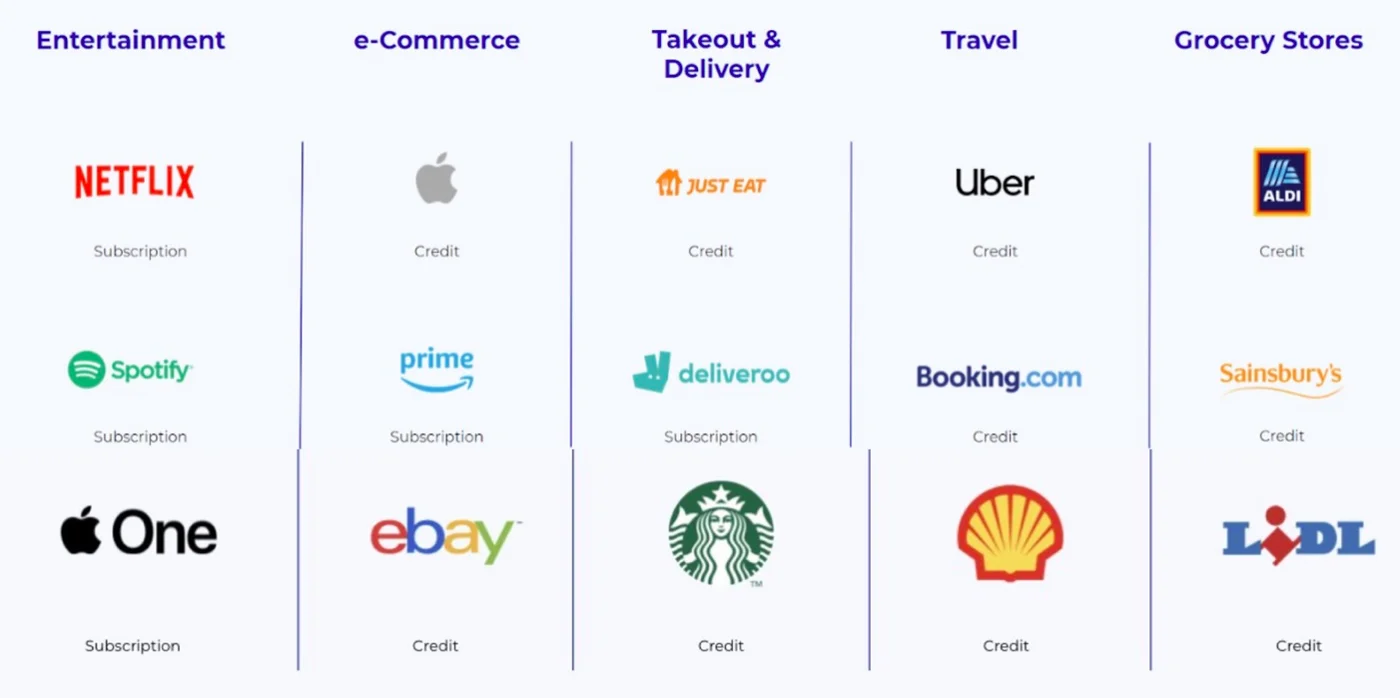
Besides making it easy to spend cryptocurrency, crypto cards stand out for the rewards programmes and discounts they include. There are cards that, for example, give discounts at Lidl, Amazon, Spotify, Shell and Prime. Rewards are often higher than with traditional bank and credit cards. They are mainly paid in the card company's own cryptocurrency, although there are also cards that pay rewards in, for example, bitcoin.
Using a crypto card frequently in everyday life is therefore an easy way to get more cryptocurrency without having to pay for it. For example, there are crypto cards that, for a subscription of under EUR 5 a month, give 2% rewards with a monthly cap plus a few months of Spotify refunds. With premium-tier cards you can get, for example, 8% rewards, Spotify and Netflix subscriptions, airport lounge access and cashback at several international chains, although which perks are included depends on the card and tier.
How crypto cards work
A crypto card is issued in partnership with, for example, Visa or Mastercard and can therefore be used everywhere their cards are accepted. When you pay, the recipient receives fiat, which means the recipient will not even know that the payment was made with a crypto card. How this happens is explained in more detail further down.
4.1
Payment companies' stance on cryptocurrency
See how the leading payment processors approached cryptocurrency payments in 2021 and which ones were still discussing doing so at the time.
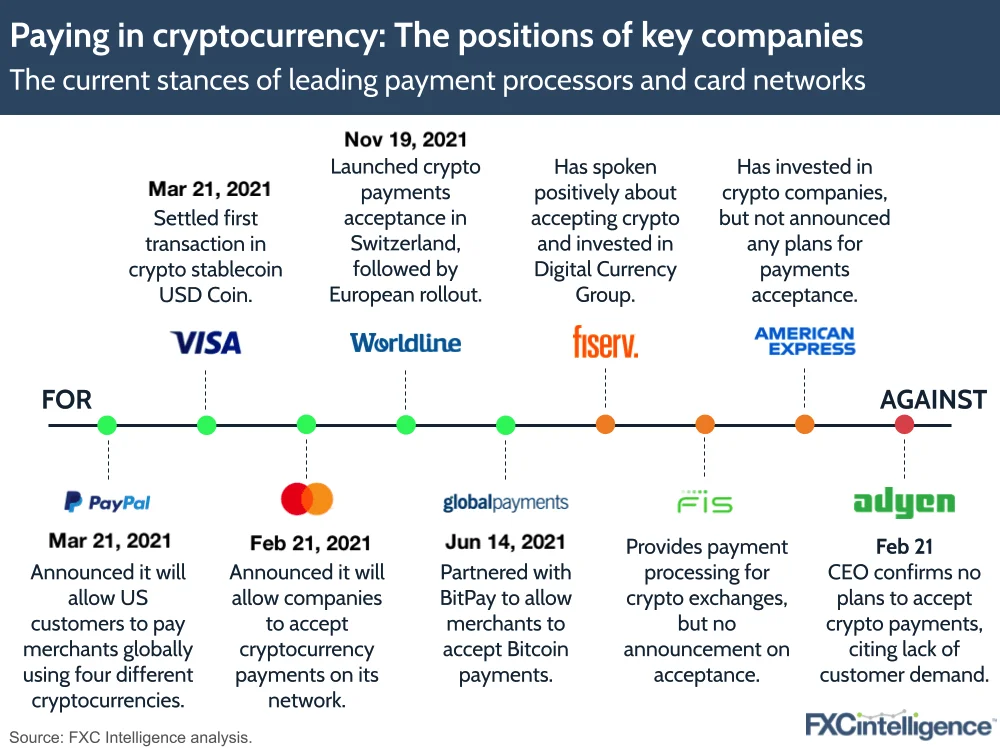
(Image source: FXC Intelligence Analysis)
4.2
Like paying in a foreign currency
The easiest way to explain how crypto cards work technically is with a comparison.
Example: When you travel from the UK to Spain and pay with a UK bank card, the shop where you make the purchase will want to be paid in EUR. But your card is linked to a UK account with a balance in GBP.
When the card payment is made, a payment request is sent to the UK bank. The amount in GBP is automatically taken from the account and converted into EUR. The receiving shop therefore gets EUR.
A card linked to a cryptocurrency service works in the same way. When a card purchase is made, a payment request is sent to the crypto service. For example, bitcoin is automatically sold for the amount, after which fiat is paid to the recipient.
In practice, then, the payment is not made with cryptocurrency but with fiat that was converted a tenth of a second earlier from, for example, BTC to EUR.
Pay with crypto
Most commonly, crypto cards offer payment in several different cryptocurrencies as well as in fiat. In the app, or when logged in on the card issuer's website, you can transfer crypto and fiat to the card account. There you can also choose the order in which money is taken. Perhaps you want bitcoin to be used first, then ether and fiat last.
Pay only with fiat
An alternative is that the card account holds only fiat. The card then works exactly like an ordinary bank account. The difference, however, is that the card's fiat balance can be topped up by converting cryptocurrency when depositing. The advantage of this solution is that conversion between crypto and fiat only happens when you deposit, which creates considerably fewer transactions to keep track of for your tax return.
Rewards only in crypto
There are also a few cards that give the cardholder rewards/cashback in cryptocurrency, but where deposits and payments are always made in fiat. Instead of points, you get, for example, bitcoin or ether as rewards.
This becomes a way to increase your cryptocurrency holdings without having to pay for them. One example is Plutus (see above), although according to Plutus its rewards are now given as PLUS points, separate from its own cryptocurrency PLU.
(Image source: Medium)
Common perks
Secret tip to max crypto cards rewards:
There are crypto cards with no perks at all. They are taken out purely because they make it easy to spend cryptocurrency. It is more common, however, for several perks to be included and for cards to be offered at several different tiers. The higher the tier, the more perks.
5.1
Examples of perks
Rewards – Earn rewards on eligible purchases made with the card. Rewards are commonly paid in the card company's own cryptocurrency, but there are also cards that pay them in bitcoin or other major cryptocurrencies. This is by far the most common perk with these cards. The rate varies between cards and tiers; among the cards in this guide it ranges from 0% up to 8–9% on the highest tiers.
Free subscriptions – Several cards offer free subscriptions on certain card tiers. This could be, for example, free Spotify, Netflix and/or Prime. With some cards, the subscription is first paid with the card and the same amount is then refunded in the card company's own cryptocurrency. The better the card, the more subscriptions can be included. How long the perk lasts also depends on the card tier. At Crypto.com, for example, it applies for 3 or 6 months on the Ruby Steel and Jade Green/Royal Indigo tiers and without a time limit only on the two highest tiers.
Fewer restrictions – Cash withdrawals are generally free and there is no FX markup. But only up to a certain level, after which a fee applies each time. On the better tiers/cards, the free allowances may be higher, depending on the card.
Cashback with partners – Shop with the card issuer's partners and automatically get cashback or a discount on your purchase. Common partners are Uber, Hotels.com, Booking.com and AirBnB. These are international companies that users in large parts of the world can take advantage of. The cashback level varies by partner and offer.
5.2
How card tiers work
As with traditional bank cards, there are different tiers/cards to choose from.
There is often a free card with few perks, as well as more expensive cards with more perks. Instead of an annual or monthly fee, you may have to stake the crypto company's own cryptocurrency.
Example: Crypto.com has five different cards to choose from. The table below presents two cards to show how large the differences can be.
Royal Indigo / Jade Green vs Midnight Blue:
Fees and perks | Royal Indigo / Jade Green | Midnight Blue |
|---|---|---|
Monthly fee | Free | Free |
CRO staking requirement | CRO worth EUR 3,500 | No requirement |
Rewards | 2% in CRO (max USD 50) | No rewards |
Spotify | Free for 6 months | None |
Netflix | Free for 6 months | None |
Lounge access | Yes | No |
Free cash withdrawals per month | Yes, up to EUR 800 | Yes, up to EUR 200 |
Fee-free bank deposits per month | Up to EUR 10,000 | Up to EUR 2,000 |
(These figures are from early 2025 and may change over time. The table should mainly be seen as an example of how more perks become available with a better tier/card.)
Which crypto card is the cheapest?
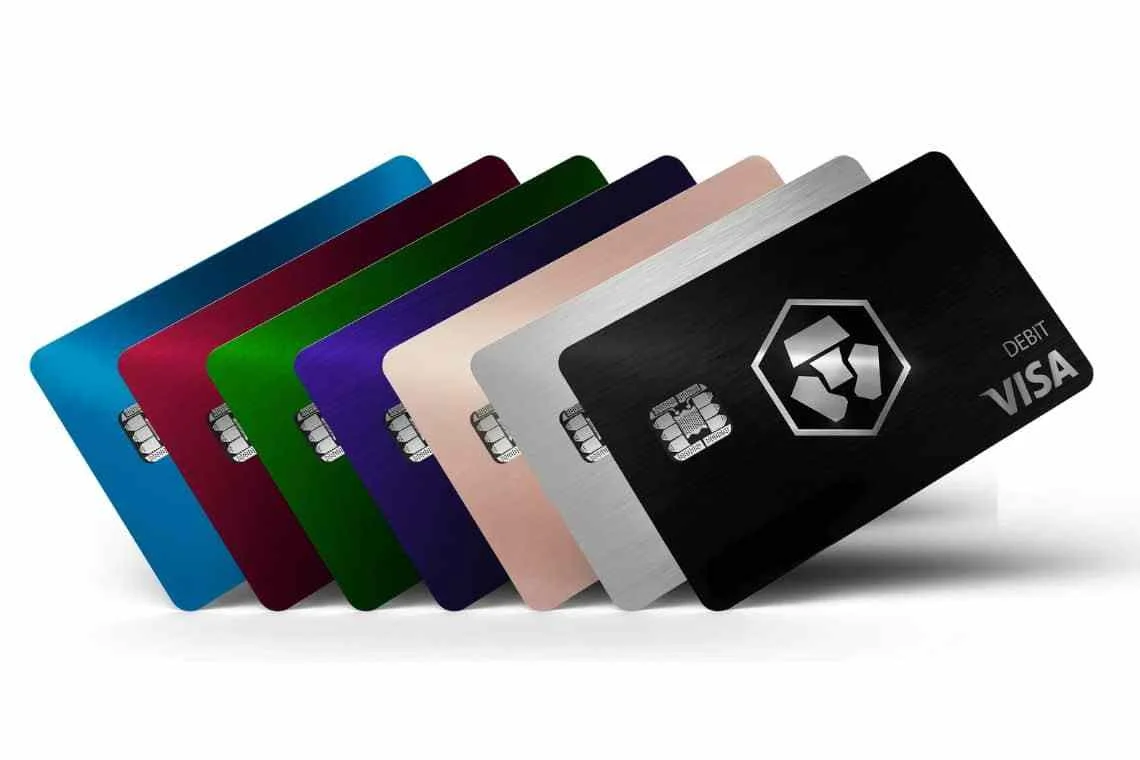
Which crypto card is the cheapest depends on how you expect to use it. There are, for example, several cards with no annual fee but with fees for various services. Below are the most common fees that can arise with this type of card. The figures in the table are examples from published price lists for individual European cards (Crypto.com and Plutus), not limits for the whole market. Several of the cards are billed in EUR.
Examples of common fees:
| Type of fee | Example |
|---|---|---|
1 | Monthly or annual fee | EUR 0 – 24.99/month or EUR 0 – 249.90/year |
2 | ATM withdrawal fee | 2.00 – 2.50% |
3 | FX markup | 0.20 – 2.50% |
4 | Crypto conversion markup | Spread (not always a separate fee) |
5 | Deposit and withdrawal fee | 0 – 1.00% |
6 | Card fee | EUR 4.99 – 9.99 |
7 | Staking | 0 |
Read about the different fees in detail below.
1. Monthly/annual fee
There are many crypto cards with no monthly or annual fee. At the same time, there are cards that cost over EUR 20 per month. The important thing is to check the cost and work out how much of the rewards/perks you can actually use. It may be worth paying a little more to get more perks.
2. ATM withdrawal fee
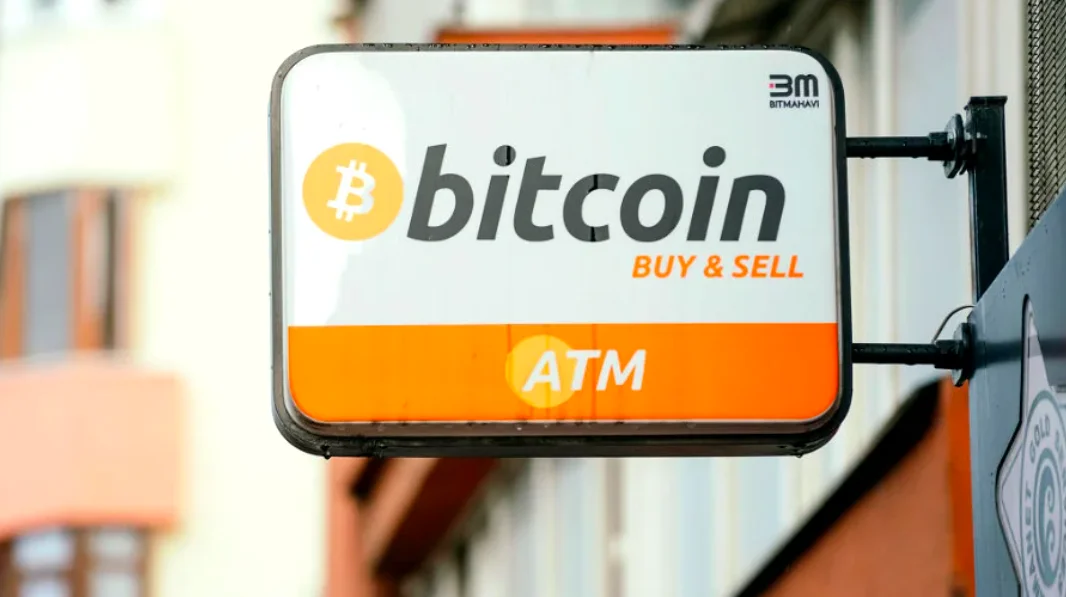
An ATM withdrawal fee is paid when withdrawing cash from an ATM. It can, for example, be 2% of the amount above a monthly free allowance. The cards differ greatly here, as some charge no fee at all while others charge really high fees for withdrawals.
(Image source: CNBC)
3. FX markup
An FX markup can arise if the card payment is made in a fiat currency other than the card issuer's national currency.
Example: If the card is issued by a French bank, its national currency is EUR. But if it is used in the UK, the payment is made in GBP, which can lead to an FX markup of, for example, 0.2 – 2.5%. In some cases, a fixed fee per transaction is added as well.
4. Crypto conversion markup
When a card payment is made, the card company automatically converts crypto into fiat. For this, it may charge a crypto conversion markup. This can be a certain percentage of the amount converted, or it can be included in the exchange rate (spread).
5. Deposit and withdrawal fee
Depending on how you deposit to the card account, different fees may be charged. Costs arise above all if you deposit with a card. If you want to withdraw to a bank account, a fee may also be charged for those withdrawals.
6. Card fee
Even if there is no annual fee, there may be a fee for producing and delivering the card. In some cases, this is around EUR 5 – 10. If the card is lost and a new one has to be ordered, a new fee arises, which is not necessarily the same as for the first card.
7. Staking
Staking means that a certain amount of the card company's own cryptocurrency is locked and therefore cannot be used for payments. If a card company has several cards with different perks, staking may, for example, be required for the better cards to become available.
Staking is not a fee, since the locked cryptocurrency becomes available again when the stake is unlocked. Its market value may, however, have changed in the meantime. Buying the amount of cryptocurrency needed to reach specific staking levels, on the other hand, is a cost.
Example: One example is the staking requirements Crypto.com had in early 2025. No staking at all was required for its free card. That card, however, gave neither rewards nor discounts. The staking requirement then increased on the higher tiers. To be able to order its most exclusive card, CRO staking worth USD 350,000 was required.
3 things to consider
At first glance, crypto cards can seem considerably more advantageous than a traditional bank card. There are, however, certain risks and things to consider before ordering a card.
7.1
Cryptocurrency volatility
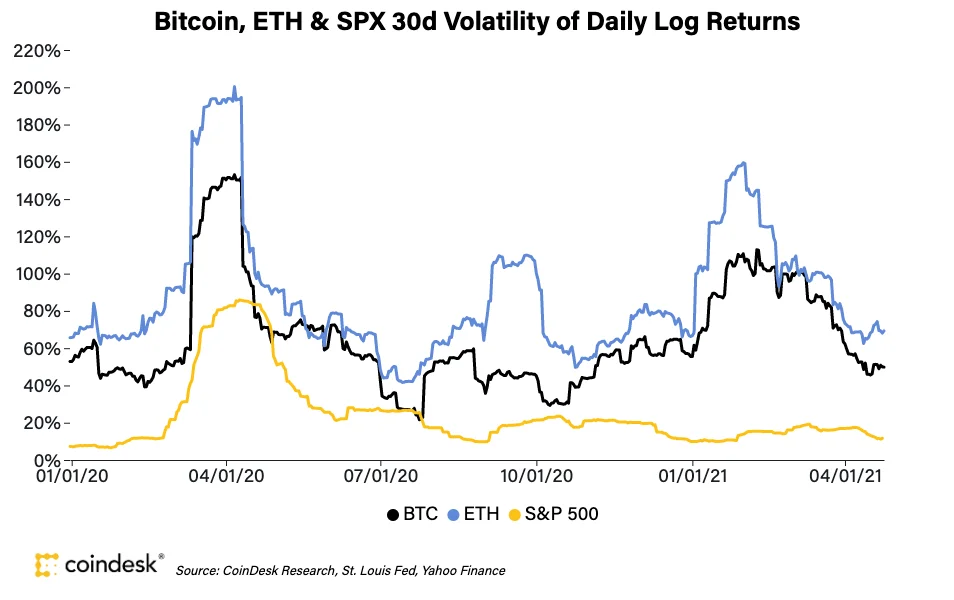
Getting 2 – 4% on card purchases can sound tempting. But it is important to remember that these rewards are generally paid in the card company's own cryptocurrency. Since volatility (price movement) in cryptocurrencies is very high, your rewards can quickly lose value.
In the chart, for example, you can see how much more bitcoin and Ether have moved in price than the S&P 500 index (the 500 largest companies in the US).
(Image source: Coindesk)
7.2
Security first
The crypto industry is still relatively new, and several of the companies started in 2016/2017 have already gone bankrupt or shut down their card business.
Investing in cryptocurrencies always involves high risk, and holding them with a company also creates company risk. If the company goes bankrupt, there is a risk that you will not get your cryptocurrencies back. The risk is reduced by choosing cards from large, established players.
7.3
Limitations
The fact that cards are described as having no annual fee, withdrawal fee or FX markup does not mean they have to be completely free. First, other fees may arise, for example for deposits or withdrawals. Second, there are very often thresholds for when fees are charged.
Cash withdrawals may, for example, be free – but only for the first EUR 200 withdrawn. After that, a withdrawal fee may apply.
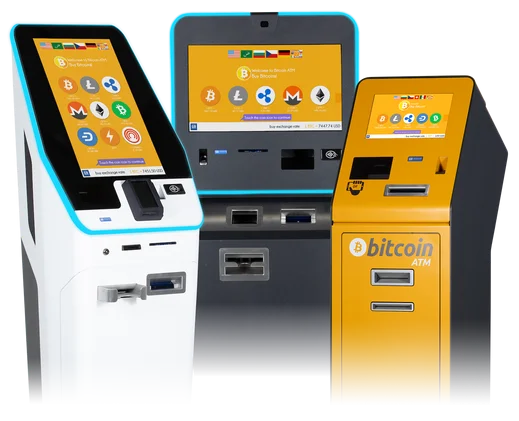
(Image source: Generalbytes.com)
Pros and cons
Pros of crypto cards
Easy to spend cryptocurrency – Paying with a crypto card is by far the easiest way to spend cryptocurrency and indirectly “convert” it into fiat. The alternative is to sell for fiat on a crypto exchange and then make a bank transfer to a bank account, which can take a couple of days. In addition, not all banks accept transfers from crypto exchanges.
High rewards – Compared with traditional bank cards, crypto cards often give higher rewards. 2 – 4% on eligible purchases is not unusual. Premium cards can give up to 8–9%, but then often require an expensive subscription, a large staking amount or large holdings.
Pay with fiat or crypto – Choose for yourself whether fiat or crypto is used for card payments. This is done via the app settings or when logged in on the card issuer's website. It becomes a flexible way to use the same card for all purchases.
Cons of crypto cards
No deposit guarantee for crypto – Cryptocurrencies are not covered by government deposit guarantee schemes. If the company goes bankrupt, all the cryptocurrencies in the account could therefore be lost. Never transfer more money to the card account than you can afford to lose.
Mostly international companies – The dominant players are international companies and crypto exchanges. This can mean limited support in your local language. If the use of cryptocurrencies grows, however, more card issuers may emerge.
With crypto cards you can earn rewards, up to 8–9% on the highest tiers, plus cashback at, for example, Netflix, Spotify and Amazon. There are also cards that give access to airport lounges.
A crypto card, sometimes also called a crypto debit card, is a bank or credit card used to spend cryptocurrency via card payments. Several cards give rewards on eligible card purchases, up to 8–9% on the highest tiers.
Yes, with most crypto cards you can pay with fiat or a chosen cryptocurrency.
Yes, crypto cards can generally be used in the same way as other cards, since most are issued in partnership with Visa or Mastercard. The card issuer or the merchant may, however, restrict certain purchases, such as buying cryptocurrency. More commonly, though, the cards are used to spend cryptocurrency – not to buy it.
Yes, it is possible to pay with cryptocurrency via a crypto card – and it works roughly like an ordinary payment card (Visa or Mastercard). But instead of money being taken from a bank account, the value is taken from your crypto wallet.
Yes, but they differ from ordinary credit cards. In Europe there are crypto cards that have a credit mode in addition to a debit mode. In credit mode, purchases are made on credit secured by the cryptocurrencies in the account, whereas an ordinary credit card gives credit without collateral. Interest is charged on the credit. Many crypto cards, however, are debit or prepaid cards.