NFT is short for "Non-fungible token" and is mainly used for selling and owning digital art, but also other digital things such as in-game items, tickets and rights. It works with the help of "blockchain", the same technology behind cryptocurrencies. In this guide of 3,000+ words, you will learn everything about NFTs.
Read about the history behind the technology, different ways to buy and sell NFTs, 5 popular NFTs and much more.
Learn how NFT marketplaces and crypto wallets fit together.
Navigate by clicking on a chapter below →
What is an NFT and how does it work?
NFT Explained In 5 Minutes – What Is NFT? | Simplilearn:
What is an NFT? An NFT, or non-fungible token, is a unique token recorded on a blockchain. It can be associated with an image, an in-game item or another asset. Holding the token does not automatically give you copyright or ownership of the underlying asset.
The image itself can be copied, but the token on the blockchain is unique and cannot be copied. What an NFT is and how it works in more detail is easiest to explain by splitting the term into two parts.
What do “non fungible” and “token” mean?
Non-Fungible
Fungibility describes how easily one unit can be substituted for another of the same kind.
Two coins of the same denomination are interchangeable. Each has the same face value and function. Units of a cryptocurrency such as bitcoin are also generally interchangeable.
That something is non-fungible therefore means that it is not interchangeable. A painting cannot be swapped for just any painting. They differ in value, function and appearance, even though all of them can be described with the same name – painting. The same can be said of hockey cards, Pokémon cards and vintage film-star cards, as well as the different streets in the game Monopoly. They are not interchangeable – they are Non-Fungible.
This means that a Non-Fungible Token is unique – even if it may exist in a certain edition.
Token
A token is used on a blockchain and can easily be sent, bought/sold and in some cases even borrowed against. All cryptocurrencies that use Ethereum as their blockchain are ERC-20 tokens, while NFTs are generally ERC-721 tokens.
They have certain technical differences, but what they have in common is that they can be stored in compatible crypto wallets and easily sent between different users. Many games also use ERC-1155, which can handle both unique and interchangeable items in the same contract.
In other words, an NFT is a token, on a blockchain, with unique properties.
NFTs – With different functions
At its core, an NFT is a token with, usually, a limited supply. In some cases they are completely unique and therefore exist in only a single copy. They can be categorised by their primary function – which also determines how they acquire a market value.
1. Collectible cards / Collectibles
There are several NFT projects that are purely about collecting, swapping and trading the NFTs in the collection. A company could, for example, create a limited supply of collectible cards featuring cool rabbits and then sell them as collectibles.

Example: NBA Top Shot is a collection of collectible cards with video clips from the NBA. Sales take place under licence from the NBA, and the cards are bought in “packs” with a few video clips per pack. As with all other collectible cards, the rarer cards (with a higher market value) are harder to get.
The value comes from the collector’s value. In other words, these video clips are not intended to generate income, be used in games or have any specific function other than being collected. This is similar to how people collect coins, stamps or other art.
2. Gaming
If a game is put on a blockchain, items in the game can be NFTs. In a racing game, for example, the car can be an NFT while the track, the audience and the surroundings are exactly the same for all players. By completing missions, or winning competitions, players receive NFTs or the game’s own cryptocurrency as rewards. These can be used to improve the character – or be sold on the open market.
Games that offer NFTs or cryptocurrency as rewards are often called play-to-earn games.
Example: Axie Infinity and Splinterlands use NFTs for items such as characters and cards that players can trade.
Players can use these items to improve their experience or try to resell them. Their resale value depends on demand.
3. Representative token
A representative NFT is a token that represents a physical asset. In theory, this could mean that the ownership of a car or a property is linked to an NFT. On a sale, this token is transferred, whereupon ownership passes to another person.
Many believe this use case will grow in the future as blockchains are increasingly used as decentralised databases of ownership rights.
4. As proof of historical value
NFTs can also be used to prove ownership of something with a unique history. This, too, can increase its value.
Example: An author publishes an e-book and sells the copies as NFTs. The first book is sold a week before all the others. This means that its owner has proof of being the first owner of that particular book, even though other people will also have a digital copy. If the author is, or becomes, famous, this NFT will probably sell for considerably more than the e-books sold later. This despite it being exactly the same product – but the first one has a unique value.
The value lies in being the owner of something unique. This uniqueness comes from the product’s history. In the same way, an ice hockey stick that Peter Forsberg once used is worth more than an identical stick that he has not used.
The history of NFTs
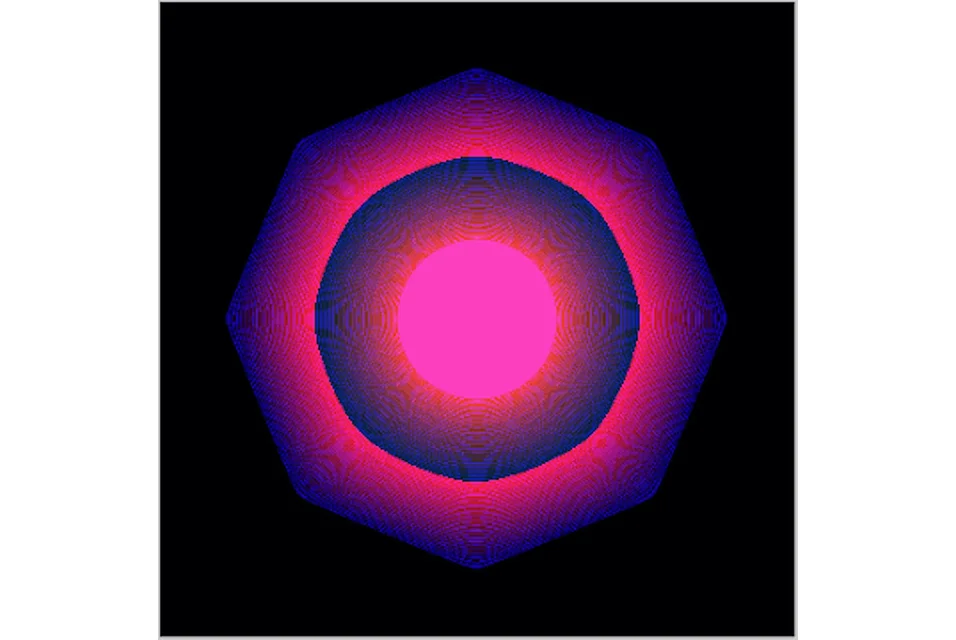
(Image source: Sotheby’s)
Officially, the world’s first NFT was created as early as 2014. It was created by Kevin McCoy and named Quantum. This NFT looks like a pulsating octagon and was sold in 2021, through the auction house Sotheby’s, for USD 1.4 million. It is shown in the image above.
In 2014, many people had still never heard of Bitcoin, let alone Ethereum or NFTs. The first big wave of interest in NFTs would instead come during the “crypto boom” of 2017. That was when, for example, the now legendary projects CryptoKitties, CryptoPunks and RarePepe were launched.
Because there were few NFT projects and it was a new phenomenon, these projects often received a lot of media attention. Even though interest increased sharply, it was still a very small percentage of the world’s population who knew what cryptocurrencies were – and even fewer who knew what NFTs were.
2021 NFTs – The breakthrough
In several different ways, 2021 was the year NFTs really broke through. This went hand in hand with the generally strong financial performance of the crypto market and greater acceptance of crypto in society.
Several of the games launched in 2019 and 2020 grew their player base tenfold or a hundredfold, and “Play-to-Earn” became a well-known concept. Not least in countries where many people struggle to scrape together money for food from one day to the next.
NFTs, as an art form, also gained more and more legitimacy. This was partly because major auction houses chose to sell the more expensive pieces, and both football clubs and celebrities chose to create their own NFTs.
What the future holds for NFTs, however, is hard to know. The technology is a few years old, and it is impossible to know how it will be used, for example for commercial purposes, in the future. One industry that has already come a long way, however, is the gaming industry. Games of this kind have attracted players around the world.
Electronic Arts’ CEO sums up the development clearly in an interview in which he states that Play-to-Earn games are the future of the gaming industry, but that it is still at such an early stage that it is hard to know how this will happen.
Ownership and blockchain
How does a blockchain work – Simply Explained:
What is unique about NFTs is that ownership sits on a blockchain and that transactions can be traced back. This makes it very different from owning, for example, physical art.
To prove that a physical painting is genuine, the owner can, for example, have certificates or let art experts examine the painting. But certificates can easily be forged, or lost, which means it can be difficult to establish that the painting is not a replica. With NFTs, it is considerably easier to determine authenticity and ownership.
Example
Example: An artist paints a picture, digitises it and sells it as an NFT in five copies. Those who then own these NFTs can prove the exact time they bought the digital painting and that the purchase was made from a specific seller (provided the seller does not choose to remain anonymous). It therefore has a digital history that can always be checked, regardless of how often it is later resold, thanks to ownership being recorded on the blockchain on which this NFT is handled.
As with physical paintings, copies will exist in large numbers. But only the five who paid for their NFT have the originals. This is the same as how there are countless posters of the Mona Lisa – but only those who can prove they have the original are millionaires.
Important to check!
All trading in NFTs takes place on a blockchain, which means anyone can check an NFT’s history. For example, you can see when it was first bought, which addresses have owned it and the number of tokens in the project. With blockchain technology, forgeries or copies therefore cannot arise – at least not within the same project. Even if someone were to copy the image/video and create a new NFT from it, the original owner can show that their NFT has a longer history and is therefore the original (i.e. genuine).
There have, however, been cases where fake copies have been traded. One example that attracted media attention was when a person bought a fake NFT for over USD 300,000. So you cannot assume that an NFT is always genuine just because it is on a blockchain.
After all, anyone can create a fake profile and pretend to be a famous person selling NFTs. There have also been cases where NFTs listed on OpenSea have been copied and listed again in multiple copies. This mainly applies to trading in art (images, video, music), but fraud has also occurred in sales of in-game items.
How do I buy NFTs?
It is possible to buy NFTs in several different ways. Which route to choose depends partly on whether you want to buy from the primary source of sale or on the secondary market. It also depends on what you want to buy.
At launch – Own or external platform
When new NFTs are launched, within a new or existing project, there are mainly 3 routes.
The project’s own platform – Those who want to buy pay with fiat or cryptocurrency and buy the asset at a predetermined price. If the game developers sell, for example, 100,000 collectible cards, or knight’s swords (for a game), for 1 USDC each, the company will bring in 100,000 USDC to use for further development of the game. In some cases, auctions are held instead, which means that the market alone determines the value.
Crypto exchange – In 2021 and 2022, several large exchanges launched NFT marketplaces. Some later closed them. New collections can also launch on project websites or dedicated marketplaces such as OpenSea.
The secondary market – Example: OpenSea – The secondary market for NFTs is enormous and, like sales of new NFTs, can take place via the project’s own platform or via crypto exchanges. The largest trading venue, however, is the largest NFT marketplace, OpenSea. To interact with the platform, you need a web-based crypto wallet, such as MetaMask.

Note: The EU’s Markets in Crypto-Assets Regulation (MiCA) generally excludes genuinely unique, non-fungible crypto-assets. Fractional interests and tokens in large series may fall within its scope, depending on their characteristics.
In fund format – Unicly
There are also services where an NFT is split into many smaller shares (fractionalisation). Such shares may be covered by the EU’s crypto rules (MiCA) and are often hard to sell. One such example was unic.ly, where you could invest in NFTs as "fund units".
A fund could then consist of anything from a single NFT to a large number of them. A larger number of tokens was then created to represent these fund units. In this way, it was possible to benefit from general increases in value within certain projects without having to choose exactly which NFT to buy.
How to buy an NFT
1. Buy cryptocurrency on an exchange
Kraken closed its NFT marketplace in February 2025. Binance discontinued its standalone NFT marketplace in July 2026.
One way to shop for NFTs is to buy the cryptocurrency you need, transfer it to your own compatible crypto wallet and connect that wallet to a marketplace such as OpenSea.
After purchase, the NFT is recorded on the blockchain at your wallet address. You can transfer it to another compatible address.
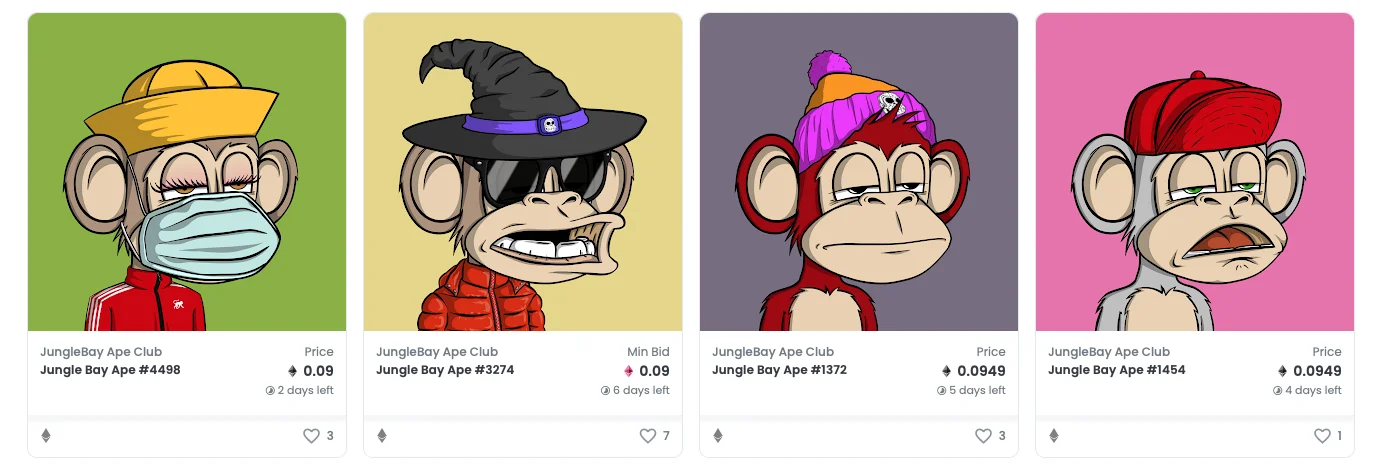
(Example of items listed on OpenSea)
2. On the project’s website
Several NFT projects sell directly from their website. In this case, which payment methods are accepted and whether a web wallet is required can vary.
Always follow the instructions given on the website. Be careful about following external guides, as there is a risk of being tricked into paying to the wrong addresses.
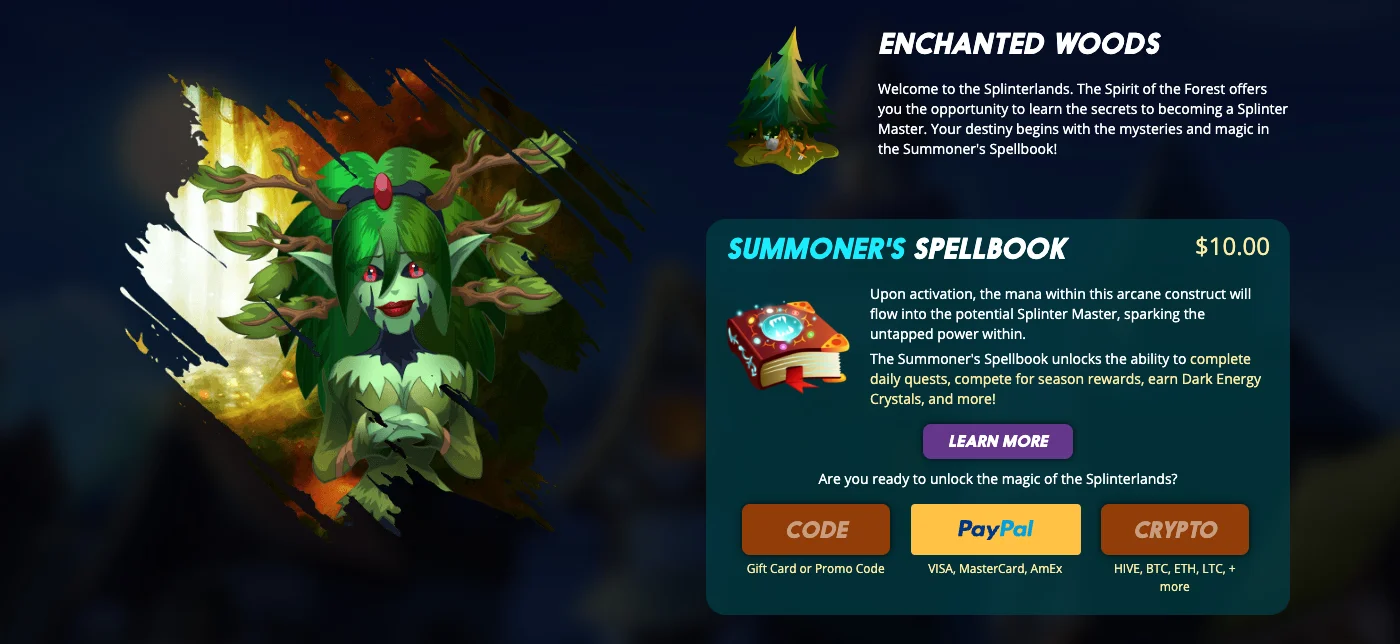
(Example from Splinterlands, where the cards can be bought with fiat or crypto)
3. Via OpenSea
OpenSea started on Ethereum but today supports over 20 blockchains, including Ethereum, Solana, Polygon and Base. To buy an NFT, you first need to buy the cryptocurrency of the blockchain on which that specific NFT exists.
For example, if you want to buy an NFT on the Ethereum blockchain, you first need to buy ether (ETH). Note that OpenSea charges a 1% fee on NFT sales.
Buying NFTs via OpenSea:
To buy NFTs via OpenSea, you need a web wallet. Download, install and learn how MetaMask works before you start transferring cryptocurrency to the wallet to make a purchase.
Then go to opensea.io and click the wallet at the top right to connect MetaMask to the site. On the left, you can filter by the collection you want to buy from. Click the NFT you want to buy, click “Buy Now” and approve the transaction with MetaMask.
Once the purchase is complete, the purchased item will be transferred to your MetaMask wallet and can then be used on the various platforms that are compatible with that particular item. If, for example, you buy a digital car, you can log in to the gaming platform where these cars are used, and the car can then be used in the game. This is because the game “reads” which compatible NFTs are in MetaMask when you connect.
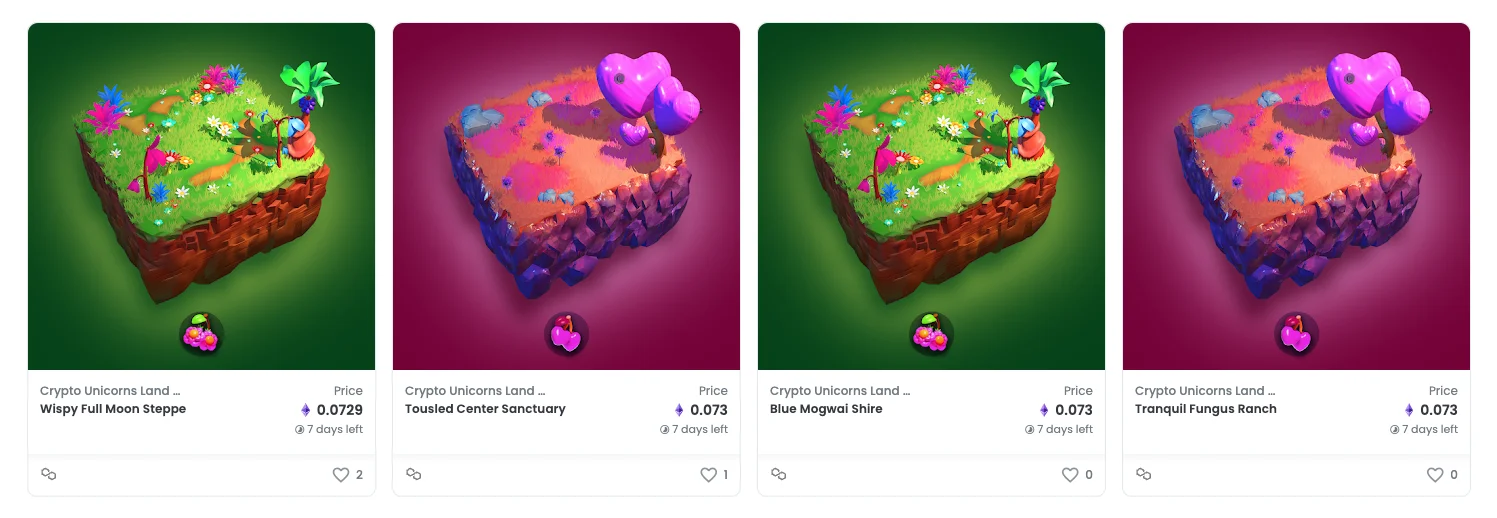
(Land plots from Crypto Unicorns Land for sale on OpenSea)
Tip: If you try the platform, start with a small amount and check both the marketplace and network fees before you buy.
5 popular NFTs
Below, five popular NFT projects are presented. They have been selected based on popularity, media attention and/or unique features.
1. CryptoPunks
CryptoPunks launched as early as 2017 and is therefore one of the first major NFT projects. This is also one of the contributing reasons for its sharp increase in value. The supply is fixed at 10,000 NFTs.
CryptoPunks remains a well-known example of an early NFT collection.
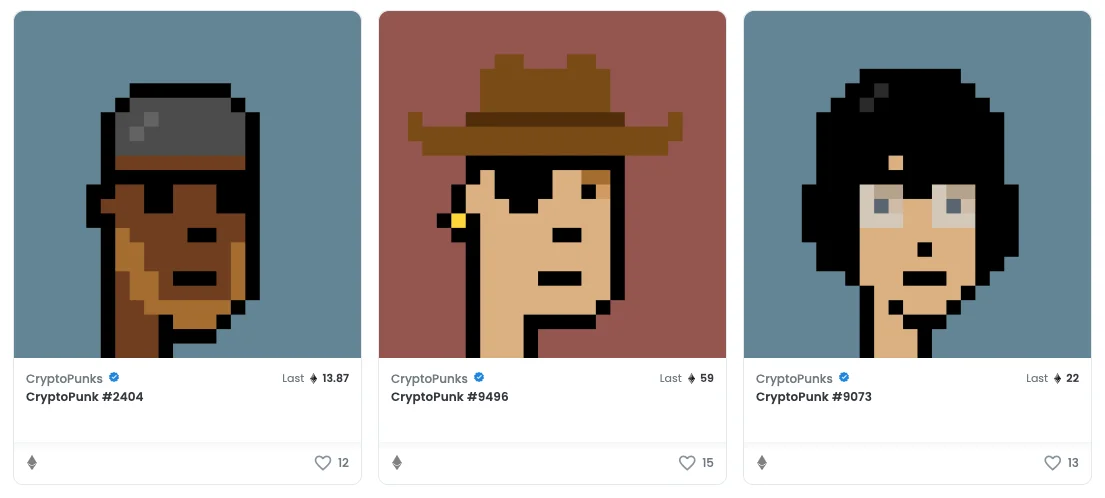
(Image source: OpenSea)
2. Doginal Dogs
Doginal Dogs is a collection of digital collectibles inscribed on the Dogecoin blockchain. It launched in January 2024.
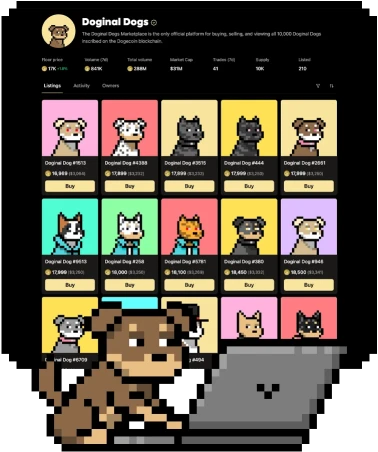
(Image source: Doginal Dogs)
3. Bored Ape Yacht Club
Bored Ape Yacht Club has long been a popular NFT collection. Several famous people have bought into this NFT collection, including Eminem, Jimmy Fallon and Stephen Curry. In 2026, Bored Ape Yacht Club continues to be a popular NFT collection.
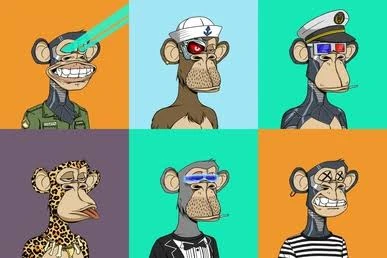
(Image source: Bored Ape Yacht Club)
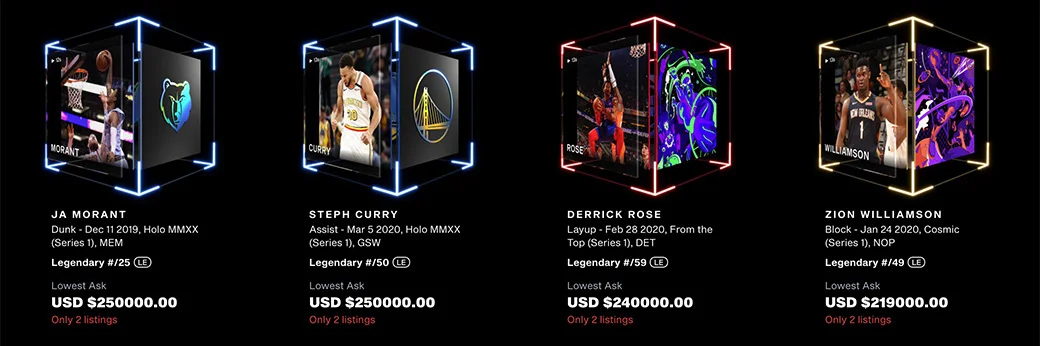
4. NBA Top Shot
In autumn 2021, NBA Top Shot was one of the ten largest NFT projects by trading volume. Under licence from the NBA, video clips from previous seasons are released. The price rose very quickly on the secondary market. For example, a video clip of LeBron James sold for USD 208,000.
NBA Top Shot is still popular in 2026. Over its lifetime, this NFT project has generated over USD 500 million in sales. The team behind NBA Top Shot is still actively promoting its NFTs and taking part in various basketball events.
5. Sandbox
The gaming company Animoca is behind the hit Sandbox Game. Over several funding rounds, the company has raised hundreds of millions to develop the platform. Those who buy its land plots (NFTs) can build their own games and worlds on that plot.
Both celebrities and other game developers have bought plots of land to take part in the digital world (metaverse) being built. Sandbox Game has an impressive list of partners – see below. Even though Sandbox has not managed to return to the popularity it once had, it is still relevant in 2026.
See also…
See also the video below, in which Coin Bureau goes through in more detail how NFTs could revolutionise the gaming industry.
Could Enjin SUPERCHARGE Gaming NFTs? – Coin Bureau:
Summary and conclusion
An NFT (Non-Fungible Token) is a token, on a blockchain, with a unique function and therefore “non-replaceable”. Above all, it is used to prove ownership of a specific item, for example the original of a digital painting.
The blockchain shows ownership
NFTs are often associated with art. Anyone who buys an art NFT can therefore use the blockchain to demonstrate ownership. This works in a similar way to how a certificate proves that a physical painting is the original. The value therefore lies in being one of the few people who own the original of a work.
The blockchain is also used to demonstrate ownership in gaming. In this case, it might instead be swords, cars or clothes, for example, used within one or more games.
Play to Earn
With NFTs and blockchains, the concept of “Play-To-Earn” has emerged. It means that people play blockchain-based games in which certain items in the game are NFTs.
Players earn both the game’s cryptocurrency and NFTs as they play, which can then be sold on a secondary market. Some of these games have millions of players around the world, and in some countries (mainly in Asia and South America) there are people who make a living from playing.
The future of NFTs?
Are NFTs dead forever:
Even though the world’s first NFT was created in 2014, it was not until 2017 that more and more projects began to launch, and 2021 when NFTs really became popular – both as an art form and within Play to Earn.
Since then, the "hype" around NFTs has died down, and many of the collections have never returned to the high values they had at the peak of their popularity. The chart below shows how the total market value of NFTs has fallen sharply over time.
Market value of NFTs, 2020–2026:
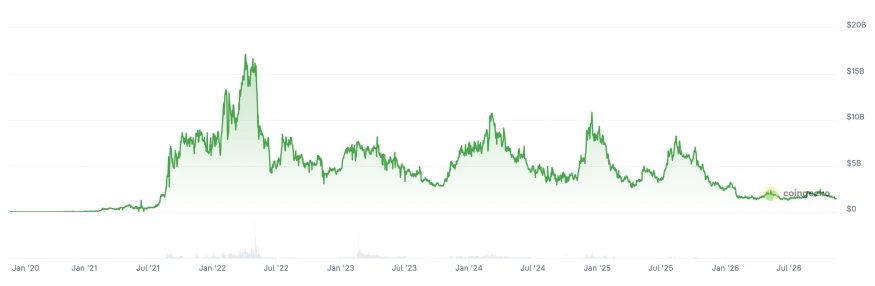
(Image source: CoinGecko)
NFTs are, however, at a relatively early stage, which makes it hard to predict the future. Those who are positive about the technology see a future where ownership of both physical and digital property is linked to NFTs – whether it is a property or a diamond sword in an action game.
An NFT, or non-fungible token, is a unique token recorded on a blockchain. It can be associated with an image, an in-game item or another asset. Holding the token does not automatically give you copyright or ownership of the underlying asset.
Many blockchains support NFTs. Ethereum is one example, and OpenSea also supports networks such as Solana, Polygon and Base.
As with cryptocurrencies, the value is governed solely by supply and demand. However, issuers can set a price when they launch them on the market, which also affects the secondary-market value.
NFTs are traded on dedicated marketplaces such as OpenSea or sold directly on a project’s website. Check which blockchain, wallet and payment methods the seller supports.
Yes, there are several online services where you can create your own NFTs (minting). It does not cost much more than the transaction fee. This is similar to how anyone can paint a picture or create a board game.
NFT stands for “non-fungible token”.
Non-fungible = unique and not interchangeable with something equivalent (unlike, e.g., money or bitcoin).
Token = a digital object stored on a blockchain, often Ethereum.
Someone can copy the image or video associated with an NFT and create a separate token. The original token still has its own identifier and transaction history on the blockchain.
The biggest risk associated with NFTs is their volatility. They can fall sharply in price in a very short time. Furthermore, they can be hard to sell if there is no buyer. Fraud also occurs in the form of fake collections.
NFTs are high-risk assets. Some well-known collections have retained value, while others have lost most of theirs. Consider the risk of losing money and the possibility that you may struggle to resell an NFT.