Cryptocurrency, or simply crypto, refers to digital assets built on cryptography and a blockchain. Instead of a bank keeping an account for you, your holdings are recorded in a ledger that thousands of computers keep a copy of. Most major cryptocurrencies, such as Bitcoin, have no issuer. Their rules are open source and only change if the network accepts an update. Other crypto assets, such as USDT and USDC, are issued by a company.
In this guide, we explain what cryptocurrency is, how blockchains work and what you should know about wallets, buying and risks.
Learn the basics of cryptocurrency, Bitcoin, Ethereum, blockchains and wallets.
See the difference between owning crypto directly and getting price exposure through financial products.
Use the table of contents to jump to a chapter.
What is cryptocurrency?
In a network such as Bitcoin, no single person, company or public authority can change the rules on its own. Other cryptocurrencies can have an issuer or more centralised control.
The largest cryptocurrency is Bitcoin, but there are thousands of cryptocurrencies with different characteristics, functions and purposes. Cryptocurrency is easier to understand when you compare it with national currency (fiat), which we do below.
The internet revolutionised the transfer of information.
Cryptocurrencies are revolutionising the transfer of money and digital value.
Decentralised
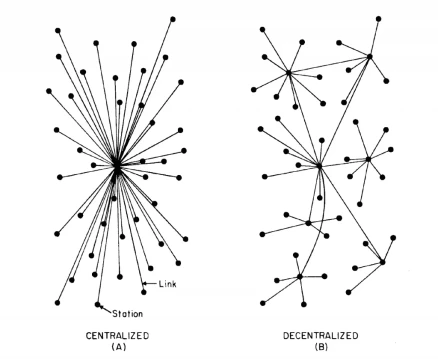
Many cryptocurrencies are decentralised, while all fiat currencies are fully centralised.
Central banks issue conventional currencies. Monetary policy decisions can affect a currency’s supply and value.
A decentralised currency is governed only by the code on its blockchain. The code is open source, so anyone can review it. Because the currency is decentralised, no single party can control updates. Instead, the code itself sets out how changes are voted through.
Some crypto assets, such as the stablecoins USDC and USDT, are issued by a company. That makes them centralised: they are controlled by a single entity.
On an open blockchain
Everything is transparent – except who owns what.
With fiat currency, the bank has control over a person's assets. Governments and authorities can therefore always see how much money a person has, simply by looking at their bank account. It also means that governments and authorities can freeze those assets if they wish.
On most blockchains, all holdings are public. You can see how much is held at a specific wallet address, as well as the funds moving to and from that address. What you cannot see is who owns the wallet or address. This is why cryptocurrency is described as pseudonymous.
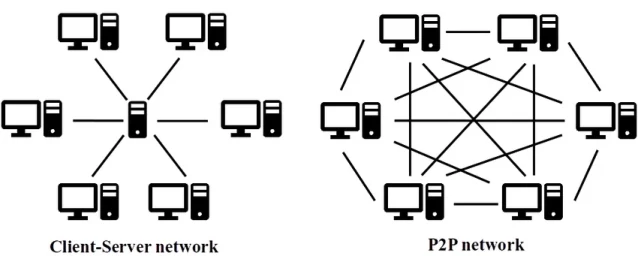
Crypto is P2P
Crypto payments go from person to person – fiat always goes through a bank
When fiat money is transferred between two accounts, the bank updates both the sender's and the recipient's bank accounts. In other words, a bank has to be involved in the payment.
A cryptocurrency payment goes directly between two parties, with no third party involved. The transfer is secured with cryptography and verified by advanced algorithms on the decentralised network that the users maintain.
Impossible to counterfeit
Fiat (notes and coins) can be counterfeited – that is impossible with cryptocurrencies
Because every unit of a cryptocurrency is recorded on its blockchain, it cannot be counterfeited. The blockchain works like an open database that cannot be changed after the fact.
This means you can always see the total amount of that cryptocurrency on the blockchain, as well as the transactions between different wallet addresses. Some currencies, however, also anonymise these transactions.

Note: In some cases, copies of tokens or cryptocurrencies have been created on a separate blockchain. If you want to buy a specific crypto asset, make sure it is the right one. Read more about Bitcoin and cryptocurrency scams.
Cryptocurrency glossary
Address | When you send bitcoins, you send them to the recipient's bitcoin address – just as you send an email from one address to another. |
|---|---|
Altcoin | Altcoin is short for "alternative coin". It refers to every cryptocurrency that is not bitcoin. |
API | API stands for "Application Programming Interface". Companies use APIs to share data, for example to fetch current prices from an exchange. |
ATH | Short for "All-Time High": the highest price anyone has ever paid for, for example, a cryptocurrency. |
Bitcoin | Bitcoin is the world's first decentralised currency, also known as a cryptocurrency. Read more about Bitcoin |
Blockchain | A blockchain is a distributed database – a database stored as many copies across a network. Read more about blockchain |
BTC | BTC is the ticker for Bitcoin. It is the abbreviation usually shown on trading platforms when you buy and sell. |
DeFi | Short for "decentralised finance": financial services built on smart contracts that do not require a central party. Read more about DeFi |
DEX | A decentralised exchange, where trades happen directly between wallets via smart contracts, without a company holding your assets. |
FIAT | Fiat money is currency with no underlying asset backing it. In other words, you cannot take your banknotes to the bank and exchange them for gold, for example. All the currencies we use today, such as USD and EUR, are fiat money. Read more about fiat currency |
FOMO | Short for "Fear of Missing Out". FOMO describes people buying something because they do not want to miss out on a price rise. |
Full node | A computer that holds a copy of the entire blockchain. |
Hard fork | A change to the code that creates a new currency from an existing one – for example, Bitcoin Cash from Bitcoin. |
HODL | To "hodl" means to hold on to your cryptocurrency rather than sell it. Someone who does this is called a "hodler". The term comes from a post on a bitcoin forum where someone misspelled "holding" and wrote "I AM HODLING". |
ICO | ICO is short for "Initial Coin Offering", when a company sells coins to the public. The term is modelled on IPO ("Initial Public Offering"), which is used when a company lists on the stock market. Read more about ICOs |
KYC | Short for "Know Your Customer": the process companies use to verify who their customers are, for example when you provide your name, address and a copy of your ID. It is required by law to prevent money laundering and other criminal activity. |
Mining | Mining is the process needed to keep the blockchain up to date. A bitcoin miner, for example, creates new blocks on the blockchain and receives new bitcoins as payment – hence the name "mining". Read more about Bitcoin mining |
Node | A computer that is connected to the network/blockchain and contributes computing power. |
OTC | Short for "Over the Counter": buying or selling outside a trading platform. This can be done, for example, when buying a large amount without wanting to move the market price. |
Private key | When you use a bitcoin wallet, you have a private key. It proves that you are the owner. |
Satoshi | A satoshi is the smallest unit of a bitcoin: one hundred-millionth (0.00000001 BTC). The term comes from the name of Bitcoin's creator, Satoshi Nakamoto. |
Satoshi Nakamoto | The pseudonym of Bitcoin's creator. The person or group behind it is still unknown, although there is plenty of speculation. Read more about Satoshi Nakamoto |
Short selling | Short selling means betting that the price will fall. You first borrow, say, bitcoin and sell it. If the price then falls, you buy it back at a lower price. Finally, you return what you borrowed and keep the difference as profit. |
Signature | A digital signature proves that you hold the private key without revealing it. Whoever holds the private key owns the cryptocurrency. |
Smart contracts | Contracts that carry out an action automatically on an "if this happens, then do that" basis. |
Soft fork | A soft fork is a backwards-compatible rule change. Nodes running older software can still accept blocks that follow the new rules. |
Stablecoin | A cryptocurrency designed to keep a stable price (minimise volatility) – hence the name "stablecoin". Read more about stablecoins |
Volatility | How much the price of a cryptocurrency moves over a given period. High volatility = a price that moves a lot. |
Wallet | With bitcoin, you need to be able to make transactions, receive bitcoins and store them. For this, you use a bitcoin wallet. There are both digital and physical wallets. |
White paper | A white paper is a document that presents a problem or challenge together with a solution. The Bitcoin white paper was written by Satoshi Nakamoto. |
What cryptocurrencies are there?
There are thousands of different cryptocurrencies, but most of them fall into a few types. Bitcoin is the largest and the oldest. In the following chapter, you can read about 17 different cryptocurrencies. Further down, you can also read about different types of cryptocurrency, from memecoins to stablecoins.
Cryptocurrencies
1. Bitcoin (BTC)
Bitcoin is the world's first cryptocurrency, created in 2009 by Satoshi Nakamoto. Since then, it has been by far the largest cryptocurrency by market value. Bitcoin is often described as "digital gold" and serves mainly as a "store of value" rather than as a means of payment.

2. Ethereum (ETH)
Ethereum was launched in 2015 by a group that included Vitalik Buterin. He had worked with Bitcoin for a couple of years, but after disagreements he decided to start Ethereum together with others, including Charles Hoskinson.
The blockchain is designed to be a decentralised platform for a wide range of applications (dApps). Ethereum hosts, for example, games, a huge number of tokens and financial services built on smart contracts.

3. Ripple (XRP)
The Ripple payment protocol was launched in 2012 by the US company Ripple Labs Inc. Its goal is to create fast and simple "bridges" for payments in cryptocurrencies, fiat currencies and other digital assets.
XRP is the native cryptocurrency of the XRP Ledger. Ripple is a company that uses the technology in some of its products.

4. Litecoin (LTC)
Litecoin was created in 2011 as a so-called spin-off of Bitcoin. The technology is very similar to Bitcoin's, but differs in areas such as block size, transaction costs and the maximum number of coins.
The cryptocurrency is mainly used as a means of payment, like Bitcoin Cash, Dash and Dogecoin.
5. Bitcoin Cash (BCH)
Bitcoin Cash was created as a hard fork of Bitcoin in 2017. Anyone holding Bitcoin in a wallet at the time automatically received Bitcoin Cash. The split followed a major disagreement over how Bitcoin should be developed.
Bitcoin Cash is known for faster and cheaper transactions. Critics argue, however, that this comes at the cost of less decentralisation. It is mainly used as a means of payment.

6. Dash (DASH)
Dash launched in 2014 as "XCoin" and was later renamed Darkcoin and then Dash. Its purpose is to offer a fast, secure and anonymous payment network, so it is designed primarily as a means of payment. Dash has mainly been used in South American countries with unstable economies.
7. Ethereum Classic (ETC)
Ethereum Classic continued the original Ethereum chain after a hard fork in 2016. The split followed the attack on The DAO.
As a result, Ethereum and Ethereum Classic have a lot in common. The big difference is that Ethereum has gone through several major upgrades, while Ethereum Classic has not.

8. Cardano (ADA)
Work on Cardano started in 2015, and it launched in 2017. One of the best-known figures behind the project is Charles Hoskinson (who also co-founded Ethereum). He started the project after a conflict with Ethereum founder Vitalik Buterin over whether the project should take on outside funding.
In terms of features, the blockchain is also very similar to Ethereum, with smart contracts, dApps and the ability to create tokens. A clear goal has been to address the weaknesses of Bitcoin and Ethereum and build a faster, more secure and more scalable blockchain.

9. Monero (XMR)
Monero launched in 2014 and is a coin for anonymous transactions. On Bitcoin, you can trace the sender, recipient and amount of a transaction, but Monero has several features that provide greater anonymity. This has also led some exchanges to refuse to list Monero.
Monero is designed to make transaction details harder for outsiders to see. That can protect users’ privacy, and the same feature can also be misused.

10. Stellar (XLM)
Like Ripple, Stellar is a payment network that aims to make it easier to transfer digital value. The network was founded by Jed McCaleb, who also co-founded Ripple.
Stellar works with partners such as IBM to build a payment network that can handle fiat and cryptocurrencies, both between banks and between individuals, and across national borders.

11. IOTA
IOTA is a blockchain and cryptocurrency designed to handle data transfers within the "Internet of Things" – in other words, connected products that can send and receive information.
Because the Internet of Things is expected to generate an extremely large number of transactions, IOTA uses a technology that eliminates transaction fees. As a result, it has no miners validating and securing the blockchain.

12. NEO (NEO)
NEO (formerly Antshares) was launched in 2014 by Da Hongfei and Erik Zhang. Like Ethereum, EOS and Cardano, it is primarily a smart contract platform, and its goal is to offer a "smart economy" that everyone can take part in.
What mainly sets NEO apart is that its blockchain is designed to accommodate regulation, for example of ownership. This could make it a blockchain that is accepted in countries where governments favour strict regulation. It is also why NEO is sometimes called "China's blockchain".
13. Zcash (ZEC)
Like Monero, Zcash has a strong focus on anonymity. It is based on Bitcoin but uses code that makes transfers more anonymous. Work on Zcash began in 2013, and the currency launched in 2016.
Unlike Monero, Zcash is not as strongly associated with criminal payments.
14. TRON (TRX)
TRON was launched in 2017 by the billionaire Justin Sun, following an ICO that raised USD 70 million. Early on, TRON was accused of copying code from other blockchains. TRON (and Justin Sun in particular) also faced heavy criticism when they tried to take over the blogging platform Steemit.
TRON started out as an ERC-20 token on Ethereum, but in 2018 it moved to its own blockchain. Functionally, the two are very similar: TRON is used for smart contracts, and you can create your own tokens on the blockchain. However, TRON is not decentralised in the same way as Ethereum.

15. Binance Coin (BNB)
Binance Coin launched in 2017 and is the crypto exchange Binance's own coin. Originally, its purpose was to give discounts on trading on the platform. Users who paid trading fees in BNB paid less than those who paid in the currency they were trading.
BNB Chain supports applications including DeFi services. BNB is used to pay network fees on BNB Smart Chain.
16. Tezos (XTZ)
The Tezos blockchain launched in 2018, together with its cryptocurrency, Tez. The project held an ICO in 2017 that raised USD 232 million. The blockchain can be used to create smart contracts and decentralised apps (dApps).
The goal is to build a blockchain that is faster and more scalable than Ethereum. It is also designed to avoid forks and instead allow smoother upgrades of the blockchain.

17. Dogecoin (DOGE)
Dogecoin launched in 2013 as a joke inspired by the Doge meme. It later drew widespread attention on social media, including from Elon Musk.
Different types of cryptocurrency
Every cryptocurrency has a specific function, which also means they can be grouped by that function. Below are some of the most common functions of these coins. First, though, here is the difference between a coin and a token.
1. Coin vs token
Some cryptocurrencies are described as "coins" and others as "tokens". Their function can be the same, but there is a clear difference.
A coin is used on its own blockchain. One example is Ether, the currency used on the Ethereum blockchain – just as Bitcoin is used on the Bitcoin blockchain.
A token is used on an existing blockchain. Ethereum is again a good example, because one of its functions is that crypto projects can easily launch their tokens on it (ERC-20 tokens). Using an existing blockchain instead of developing a new one saves a lot of money while giving users more confidence. Simply put, it is easier to trust an established blockchain with a long track record than a brand-new one. Tokens on the same blockchain are also extremely easy to swap via a DEX (decentralised exchange).
2. Means of payment (digital cash)
Several cryptocurrencies are designed for fast, cheap and international transfers. You can think of them as digital cash that can be sent in a few seconds to anyone in the world with a computer or phone – simpler, faster and cheaper than a bank transfer.
They are also available to everyone. Some examples of cryptocurrencies in this category are Dash, Bitcoin Cash, Monero and Zcash.
3. In-game money (like coins in a video game)
Many classic computer and mobile games have an in-game currency. It can be anything from diamonds and coins to stars, and players use it to buy items in the game.
In blockchain-based games, this currency can be a cryptocurrency instead. Items are bought and sold for the game's currency, which can then be withdrawn to a wallet or crypto exchange and swapped for other currencies or fiat.

4. Perks within a service (like loyalty points)
Cryptocurrencies can also give people unique perks within a digital service. Examples include BNB and BEST, two currencies linked to crypto exchanges that give you lower fees when you pay with them.
One historical example is CEL. The Celsius lending service previously used the token to offer customers benefits on its platform.
5. Stablecoin
USDC is an example of a stablecoin designed to track the value of the US dollar.
6. Tokens that represent something
A token can represent something else, which makes that thing easier to transfer and trade once it has been tokenised.
One example comes from the blockchain-based card game Splinterlands. A player who buys a booster pack of cards can choose to lock the pack and receive a token representing the cards instead. The token can then be sent or swapped on an exchange for other cryptocurrencies. The recipient can later redeem the token for the card pack in the game.
7. Governance tokens
Holders of a governance token have the right to vote on and influence the development of a specific service on the blockchain.
One example is UNI, the governance token for Uniswap. Anyone can submit proposals for improving the service, and UNI holders have the right to vote. These coins may also come with other benefits.

8. Dividend tokens
These tokens go by several names, but they work in a similar way: holders receive a share of what a service earns, based on how much it generates. One example is QuickSwap, which in 2021 decided that around 0.05% of the fees paid to the decentralised exchange would be distributed to holders of its QUICK token.
How does cryptocurrency work?
Because cryptocurrency is a currency used on a blockchain, the first step is to understand how a blockchain works. The easiest way is to compare a blockchain with today's centralised databases.
A typical card payment
Example: A customer pays for milk in a shop by card. The card network and payment services pass the payment between the customer's bank and the shop. This is a different set-up from transferring a digital asset on a blockchain.
Several parties therefore take part in processing a typical card payment.
The payment for the milk is recorded by the parties that process it.
Where does crypto come in?
Ordinary money is normally held in bank accounts. On a blockchain, digital assets are transferred instead – for example, a stablecoin that tracks an ordinary currency.
On a blockchain, people or companies can send digital assets directly between addresses. The network checks the transactions according to the rules of that particular blockchain.
What is blockchain?
Blockchain is the technology behind all cryptocurrencies. What makes it unique is that digital value can be transferred between two (or more) parties without involving a central party.
Solving the "double-spending problem"
What makes a blockchain unique is that it solves the "double-spending problem" – a problem that used to mean a central party had to handle and verify every transaction.
What is double spending?
Before blockchain technology was launched, anything digital could be copied. An image, audio file or text could be sent to a recipient while the sender still kept exactly the same file. If a digital currency were shared among a few people, those digital coins could be copied or sent to two people at once. This is what is known as the "double-spending problem": the same money being spent twice.
Before blockchains, the solution was for a central party – usually a bank – to keep the books. As soon as a bank transaction happens, the bank updates its database, making sure the same money cannot be used twice.
Thanks to the way a blockchain is built, as a decentralised and automatically updated database, this central party is no longer needed.
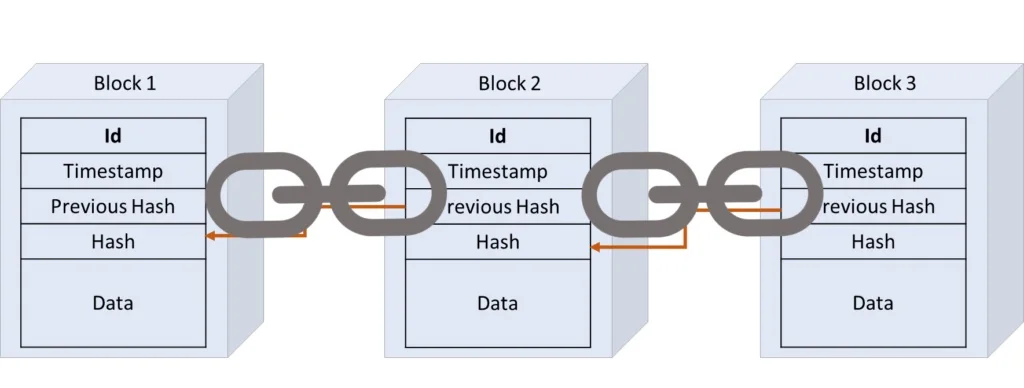
Blockchain – a decentralised database
A blockchain is like a database that anyone can access and where information can only be added, never changed afterwards. Here, we explain the blockchain using an example of five people who create their own coin.
1. Decentralised
Five people decide to create a database in the form of a spreadsheet. Using a piece of software, everyone in the group always has the latest version of the database. People can then join or leave the group without affecting the database.
This is because no single person (centralised) is responsible for updating and maintaining the software. As long as at least two people have the software installed on their computers, the database will continue to exist (decentralised).
2. Transfer of value
When the database is created, 5 "Buddy Coins" are allocated to each person's unique wallet address. At this point, they have no value; they are simply entries in a database.
Erik then buys a cup of coffee from Oskar, and they agree on a price of 0.2 Buddy Coins. Erik creates a transaction, signs it with his private key (cryptography) and sends the information to the software that maintains the database. Once the transaction is complete, the database will show that Erik's address holds 4.8 coins and Oskar's 5.2 coins. The total number of coins in circulation stays exactly the same.
The transfer could just as well be code, concert tickets, digital trading cards or anything else placed on a blockchain. Companies, for example, use private blockchains to keep track of who owns certain financial instruments.
3. Information in blocks – cannot be changed
Every transaction is verified so that double spending cannot happen. The transactions are then "packaged" into blocks that are locked into the database. Because they cannot be changed afterwards, new blocks can only be added on top, recording later transactions.
4. Anonymity
The five friends want to keep how much each of them owns private. They can therefore create as many wallet addresses as they like, made up only of letters and numbers. It is these addresses they share when paying. A person can have an unlimited number of addresses and choose how much to hold at each one.
5. Rewards for contributing computing power
The group of friends keeps growing. Some want to contribute computing power to maintain the database, while others just want to use it to make transactions. To encourage people to contribute computing power, 0.001 Buddy Coin is awarded at random to one of the contributors who help create blocks in the database. This happens every time a block is created, and it is all pre-programmed in the code. This also creates automatic inflation (a growing supply) over time.
The example above is only a simplified explanation of how a blockchain works.
Database = The blockchain
Buddy Coin = The cryptocurrency used on the blockchain
Reward = Mining

Private blockchains
Companies can use private blockchains to benefit from the technology. In this case, there is no need for an incentive scheme based on a cryptocurrency: the company runs a number of computers that maintain the blockchain. Nasdaq, for example, has used blockchains for several years to handle orders from different countries more easily. These blockchains are closed and can only be used by those who are given permission to interact with them.
Public blockchains
Anyone can interact with a public blockchain. These are the blockchains that have cryptocurrencies, mining and nodes. As an incentive to maintain the blockchain, process transactions and create blocks, a certain amount of cryptocurrency is issued as a reward.
Tip! Read our complete guide to what blockchain is.
What is mining?
What is Bitcoin Mining? (In Plain English):
Mining is the work that mining equipment (computers) does to verify transactions, secure the network and create new blocks on the blockchain. Mining involves the following:
Verifying transactions – When someone sends cryptocurrency, the transaction needs to be verified, for example to make sure no double spending takes place. Verification involves very complex cryptographic calculations, and the computer that solves the calculation earns the right to add the block containing all the transactions to the blockchain.
Creating new blocks – Once a block has been added to the blockchain, its information cannot be changed. This makes it secure, because nothing can be manipulated.
Securing the network – Miners (the people who do the mining) secure and maintain the decentralised network. Instead of a single party (a central party) keeping a database, cryptocurrencies are decentralised. Anyone can contribute computing power at any time to make the network even more secure. The software they use updates the blockchain with new blocks that cannot be changed afterwards.
Creating new currency – Miners are paid for their work with newly created coins. For many coins, this means automatic inflation is built into the code, because a set number of coins is created at predetermined intervals.
Tip! Read our in-depth guide to bitcoin mining.
What determines the value of a cryptocurrency?
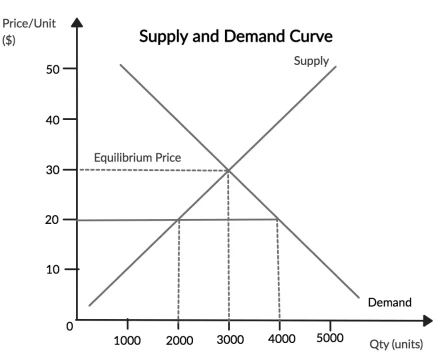
The value of a cryptocurrency is determined solely by supply and demand. If nobody wants a particular currency, its price will crash – and the reverse is also true.
Demand
Demand for a specific cryptocurrency is driven both by what it does today and by speculation about what it may do in the future.
One example is Enjin, a token on the Ethereum blockchain that is used in a number of mobile and computer games. Players need Enjin to buy items in these games (current use), and the more people who play, the greater the demand will be. At the same time, many people buy Enjin because they believe it will revolutionise the gaming world in the future (speculation), which would increase demand enormously.
It is not unusual, however, for a cryptocurrency to start trading before its service or function is live. In that case, investment is based purely on speculation.
Supply
Supply varies enormously between cryptocurrencies, as does how, when and how much new currency is created (inflation). For Bitcoin, a predetermined number of bitcoins is created with each block (every 10 minutes). This makes its supply extremely predictable and easy to calculate.
Other currencies can work in completely different ways. For example, Bitcoin Cash was created as a fork of Bitcoin, and everyone who held Bitcoin received exactly the same number of Bitcoin Cash. After that, the market decided what it was willing to pay for one Bitcoin Cash. Once again, it all comes down to supply and demand.
The exception – stablecoins
There is one exception to the rule that value is determined solely by supply and demand: so-called stablecoins. These are expected to be backed by the asset the coin is pegged to.
USDC is a stablecoin designed to track the US dollar. Its price on a trading platform can differ slightly from USD 1. Redemption and exchange options depend on the service and its terms.
See live cryptocurrency prices here.
How to use cryptocurrency
How do I store my cryptocurrencies?
What is a Bitcoin Wallet? (in Plain English):
How you should store cryptocurrency depends mainly on its total value and how you expect to use it.
On a crypto exchange
A crypto exchange is a trading platform where cryptocurrencies can easily be exchanged for fiat or other cryptocurrencies. Examples of crypto exchanges include Coinbase and Binance.
Keeping crypto on an exchange is like keeping your money with a stockbroker.
 The advantage of keeping your cryptocurrency on an exchange is that you can trade within a minute or so. If you day trade or swing trade, this can be a good option.
 Storing crypto on an exchange means depending on its security and operations. Mt. Gox shut down in 2014 after reporting major bitcoin losses. Check the rules and consumer protections that apply to the service you are considering.
In a software wallet
A software wallet is a crypto wallet in the form of a mobile app, a desktop program or a web-based wallet that you access through your browser.
A software wallet is like keeping money in an ordinary wallet.
The advantage is ease of use. With a wallet on your phone, you can send cryptocurrency to friends, pay with it or swap it for other currencies quickly, easily and on the spur of the moment. But that convenience comes at a price: security.The disadvantage is much lower security than with a hardware wallet. These wallets often have a shorter password (if one is enabled at all), so if your phone is stolen, someone else could get hold of the cryptocurrency stored in the wallet. There is also a risk that your computer or phone is hacked and that either the cryptocurrency or the 12-word recovery phrase is stolen.Mobile app – convenient for everyday transactions
Web-based wallet – can be accessed from any computer
Desktop wallet – can only be accessed from that specific computer
Browser extension wallet – a wallet that can interact with different websites; commonly used for DeFi
Who manages the keys?
One way software wallets differ is in how they handle private keys – the keys that allow a transaction to be made from one wallet to another. Is a third party responsible for security, or do you need to take control and responsibility yourself?
In a hardware wallet
A hardware wallet usually looks like a small USB stick. Because the wallet is not connected to the internet, it does not matter if your computer or phone is stolen or hacked.
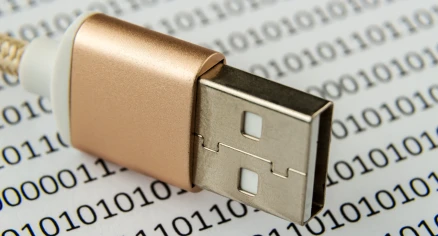
To send cryptocurrency from the wallet, you plug it into a computer via USB or connect it via Bluetooth. Even then, the private key is never exposed to the internet. Well-known brands include Trezor (Trezor review), Ledger (Ledger review) and KeepKey.
A hardware wallet is like keeping money in a bank vault.
The advantage is that your cryptocurrency is stored offline. It is kept on a physical device, out of hackers' reach.The disadvantage is that the wallet usually has to be connected to a computer before you can send or swap cryptocurrency.Which wallet is best?
Read our guide to the best bitcoin wallets and choose the one that suits you best. We compare prices, features, ease of use and much more.
Important things to keep in mind
Not crypto, but keys…
Strictly speaking, it is not cryptocurrency that is stored in wallets and on exchanges. What needs to be stored safely are the private keys that let you move the coins held at a specific address. For simplicity, we say that someone has X cryptocurrency in their wallet, even though that is not technically accurate. To be precise, the person holds the keys that give them the right to move X cryptocurrency…
Always back up your 12-word phrase
Whichever wallet you choose, always write down the wallet's 12-word phrase and keep it somewhere safe. If your phone is stolen or your computer breaks, these 12 words still give you access to your assets.
If entered in exactly the right order, the words can be used in another wallet to restore access to all your cryptocurrencies.
Act quickly if your phone is stolen
If you keep your cryptocurrency in a mobile wallet and your phone is stolen, always use the 12-word phrase quickly to access your funds, then send them to a new wallet. In the worst case, the thief may have seen the password you use to open the crypto wallet and could send all your funds to their own address.
Sending and receiving cryptocurrency
Blockchain technology is based on a public address and a private key. Using cryptography, transactions from the public address are signed with the private key. Below, we first describe each part and then show how a transaction works.
Public address
A public address is like a letterbox. You can give it to anyone, and they can then send cryptocurrency to that address. Anyone who knows another person's public address can also easily see what is held at that address.
Addresses differ depending on which blockchain is used. For example, a single Ethereum address can receive all ERC-20 tokens, because they all run on the Ethereum blockchain.
Example: (invalid) Ethereum address:
0x3f2bae8C1812075566sdds8cBBca887937d8D829C03
Private key
In this analogy, the private key is the "key to the letterbox". It gives you the right to move or send cryptocurrency from the current address to another address. The private key is stored in the software or hardware the wallet uses, but in principle you could just as well write the key down on paper and keep it in a safe.
The same private key can be used in several different wallets. This means that whoever holds the private key can access the cryptocurrency at the corresponding public address.
The 12-word phrase
Many wallets give you a recovery phrase, often 12 or 24 words. You can use it to restore access in a compatible wallet. Keep it secure, because someone else could use it to access your assets.
What is cryptocurrency used for?
Today, cryptocurrency is mainly used as an investment, but also for payments and for financial services without a bank. In this chapter, we go through 5 different ways to use cryptocurrency and 5 ways you can use it to make money.
5 ways to use cryptocurrency
What makes a blockchain unique is that digital assets (digital code) can be sent between two people without the sender being able to keep a copy of the asset. This happens on a decentralised network, which means no bank or company has to approve the transaction. Anyone can send anything, at any time.
Above all, these currencies can be used as a means of payment and in financial services, since the core function of blockchain technology is the transfer of digital value.
1. As a currency – a means of payment
Cryptocurrency can be used as a means of payment when the recipient accepts it. Some crypto assets have been designed for payments on a particular platform or between people and businesses.
A means of payment can be used either between two people or to pay for transactions on a blockchain. For example, every transaction on Ethereum is paid for with gas.
2. As a bank – savings, exchange and payments
According to the World Bank's Global Findex 2025, around 1.3 billion adults did not have a financial account. Self-custody and some cryptocurrency payments can work without a bank account. Rules, access to exchange services and ID requirements vary.
3. NFTs – digital art
Physical paintings and other artworks get their value mainly from the artist who created them. These works exist in limited numbers and can be bought and sold between individuals and businesses.
Digital artworks have so far been much harder to sell, because they could easily be copied. With a blockchain, digital value can be transferred with the certainty that it is the artist's original work being transferred. This opens up a whole new market for digital art.
4. Tokenisation – invest in anything
With blockchain technology and cryptocurrencies, anything digital can be "tokenised" and then transferred and traded. For example, the crypto exchange Binance chose to tokenise shares in Coinbase. It bought the shares (so the tokens were backed by them) and then issued tokens representing those shares.
Once an asset is on a blockchain, it can be transferred to anyone. The recipient does not need a brokerage account or similar. The asset can also be traded in pairs against other assets.
Tokenisation is common in digital games, where different in-game items are represented by a token that can then be traded and sent.
5. Investing in DeFi – banking services for everyone
What is DEFI? Decentralized Finance Explained:
Although cryptocurrencies can be used in many different areas, it is in DeFi (decentralised finance) that most capital is allocated. In short, a range of the services banks offer today are moving to decentralised networks, such as currency exchange, investments, loans, savings accounts and certain contracts.
For anyone to be able to swap or borrow, however, there needs to be capital. One way to put your cryptocurrency to use is therefore to provide capital to the new financial system that is emerging. Read more about this in the next section.
5 ways to make money with cryptocurrency
There are at least five main ways to make money with cryptocurrencies. Most investors focus only on price gains, but by "putting your capital to work" you can increase your returns considerably.
Mainly, this is because blockchain technology allows several banking services to happen P2P, without going through a bank.
1. Price appreciation
Price appreciation simply means that the market price of a coin goes up. If one Bitcoin costs USD 50,000 when you buy it and then rises to USD 60,000, its value has increased by 20%.
2. Lending
In centralised lending, you entrust assets to a provider. Interest and your ability to recover the assets depend on the terms and on the provider’s ability to meet its obligations.
On decentralised platforms such as Aave, smart contracts manage loans. The borrower generally supplies collateral worth more than the loan. Interest rates can change, and the collateral may be sold if its value falls too far.
If the collateral falls in value and the loan-to-value ratio passes a certain threshold, the collateral is automatically liquidated and the loan repaid.
3. Staking
Staking means locking coins in a smart contract, which takes them off the market for that period. It is used by currencies that rely on proof of stake rather than proof of work. This means staking is not possible with Bitcoin.
What is Proof of Stake? – Earn Passive Income with Staking:
4. Liquidity provider
Decentralised exchanges need a large amount of liquidity (cryptocurrency) to run smoothly without extreme price differences when people swap. This is what liquidity providers supply: they deposit cryptocurrency into the various trading pairs the exchange offers.
Traders, in turn, pay a fee of, for example, 0.3% per swap. This fee is then shared among those who have added liquidity to the pool. Your return therefore depends on trading volume and your percentage share of the pool.
5. Farming
Farming can take place, for example, as an LP (liquidity provider) on a relatively new decentralised crypto exchange. Those who add liquidity to specific pools receive, on top of trading fees, governance tokens for that exchange. This is how the tokens are distributed to the service's users. Uniswap, QuickSwap and ElkSwap, for example, have offered farming of their tokens to liquidity providers.
Yield farming
Yield farming is not a specific way of earning a return. Instead, the term refers to moving liquidity regularly between different services in constant search of the highest return. This is done by moving cryptocurrency between farming projects, exploiting arbitrage opportunities between borrowing and lending, and taking advantage of temporary promotions.
Is cryptocurrency hype or the future?
After Bitcoin was launched, it took several years for the currency to gain legitimacy and acceptance. At first, it was seen mainly as a "basement project" or a pyramid scheme. But those who really took the time to understand the network's strengths both invested in it and spread the word.
A bubble, hype or the financial system of the future? Opinions differ on cryptocurrencies, and on Bitcoin in particular.
Is cryptocurrency a bubble?
Most financial experts believe Bitcoin is "here to stay". In other words, the phenomenon of cryptocurrency itself is not considered a bubble. However, any asset can become overvalued, which creates price bubbles. When these "burst", the price falls sharply.
Bitcoin has seen steep price drops over just a few weeks on several occasions. It recovered after some of them, but past prices cannot tell you whether or when it will rise again.
Is cryptocurrency the money of the future?
Cryptocurrencies are the money of the future – but perhaps not in the way we think of money today…
Some retailers and online services accept cryptocurrency. Adoption varies by country and by merchant.
More and more people are realising that cryptocurrencies will be part of the financial system. But opinions are sharply divided on exactly what role they will play and to what extent.
Why invest in cryptocurrency?
Those who advocate cryptocurrencies (Bitcoin in particular) as an investment usually put forward arguments such as the following:
1. Historical returns
Bitcoin has risen sharply in some periods and fallen heavily in others. Past performance is no guarantee of future results.
2. Part of a new financial system
Bitcoin showed that users could transfer value on an open network. Blockchains have since been used to record and transfer other kinds of digital assets.
3. Inflation hedge
Bitcoin was created in response to the global financial crisis, which exposed weaknesses in the financial system the world's economies rely on. Under today's system, governments can decide to create more money to solve an economic problem in the short term – but the long-term problem becomes inflation. Because only 21 million bitcoins can ever be created, the same problem cannot arise with Bitcoin, which is why it can be seen as an inflation hedge.
4. Large investors are buying Bitcoin
When large companies and institutions buy Bitcoin, it shows that they believe in the cryptocurrency's future. Their purchases also lend it considerable legitimacy. In 2026, there are several Bitcoin ETFs, including BlackRock's, that hold a large amount of Bitcoin.
Public companies can also hold bitcoin. For example, Strategy reported holding over 850,000 BTC in late 2026.
Private companies can hold bitcoin too. BitcoinTreasuries estimated that Tether, the issuer of USDT, held around 150,000 BTC in late 2026.
Security – what to keep in mind
Prices, ease of use and the range of assets on offer are three things that differ between crypto exchanges. The most important thing to check, however, is security. A crypto exchange or exchange service should have several security features, and you as a customer need to understand how to secure your assets.
Only buy on well-known crypto exchanges
Only buy and sell cryptocurrencies on the largest and best-known crypto exchanges. Avoiding new, small and unknown exchanges also reduces the risk of fraud and problems with hackers. Compare and choose trading platforms here on CryptoRunner.
Be aware of market risk
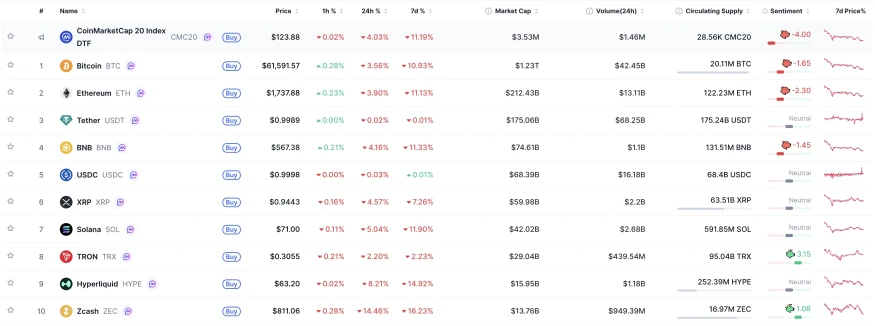
Volatility is very high for Bitcoin – and even higher for smaller currencies. Price moves of more than 10% up or down in a single day are not unusual.
The example below shows price movements for ten major cryptocurrencies over a week in November 2026.
(Image source: CoinMarketCap)
Turn on security features
Always enable 2FA on the crypto exchanges where you open an account, for example via SMS verification, Google Authenticator or a similar app. You can often also set up a withdrawal address whitelist, meaning the only crypto addresses withdrawals can be sent to.
Some exchanges also have a "HODL mode", which means withdrawals take at least 24 hours to go through. What happens if someone gets hold of your mobile phone and with it your texts and email? Could they still log in to the exchange – and what can you do to stop them?
Use a hardware wallet
"Not your keys – not your coins" / Andreas Antonopoulos
"Not your keys – not your coins" means that whoever has access to your private keys also has access to your coins. When you trade on an exchange, for example, you do not access your cryptocurrency through private keys of your own. The same applies to some software wallets. Both exchanges and wallets can be used – just be aware of the risk.
Start with small amounts
New to crypto? Start by learning how wallets, addresses and fees work. If you decide to try a transfer, you can use a small amount and check the recipient address and network first.
Keep records of your transactions
Keep a record of dates, amounts, fees and transaction history. This helps you keep track of your trading and gather documentation if you need to report transactions or income.
How purchases, sales, swaps and any rewards should be reported depends on the rules where you are liable to pay tax.
Scams – stay clear of fraudsters!
Never invest because someone calls you out of the blue offering an investment opportunity.
If it sounds too good to be true… it probably is.
Do your own research – UNDERSTAND what you are investing in.
Use a prepaid card if you are unsure about using your payment card online.
Never click on links sent to you by email.
Only invest what you can afford to lose.
NEVER share your wallet's 12-word phrase!
Tip! Read our complete guide to bitcoin and cryptocurrency scams.
Different ways to invest in cryptocurrency
You can invest directly in a cryptocurrency or in a financial instrument that tracks the value of a specific cryptocurrency. Here, we present the pros and cons of these two options and the most common ways to get exposure to a cryptocurrency's price.
Real cryptocurrency
You can buy cryptocurrency through a crypto exchange or exchange service. The service may require you to verify your identity before you deposit money. The currencies and payment methods available depend on the service and where you live.
The advantages of buying the cryptocurrency itself (rather than certificates) are a far wider choice of assets, no management fees and the ability to use the currency for its original purpose. You can also use it to generate higher returns through lending, staking, providing liquidity and farming.
If you store the cryptocurrency yourself, you need to be able to protect your private keys or recovery phrase. For some transfers, you also need to know which blockchain is being used.
Pros:
Huge choice – more than 5,000 cryptocurrenciesUse the currency in DeFi and earn extra returnsUse the cryptocurrency the way it was designed to be usedCons:
Requires some technical knowledge if you want to use the currency on the blockchain(DeFi = decentralised finance: financial services that run on smart contracts and therefore do not need a bank.)
Tip! Read more about buying cryptocurrency.
Certificates
A crypto certificate is a security designed to track the price of a cryptocurrency. How it is structured varies between products. Read the product information on fees, the underlying asset and any leverage.
A certificate gives you exposure to the price. Issuer risk depends on factors such as how the product is structured and what collateral is in place.
When looking at certificates, compare management fees, spreads and any brokerage commission. Which products are available depends on the market and the broker.
Pros: Price exposure without having to store private keys yourself
Cons:
Brokerage commission and management feesVery limited choiceThe cryptocurrency itself cannot be used (lending, staking and more)ETFs
ETFs are funds that trade on an exchange. An ETF can track an index or provide price exposure to a particular type of asset. Its holdings depend on its strategy.
By buying units in an ETF that holds cryptocurrency, you get exposure to the crypto market. Several ETFs holding crypto assets were launched in the US in 2024. The range of these funds is expected to grow as cryptocurrencies become more mainstream and more people want to invest through securities.
Pros:
A fund can give exposure to several currenciesTraded on a stock exchangeCons:
Limited choice; launches began in 2024The cryptocurrency itself cannot be used (lending, staking and more)CFDs
CFDs are contracts traded directly with a CFD broker. This means the broker sets the buy and sell prices. Brokerage commission is rarely charged; instead, the broker earns from the spread between the buy and sell price.
CFDs are often traded with leverage. If you buy Bitcoin at 2x leverage, your gain or loss will be twice as large as the change in the Bitcoin price. There are also CFDs without leverage.
CFDs can be complex and carry high risk, especially with leverage. Availability and terms depend on the market and the provider.
CFDs are complex products. Leverage can amplify both losses and gains.
Pros:
Can provide price exposure to several cryptocurrencies, depending on the providerTrade with or without leverageCons:
Margin requirements can be hard for beginners to understandThe cryptocurrency itself cannot be used (lending, staking and more)Limited choiceHow do you buy cryptocurrency?
You can buy cryptocurrency through an exchange or exchange service. Compare which assets and payment methods are available where you live, and check the price, fees and withdrawal terms before choosing a service.
1. Choose a platform and verify your account
Check that the service accepts customers where you live. Follow its instructions for opening an account and verifying your identity.
2. Choose a payment method
Check how much the deposit costs and how long it is expected to take.
3. Check your buy order
Check the asset, the amount and the total cost. Read more about how to buy Bitcoin.
Pros and cons
Advantages of cryptocurrency
Speed – Some crypto networks can process transfers quickly. The time varies with the network and how many confirmations the recipient requires.Costs – Transaction fees depend on the network, congestion and the service you use. Check the total cost when comparing ways to transfer money.A safer option in an economic collapse – Cryptocurrencies offer an alternative to the national currency, something people look for especially during economic collapses. Venezuela and Zimbabwe are examples where hyperinflation caused people's savings to lose an enormous amount of purchasing power over several years. In some years, inflation in Venezuela exceeded 80,000%. In that situation, people could buy cryptocurrency and hold it as a safeguard rather than rely on the government's disastrous economic decisions.
No central issuer in some networks – Bitcoin is one example, where the rules are set in the protocol. Other crypto assets may have an issuer or be controlled by a smaller group.
Access – A wallet can let you send and receive crypto without a traditional bank account. Access to exchanges, lending and other services depends on the provider and the rules where you live.Creating a new gaming industry – Cryptocurrencies make it possible to transfer many different kinds of digital assets. In the gaming industry, the technology has been used in a number of blockchain-based games, which means in-game assets can be resold on an external market. Players can play a game, reach high levels and win unique items that they can then sell to other players. The trade happens in a cryptocurrency that can then be moved to an exchange and swapped for, say, Bitcoin. In some developing countries, there are people for whom these games are their main source of income – something that would not have been possible without blockchain technology.Disadvantages of cryptocurrency
Security is entirely up to you – Cryptocurrencies are decentralised, which means no central party is responsible. You are therefore fully responsible for your passwords, recovery phrases and making sure your heirs have access to them so your investments can be passed on. Many people are careless about this and lose their cryptocurrency as a result.
Energy use – Networks that use proof of work need electricity for mining. Networks that use proof of stake are secured in a different way and usually use far less energy.
Risk of fraud – Check senders, services and links carefully. Fake investments, phishing and copycat services can lead to the loss of money or assets.
Reporting – Purchases, swaps and other transactions may be subject to reporting requirements. Keep records of your transactions and check the local rules.
Books and films about cryptocurrency
Here are some books and films for anyone who wants to learn more about Bitcoin, cryptocurrency and blockchain technology.

Books
The selection below includes books about Bitcoin, cryptocurrency and blockchains.
Grokking Bitcoin (Kalle Rosenbaum)
The Internet of Money (Andreas Antonopoulos)
Mastering Bitcoin (Andreas Antonopoulos) – a classic!
Bitcoin Billionaires (Ben Mezrich) – about the Winklevoss brothers
Digital Gold (Nathaniel Popper)
The Politics of Bitcoin (David Golumbia)
Bitcoin, Blockchain, and Cryptoassets (Fabian Schär)
Money Code Space (Jack Parkin)
The Bitcoin Standard (Saifedean Ammous)
Bitcoin for Dummies (Prypto)
Mastering the Lightning Network (Andreas Antonopoulos)
Cryptocurrencies Simply Explained (Julian Hosp)

Documentaries
Banking on Bitcoin (2016)
Banking on Africa: The Bitcoin Revolution (2020)
Bitcoin: The End of Money as We Know It (2015)
Trust Machine: The Story of Blockchain (2018)
Magic Money: The Bitcoin Revolution (2017)
Cryptopia: Bitcoin, Blockchains and the Future of the Internet (2020)
Life on Bitcoin (2014)
Bitcoin: Beyond the Bubble (2018)
Bitcoin: The Digital Rush (2017)
The Rise and Rise of Bitcoin (2014)
Open Source Money (2020)
Cryptocurrency: a summary
What is cryptocurrency?
Cryptocurrencies are currencies used on decentralised blockchains. Bitcoin was the first cryptocurrency and was described by Satoshi Nakamoto in a 2008 white paper and launched in 2009. As more and more people have recognised the strength of a decentralised network, further cryptocurrencies have been launched – but with very different functions. Today, there are thousands of different cryptocurrencies.
Their strength is that cryptocurrencies are governed entirely by their code ("code is law") and therefore cannot be influenced by governments or authorities. This is also one reason why people in countries with major economic instability have embraced crypto more than people elsewhere.
How are cryptocurrencies stored?
You can store crypto on an exchange or use a software or hardware wallet. A hardware wallet can keep private keys separate from an internet-connected computer. You still need to protect the device and recovery phrase.
How is the value determined?
The value is determined by supply and demand. These, in turn, are influenced by the currency's function, as well as speculation about its future function and future popularity. Because supply is limited, the price can rise if many people want to benefit from the currency's advantages and features.
Is cryptocurrency the economy of the future?
Opinions on cryptocurrencies' function and right to exist differ sharply. Some believe they only enable money laundering and terrorist financing, and that their environmental impact is unacceptable.
Others see cryptocurrencies as the foundation of a decentralised economy of the future, where everyone has access to and can use financial services P2P, minimising the need for a central party (a bank). This technological possibility is seen as especially positive in countries where governments crack down hard on dissent.
How cryptocurrencies are used in the future will depend on factors including the technology, demand and regulation.
Frequently asked questions about cryptocurrency
The rules vary between jurisdictions and depending on what you do with the asset. Check which rules and what consumer protection apply where you live.
The price is driven by supply and demand. Stablecoins aim to track the value of another asset, such as a currency, but their design varies and the price can deviate.
Every cryptocurrency has unique characteristics and therefore serves a different purpose. That said, there are also many currencies with similar characteristics, such as fast, cheap and simple digital payments. Always read up on and learn about a cryptocurrency before you invest in it.
Several cryptocurrencies have risen by thousands of per cent since they launched. But many others have become completely worthless. By far the largest cryptocurrency is Bitcoin, and its value is driven by supply and demand. The fact that its price has risen so much shows that more people want to invest in Bitcoin and believe in its future.
The number of scams always rises around assets that have increased sharply in value. That is because more and more people become interested and want to invest – without fully understanding what they are buying. So it is important to do your own research on any investment and never invest money you cannot afford to lose.
Yes, there are both Visa and Mastercard cards that can be used to make payments with cryptocurrencies. The technical set-up, however, can differ from card to card.
Cryptocurrencies should be seen as a speculative asset. Most of their value comes from speculation about how the currency will be used in the future. In general, volatility (price movement) is especially high for speculative assets.
Investing in cryptocurrencies today could perhaps be compared with investing in the internet in the early 1990s. Back then, nobody could have imagined how the internet would revolutionise the world, with everything from smartphones to the Internet of Things.
Nobody can say for certain whether Bitcoin will go up or down in value. Bans and regulation can make the price crash, while development and wider acceptance can make it rise. Only invest what you can afford to lose, and remember that Bitcoin's value has risen and fallen sharply over the years. That said, its value has risen enormously since the currency was launched.
A blockchain is a decentralised database that many people and companies have access to. Those who maintain the database have a downloaded copy that is constantly updated.
A cryptocurrency is a currency used on a blockchain. This means a cryptocurrency cannot exist without a blockchain – but a blockchain can exist without a cryptocurrency.
There may be rules covering sales, swaps and income from crypto assets. Keep records and check the rules where you are liable to pay tax.
Crypto is an everyday umbrella term for cryptocurrencies and other crypto assets. Some are used as a means of payment, while others have other functions within a network.