



.webp)


NOTE: Is the Solana price higher somewhere else?
Several exchanges and websites in different countries show different Solana prices. Why? The price can be affected by fees, spreads and how it is converted into dollars. The Solana price shown at the top is a reference price. We use an API that collects data from several exchanges and shows the average price of Solana. If you suspect that a website is showing a higher price, you can compare it with the Solana price shown here.
Solana price in USD (SOL/USD): real-time price chart
At the top of this page, we show the price of one Solana in US dollars (SOL to USD). There is also a Solana price chart where you can follow price movements. Below the Solana price, you will also find information about the cryptocurrency’s supply, trading volume and total market capitalization.
What affects the price?
At its core, the Solana price is driven by supply and demand among buyers and sellers. The factors influencing this demand range from economic and political news to market trends and Solana’s long-term projects.
Solana’s historical price performance in dollars
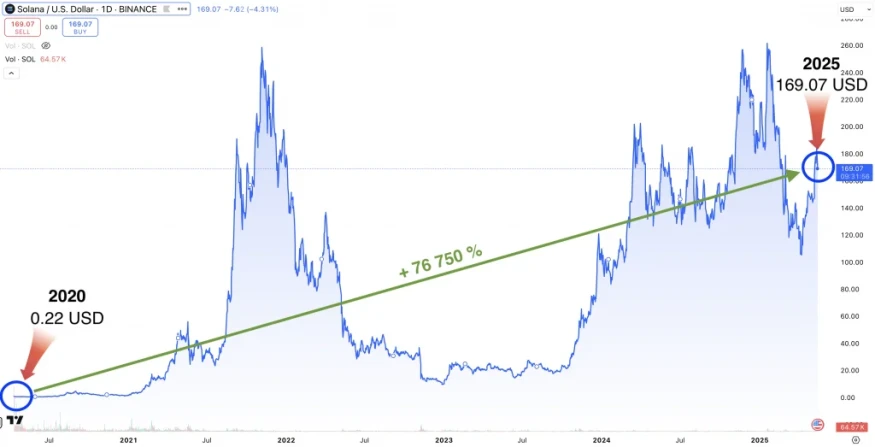
(Image source: TradingView – Solana price)
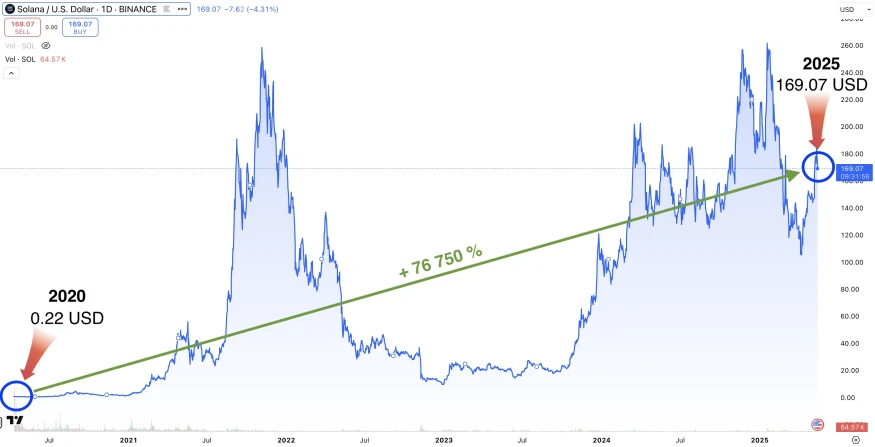
The chart above shows how Solana’s price has developed since its introduction in 2020. At the public auction in March 2020, the price was USD 0.22. By mid-2025, SOL was trading at USD 169.07. That represents an impressive increase of 76,750% from the auction price.
Solana statistics and analysis
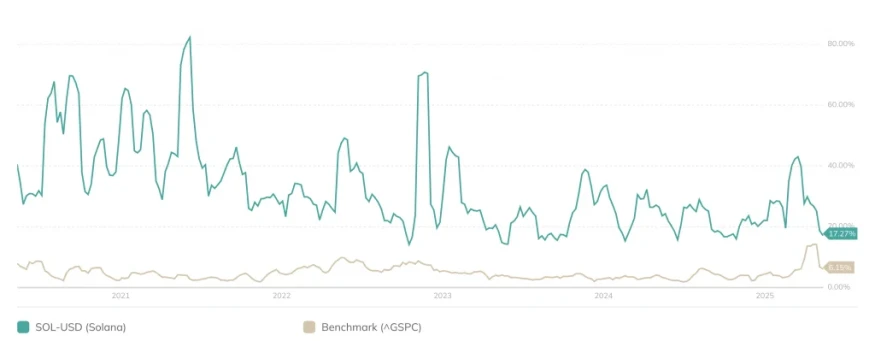
(Image source: TradingView)
Historically, Solana’s price has been considerably more volatile than, for example, the S&P 500, an index reflecting the 500 largest companies in the US. The chart above clearly shows how the volatility of both SOL and the S&P 500 has varied significantly since 2020. In mid-2025, SOL’s volatility stood at 17.27%, while the S&P 500’s was 6.15%.
Solana valuation and returns
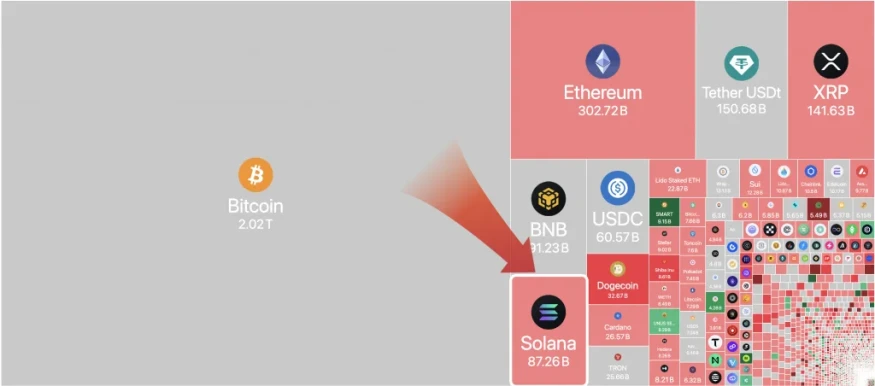
(Image source: TradingView)
Over the years, Solana has established itself as one of the most sought-after cryptocurrencies. The image above highlights its market position compared with other digital currencies. In mid-2025, Solana ranked as the 6th most valuable cryptocurrency. Its market capitalization at the time was USD 87 billion.
What is Solana?
Solana is the name of a blockchain whose development began in 2017. The blockchain’s cryptocurrency, SOL, was launched in March 2020 by the Solana Foundation. Solana is known for its technical architecture and its combination of PoS (Proof of Stake) for consensus and PoH (Proof of History) to verify the order of events. This contributes to scalability and low transaction costs, which vary with the SOL price and any priority fees.
How is Solana used?
SOL is used to pay for transactions on Solana, which has a target block time of around 0.3 seconds. The cryptocurrency is also used for staking, as the blockchain uses “Proof of Stake”. Solana is also used for dApps, smart contracts, games, DeFi and NFTs.
Why buy Solana?
Buying Solana gives you exposure to an extraordinary technology. Solana is a technically complex blockchain that was among the 10 largest blockchains by market capitalization in mid-2025. The blockchain works in many ways like Ethereum and Tezos. Those who consider Solana better than earlier smart contract platforms often point to its greater speed, efficiency and scalability.
Solana price history
SOL sold for USD 0.22 per coin in CoinList’s public auction in March 2020. Trading on cryptocurrency exchanges followed in April. Its price has been volatile from the start, with its performance largely driven by broader cryptocurrency market trends.
Below, you can see the Solana price and its historical performance from 2020 through mid-2025. Below the chart, you can also read about important historical events that have had a significant effect on the Solana price.
1.1
Solana’s historical price performance in dollars, 2020–2025
(Image source: TradingView – Solana price)
We can see that the price has both risen and fallen sharply when trading volume has increased (trading volume is shown in gray below the price). In other words, the amount of Solana bought and sold during the period. This pattern is particularly clear around September 2021 and February 2022, when trading volume temporarily increased.
1.2
Historical events that have affected the Solana price
The following are examples of some of the most significant historical events that have affected the Solana price.
March 2020 – SOL sold for USD 0.22 per coin in CoinList’s public auction. Trading on cryptocurrency exchanges followed in April.
May 2021 – A sudden crash in the crypto market this month caused the Solana price to fall sharply. Many attribute the decline to Chinese authorities speaking negatively about crypto, alongside Elon Musk tweeting that Tesla would no longer accept bitcoin payments.
August 2021 – The month when almost all cryptocurrency prices rose significantly as demand for bitcoin increased. Bitcoin’s strong market dominance and rising price carried over to other cryptocurrencies, whose valuations began to climb. The chart above shows the Solana price rising from around USD 25 to just over USD 250 between August and November.
November 2022 – The month that shook the crypto world and Solana when one of the largest crypto exchanges, FTX, filed for bankruptcy. The company had liquidity problems after apparently mismanaging investors’ assets. At the same time, it held a large amount of Solana tokens on its balance sheet. News of the bankruptcy prompted investors to sell their Solana tokens, causing the price to fall sharply.
September 2023 – Visa announced that, together with payment processors Worldpay and Nuvei, it had added support for the Solana blockchain to send payments to merchants using the stablecoin USD Coin (USDC).
June 2024 – Investment manager VanEck submitted an application to the US SEC to list the first exchange-traded fund (ETF) linked to Solana’s price. Cboe did the same later in July.
What affects the Solana price?
Could SOL hit $1,000? – Solana:
At its core, the Solana price is driven by supply and demand among buyers and sellers. In turn, several key factors influence which group has the upper hand in both the short and long term.
2.1
News affecting the whole market

Political and economic news are among the main factors affecting the Solana price in the short term. This is because they can affect the entire crypto market, which in turn affects SOL.
For example, a number of countries, including China, have banned all crypto trading, disrupting the valuations of both Solana and other cryptocurrencies. Several well-known crypto exchanges have also collapsed, spreading fear throughout the crypto world and causing sharp falls in the Solana price.
2.2
Solana projects

In the long term, the Solana price is influenced by the blockchain’s uses. The more Solana’s ecosystem expands and becomes involved in different projects and partnerships, the larger its user base can become. This can help the price rise over time through increased demand. Solana has, for example, been used by projects such as Serum, Audius and Maps.me.
2.3
Competition
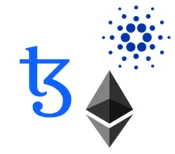
Solana competes with cryptocurrencies that offer users similar features and services. Its main competitors are Ethereum, Tezos and Cardano. Their performance and technical features can cause investors to lose interest in Solana, reducing demand and pushing the price down.
2.4
Solana’s inflation rate
Solana’s original inflation schedule started at 8% per year. Under the schedule, the inflation rate decreases by 15% per year until it reaches a long-term rate of 1.50% per year. Inflation can negatively affect the currency’s price because increased supply can put downward pressure on SOL. For the price to rise, demand needs to grow faster than supply.
2.5
Trends

The Solana price is significantly affected by trends in the crypto market. Demand for Solana and other cryptocurrencies has varied over different periods. For example, many cryptocurrency prices rose as more people wanted to own and trade them in 2021 during the COVID-19 pandemic.
When should I buy and sell?
Knowing exactly when to buy or sell is difficult. Like many other cryptocurrencies, Solana is a highly volatile asset. This means that its price can change quickly over a very short period. It is not unusual for its price to change by 10–50% in just a couple of weeks.
When you start buying and selling depends partly on whether you intend to buy Solana for short-term trading or view it as a long-term investment.
3.1
Investing in Solana in the short term
Investing in Solana in the short term requires a basic understanding of technical analysis and fundamental data. With technical analysis, you can try to anticipate future price movements by using historical data and applying technical indicators.
1. Technical analysis:
Technical analysis involves studying and analyzing price charts and market patterns to identify herd behavior. This is done using technical indicators that can point to future price movements and trends.
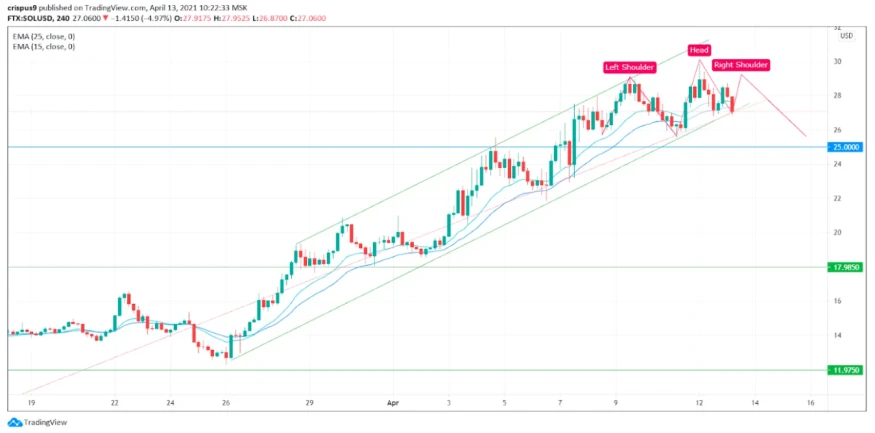
Example: In the image below, you can see how a trader uses EMA (Exponential Moving Average) together with technical candlestick patterns to find entry and exit points for Solana. We can see how the trader has identified the “Head-and-Shoulders” pattern, which indicates a reversal in the underlying market trend.
(Image source: TradingView – Solana price)
2. Fundamental analysis:
Fundamental analysis can be used for short-term trading by analyzing economic data and news. The method involves analyzing quantitative data, such as figures, statistics and forecasts, alongside qualitative data, such as news, competitive advantages and customer behavior. You then draw a conclusion about whether to make an investment.
Example: In early November 2022, FTX collapsed following a CoinDesk report alleging that the company had potential leverage and solvency problems (when borrowers cannot repay their loans).
At the time the report was published, the company held a large amount of Solana tokens on its balance sheet. News of the bankruptcy prompted investors to sell their Solana tokens, causing the price to drop sharply by around 50% (see image below).
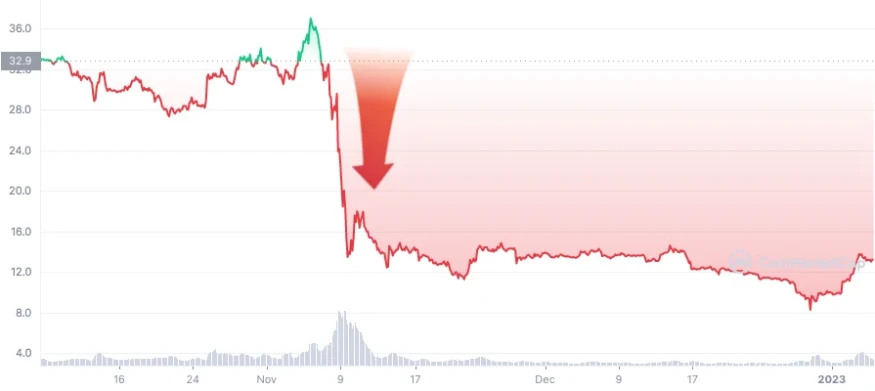
(Image source: Coinmarketcap – SOL price)
3.2
Investing in Solana in the long term
In addition to the short term, you can also invest in Solana for the long term. You should mainly consider a long-term investment in Solana if you strongly believe in its underlying technology and what makes it unique.
Solana’s technology differs from that of its competitors and attempts, among other things, to address the blockchain “trilemma”. The blockchain trilemma concerns finding a technical solution that offers sufficient security, scalability and decentralization.
In terms of its technical features, Solana differs from its competitors in the following ways:
Proof of History – Solana uses PoH (Proof of History), an addition to the “Proof of Stake” mechanism the blockchain uses for nodes to reach consensus. PoH contributes to scalability and low transaction fees, which are paid in SOL and can vary.
Block time – Solana stands out for its efficiency, with a target block time of around 0.3 seconds. Compare this with bitcoin, for example, whose blockchain creates a new block only about every ten minutes.
Scalability – Solana’s original whitepaper describes a theoretical capacity of around 700,000 transactions per second. This is not its measured operating capacity, which varies with factors such as transaction type and network load.
Transaction costs – Other blockchains have been criticized for making transactions too expensive. Solana has used its technology to keep transaction fees low. The cost in dollars depends on the SOL price and any priority fees.
Programming language – Solana uses the programming language “Rust”. It is very powerful and opens up considerable possibilities for creating different smart contracts.
Where can I trade Solana?
How to buy solana on Coinbase | Beginners tutorial:
Solana can be traded in forms other than the cryptocurrency itself. You can also gain exposure to Solana through CFD contracts or certificates.
4.1
Coinbase
Overview:
• Founded: 2012
• Number of users: 108 million verified users (third quarter of 2022)
• Trading option: The SOL cryptocurrency
About Coinbase:
Coinbase is a publicly listed US company whose trading platform lets you trade the SOL cryptocurrency directly. It is a reputable exchange that we recommend to people interested in direct exposure to the cryptocurrency.
The advantage of trading actual cryptocurrency is that you own the coins and can transfer them to your own wallet. However, Coinbase may restrict or delay withdrawals. You also pay no annual fee, which can apply when trading cryptocurrency certificates.
How to invest in Solana
To start trading Solana as a cryptocurrency, you first need to open an account with a crypto exchange. The most popular one on our website is Coinbase. Start by creating an account and verifying your identity.
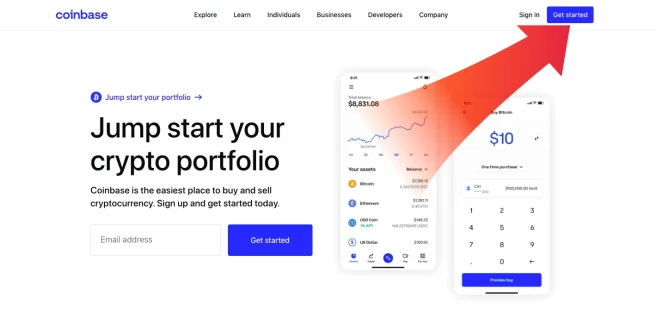
1. Create an account
To create a Coinbase account, visit its website. Click “Sign up” and fill in your details →
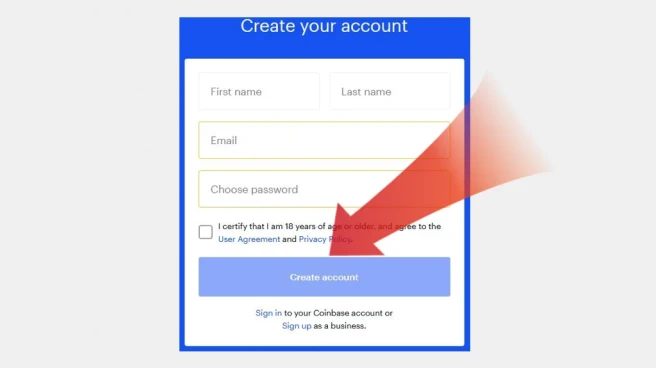
2. Enter and verify your email address
The next step is to enter and verify your email address. Choose a password, enter your first and last name, and verify your phone number by following the instructions →
3. Verify your identity
Coinbase requires all customers to verify their personal details and documents. This is done during registration, when customers must enter their personal details and upload a copy of a valid ID document. Once verification has been approved, you can move on →
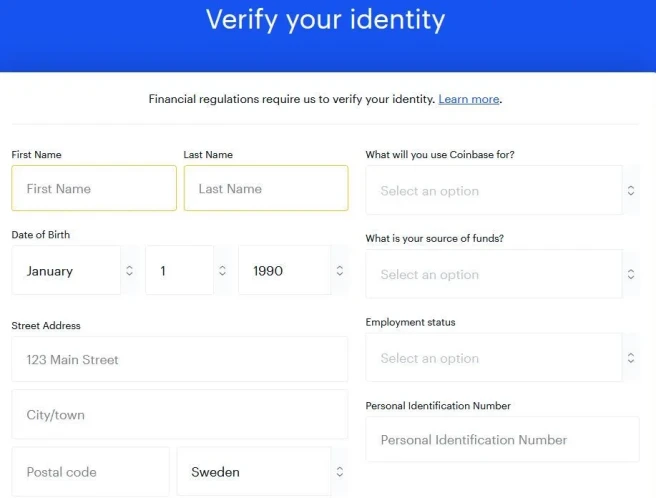
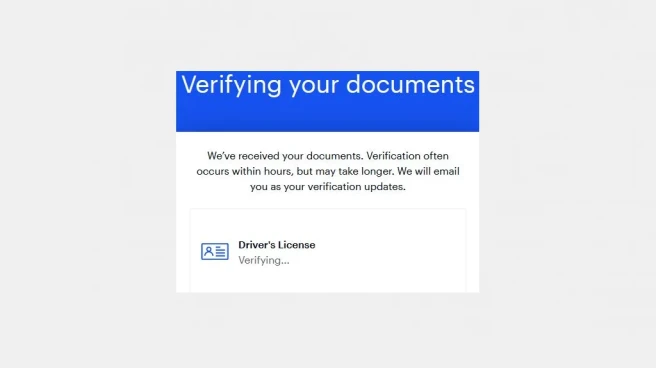
4. Deposit money
Go to “Settings”, then “Payment Methods”. Click “Add a payment method” and choose an available payment option. Cards can be used for direct purchases, while deposits by bank transfer may take longer →
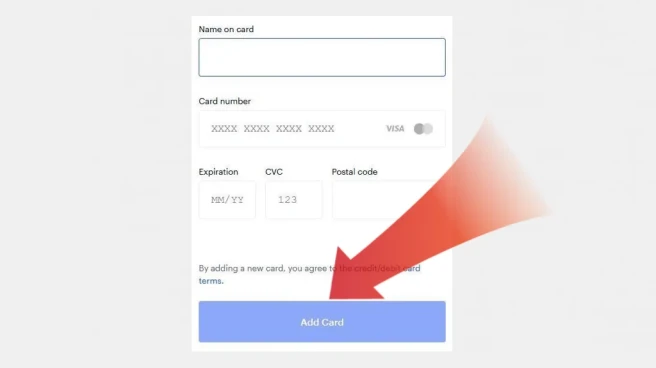
Step 5. Buy Solana
To buy Solana, click “Buy”. Select Solana, the amount you want to spend and your payment method. Check the details under “Review order”, then complete the purchase with “Buy now” →
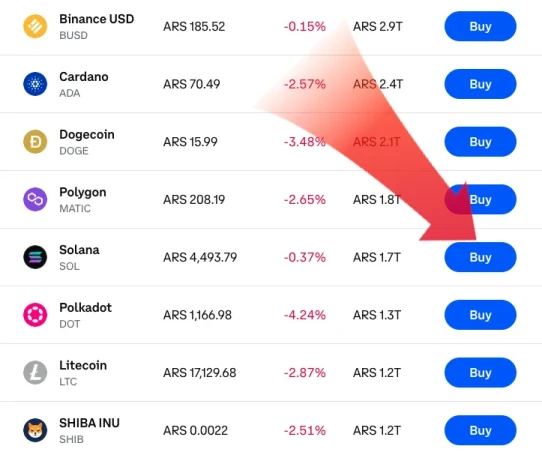
We’re done, well done!
The blockchain’s future
Exploring The Solana Ecosystem – Top 8 projects on Solana:
Solana is now one of the most valuable, market-leading cryptocurrencies. The network’s scalability, high speed and low transaction fees make Solana one of the most obvious choices for NFT-based decentralized applications (dApps).
6.1
Solana and its future
However, Solana constantly faces competition from other cryptocurrencies, such as Ethereum, Tezos and Cardano, that have similar features and technology. The blockchain’s future mainly depends on two things:
Competition – How it measures up against competitors with similar technology, such as Ethereum and Cardano.
Projects – The types of projects and partnerships it takes on to strengthen the network and increase use of the blockchain.
6.2
Projects in the Solana ecosystem
Solana has previously been involved in projects such as Serum, Audius and Maps.me. It continues to form new partnerships and take on new projects to increase use of the blockchain and compete with other cryptocurrencies. Below, you can read about a few examples of projects that have used Solana’s blockchain.
1. Mango Markets
Mango Markets was a decentralized trading platform that offered services including loans, credit and leveraged cryptocurrency trading. The platform announced that it would shut down in February 2025.

2. Orca
Orca is one of the largest decentralized exchanges built on Solana’s blockchain. Founded in 2021 by Yutaro Mori and Grace Kwan, the platform is an AMM (Automated Market Maker) that takes full advantage of Solana’s fast transactions and low fees.
The trading platform was developed before Solana began attracting wider attention in the crypto world. It was built on Solana to reduce the high fees often associated with transactions in Ethereum-based applications.

3. STEPN
STEPN is a WEB3 lifestyle app created in August 2021 by Yawn Rong. The app builds on the “play-to-earn” concept but creates a new category called “move-to-earn”. This category combines elements of a game with fitness software.
The app aims to transform the fitness sector. By buying a pair of NFT sneakers and installing the app and a wallet, you can start earning tokens while out jogging or walking.
The number of tokens you can earn depends on how far you walk or jog and which NFT sneakers you own. Users can collect points and compare their performance on a leaderboard. In this way, STEPN encourages a healthy lifestyle.
There are three ways to gain exposure to Solana:
Cryptocurrency – Buying the cryptocurrency directly means that you own SOL. Buy SOL on Coinbase.
CFD contracts – These let you gain exposure to Solana’s price movements without owning the underlying asset.
Certificates – These let you gain exposure to Solana’s price movements without owning the underlying asset.
The Solana price is volatile and mainly affected by overall market demand. Demand is influenced partly by economic and political news and decisions, market trends and Solana’s long-term projects.
Solana attempts to address the blockchain “trilemma” by combining several technical solutions. The trilemma concerns achieving high security, scalability and decentralization without compromising the quality of any of them.
Solana is the name of a blockchain. It uses PoH (Proof of History), an addition to the “Proof of Stake” mechanism the blockchain uses for nodes to reach consensus. SOL is the name of the blockchain’s cryptocurrency.
Here on our price page, you can see the Solana price in USD in real time (Solana to USD). The page also has a SOL price chart and trading volume data.