Web3, or Web 3.0, is the internet of the future. An internet where products and services largely live on blockchains instead of in the databases of tech giants. This means digital assets can be owned just like physical assets – something that isn’t possible to the same extent today. This ultimate guide contains 4,000+ words and 4 videos.
Learn everything about Web3, digital assets and how you can invest in this technological innovation.
Navigate by clicking a chapter on the left-hand side.
What is Web3?
What is Web3? – Harvard Business Review:
Web3 is often described as “the next generation of the internet”, because of the enormous changes the technology brings. Web3 is a vision of a next-generation internet in which users own their data, their digital assets and their identity.
The technology is built on blockchains, smart contracts and crypto wallets instead of Big Tech’s servers. Web1 let us read, Web2 let us write and share – Web3 also lets us own.
The internet’s 3 eras in brief
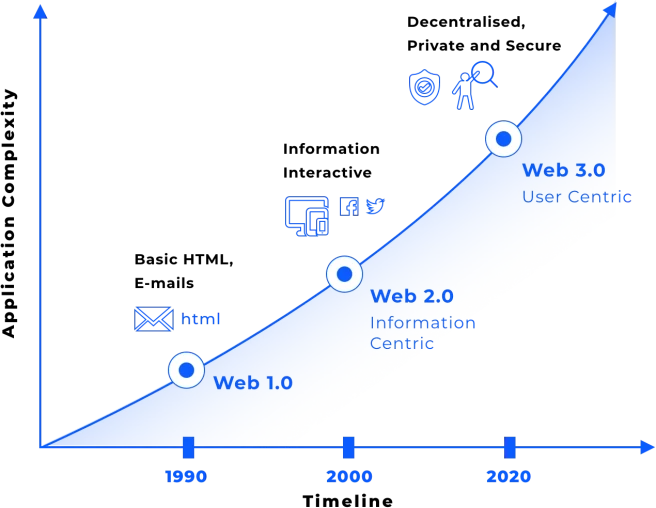
The history of the internet is usually divided into periods, or eras, based on how it has been used and which functions have been available online.
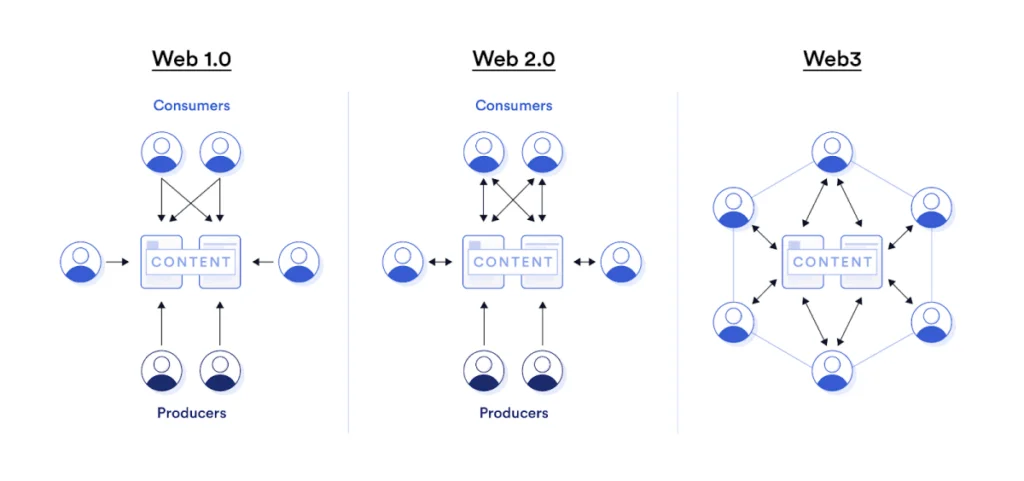
It starts with Web1, the period when the internet was mainly a source of information (one-way communication).
Then came Web2, with social media and extensive social interaction between users (two-way communication). Web2 took a big step towards “blurring” the line between physical and digital interaction. Today, for example, many people spend more time with their friends online than meeting “in real life”.
With Web3, value transfer and digital ownership also become possible. Everything from clothes and avatars to images and tickets can be bought and sold directly online. These are no longer registered on centralized servers but on blockchains.
(Image source: Money Training Club)
Blockchains are the technical solution
The technology that makes Web3 possible is blockchain. In short, blockchains are decentralized databases that no single company or state controls. Digital assets are registered on blockchains in the form of NFTs and cryptocurrencies and can therefore be personally owned.
Blockchains are often associated with bitcoin and other cryptocurrencies, but the technology is now used by many companies to secure the flow of information between different parties within a network. In other words, a blockchain can be used without cryptocurrencies.
How will it affect us?
Web3 blurs the line between the physical and digital worlds by adding an extremely important component to the internet – digital ownership.
Buying a jersey in a physical store today that you could then only wear to your national team’s home games sounds absurd. Naturally, you want to decide for yourself where and when to wear it – and sell it if you no longer want it. Yet so far, that is exactly how digital ownership has worked. What you buy in a game, program or app can only be used there and can’t be resold.
(Image source: Analytics Vidhya)
With Web3, you become the owner instead – for real. Digital ownership also creates entirely new markets, functions and services online, forming a kind of digital parallel society where everything from new professions to public services emerges.
If you want to dig deeper, we recommend the Ethereum Foundation’s introduction to Web3 on ethereum.org.
Investing in Web3
Investments in Web3 can be divided into technical infrastructure, means of payment and digital assets. Examples are presented below in the form of stocks, funds, cryptocurrencies, digital assets and DeFi.
Technical infrastructure – Tech stocks
Companies developing parts of Web3 include:
Roblox – One of the world’s largest gaming platforms.
Microsoft – Software development.
Meta Platforms – Formerly Facebook, which by its own account is set to build its own metaverse.
Unity – Cross-platform game development engine.
Amazon – The world’s largest e-commerce platform.
Apple – Mobile and tech.
Samsung – Mobile and tech.
Coinbase – Cryptocurrencies.
Block – Payment solutions.
Funds and similar
1. Metaverse Portfolio
The trading platform eToro offers trading in themed portfolios. These are similar to funds, since a portfolio consists of shares in several different companies. The Metaverse Portfolio gives you broad diversification across the industry.
* eToro is a multi-asset investment platform. The value of your investments may go up or down. Your capital is at risk.
2. Go Blockchain
The Swedish equity fund Go Blockchain invests in companies that primarily develop blockchains or are strongly expected to benefit from this technological innovation. Since blockchain technology is a prerequisite for Web3, investing in the fund can partly be an investment in Web3.
Means of payment – Cryptocurrencies
The basic premise of Web3 is that information is handled on decentralized blockchains. Everything from games and digital worlds to payments can be built and carried out on blockchains. All transfers of means of payment are expected to take place using various cryptocurrencies.
One way to invest in a growing Web3 is to buy cryptocurrencies that you expect to see rising demand for. Examples of cryptocurrencies include:
1. Bitcoin
The world’s largest cryptocurrency. Often seen as “digital gold”. Bitcoin was created in 2009 by an unknown person or group under the pseudonym Satoshi Nakamoto.
2. Ether
The cryptocurrency used on the Ethereum blockchain. It is used to pay for transactions such as payments, transfers of digital assets or deploying smart contracts.

3. Enjin
A cryptocurrency often presented as “the gaming currency”. Enjin is a blockchain and NFT platform, and ENJ is its native cryptocurrency.

4. Sand
The cryptocurrency used in the metaverse world The Sandbox. The project has several well-known investors. Its cryptocurrency, SAND, is used within its own metaverse.
5. Mana
Decentraland has a lot in common with The Sandbox. It is a digital world (metaverse) where users are expected to build their own communities. In this digital world, artists can hold concerts and museums can host digital exhibitions, for example. The venerable auction house Sotheby’s has a virtual gallery in Decentraland.
Digital assets – NFTs
Just as you can invest in real estate, art, music rights and loans in the physical world, similar investments can be made within Web3. The investment options will increase sharply as the new digital world develops.
Today there are, for example, NFTs that represent art, in-game items, tickets and plots of land in digital worlds. But much is still at an experimental stage, so these investments should be considered high risk. Examples of well-known NFTs:
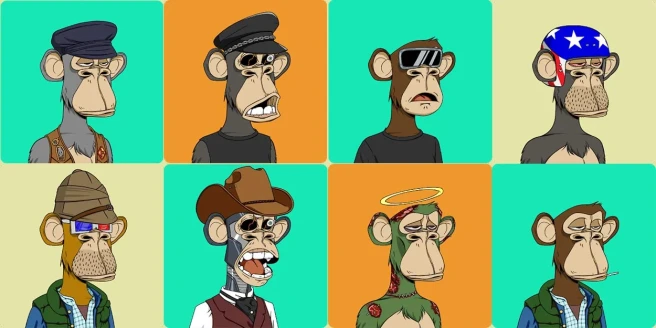
Bored Ape Yacht Club – Bored Ape Yacht Club is an NFT collection on the Ethereum blockchain. It has received a great deal of attention because a number of celebrities have invested in and own an NFT from the collection.
NBA Top Shot – NBA Top Shot is classic trading cards – but in digital format. Each card shows a highlight from the American basketball league.
Land in The Sandbox – The Sandbox is one of the largest metaverse projects. The digital world consists of a fixed number of land plots on which users can build everything from games and houses to digital concert venues.
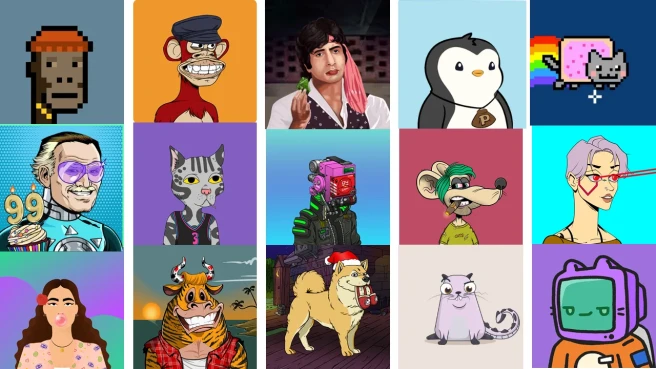
DeFi – Swapping, lending and saving
Blockchain technology brings more digital ownership. The more people own digital assets, the more trading will take place. This covers everything from swapping cryptocurrencies for one another to “digital flea markets” where card games, outfits and emojis are bought and sold.
Several decentralized exchange and financial services (DeFi) offer investment opportunities, such as:
Renting out data storage
Liquidity pools
Mining

Note: Investments in cryptocurrencies, NFTs and Web3 companies are high-risk investments. Their value can fall sharply and quickly, and you can lose the entire amount invested. Never invest money you can’t afford to lose.
From Web1 to Web3
The future or all hype? – Web 3:
The easiest way to explain Web3 is to look at how the internet has developed – stages often referred to as Web1, Web2 and Web3.
Web 1
Web1, or Web 1.0, describes how the internet was built and used during the 1990s. During this decade, more and more individuals and businesses gained access to the internet, and websites were primarily used as information portals. The internet was used mainly to search for information, and websites were built accordingly.
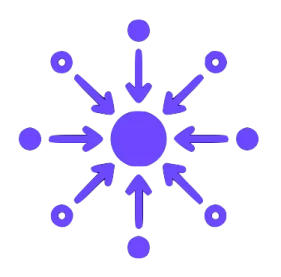
Even though online stores became more common, it can still be seen as “one-way communication”, where visitors consumed the information available. Creating a website, or publishing material online in any other way, was complicated.
Web 2
Web 2 is the next stage of the internet’s development. Instead of simply providing information, the internet became a platform for interaction. Social media, blogs, vlogs and podcasts created an entirely new way of communicating.
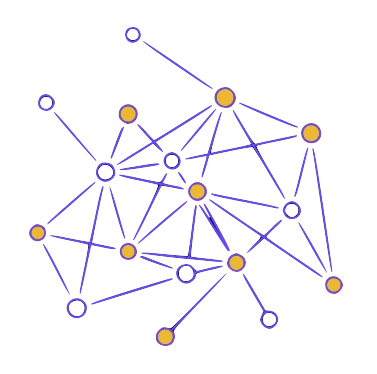
It was no longer just about “consuming” information but also about creating content, publishing and interacting.
This happened on platforms created mainly by large international companies such as Facebook, Google, TikTok and so on. As a result, it is these companies that in reality own the content created on their platforms.
Web 3
The big difference between Web2 and Web3 is ownership. Through dApps and blockchain-based services, it is no longer the big tech companies that own everything created and published online. Instead, creators can own their own content and, for example, sell the rights, rent them out or use their digital assets in other ways.
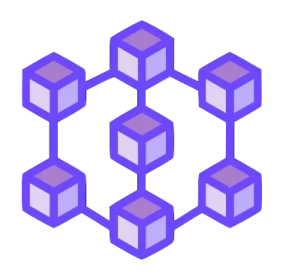
Some of the cornerstones of Web3 are described in more detail below:
1. Internet on blockchains
Information can be stored on blockchains instead of in individual companies’ databases. This is the foundation of Web3, and it is these blockchains that make it possible to own digital assets.
2. Decentralized information
With Web 2, all information is stored in companies’ giant databases. They have ownership and can, for example, deny a person access to the service or censor it. This also means that some people are excluded from these platforms.
Example: One example is when Donald Trump was banned from Twitter (now X) in 2021. Many may see it as positive that these social platforms “take responsibility”, but at the same time it means censorship on their terms.
What happens when platforms are controlled, or heavily influenced, by undemocratic states? Web 3 could instead mean that information is available in a decentralized way on blockchains, so that no single centralized party can control access to it.
3. Ownership
What is revolutionary about blockchains is that they enable digital ownership without control by a central party.
Digital ownership of cryptocurrencies and NFTs already exists today, but with a fully developed Web3 it could cover everything from contracts and agreements to subscription services and other digital products and services.
4. Secure digital transfers
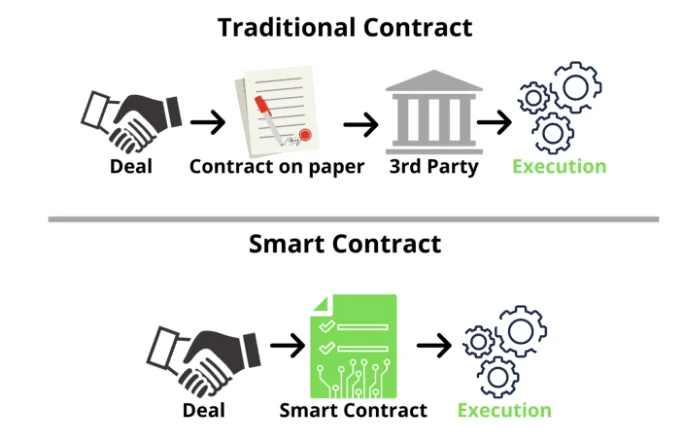
Buying and selling digital items has so far involved a high level of risk. The buyer and seller need to trust each other for the purchase to go through. The only way to make secure payments has been to use a trusted third party, such as Klarna, that takes on the risk.
(Image source: P2P Market Data)
But with blockchains, smart contracts can be created that transfer digital assets automatically – without the parties even needing to know who the counterparty is.
5. 3D interaction
With digital worlds and VR headsets, Web3 is expected to offer interaction in 3D. This is nothing new, however, as 3D has long existed in the gaming sector, among others.
Web3 is, however, expected to make it more common and spread it to more industries (read more about digital worlds in the “Metaverse” section below).
6. Advertising and personal information
Many also believe Web3 will bring a new way of handling personal information. Anyone browsing the web today shares a huge amount of information with the tech giants – information they can then sell to any company, which in turn creates personalized advertising.
With blockchain technology, this could change so that you decide which information should be public and which should not.
Comparison table
There’s a lot of information to take in when reading about the differences between Web1, Web2 and Web3. That’s why we’ve summarized the most important differences in the table below.
Web1, Web2 and Web3:
Internet evolution | Web1 | Web2 | Web3 |
|---|---|---|---|
Content | Read | Created and shared | Created, shared and owned |
Technology | HTML | Multiple programming languages | Blockchains |
Digital worlds | No | Controlled by companies | Decentralized alternatives |
Data storage | Individual servers | Cloud services and tech giants | Blockchains secured by users |
Payment | To companies | To each other – via companies’ platforms | Directly to each other with cryptocurrencies |
Governance | Individual companies | Individual companies | Companies and decentralized organizations |
The building blocks of Web3
Until now, there have been clear differences between the physical and digital worlds, mainly because digital ownership has barely been possible. But this line becomes more blurred as an “internet of blockchains” develops, digital ownership emerges and financial services also become decentralized.
In the future, the digital economy could be structured just like the economy of a society. The only difference is that everything is digital. People will buy and sell things to each other, borrow against their property, give gifts and take part in sports competitions… In other words, we won’t behave differently, but much more of it will happen digitally.
Four of the building blocks of Web3 are described below.
Cryptocurrencies
On blockchains, cryptocurrency is used to pay for products and services, but also to carry out transactions on the blockchain itself. The various cryptocurrencies have their own use cases and economic ecosystems. The largest cryptocurrency is bitcoin, and many believe bitcoin will be treated as “digital gold” within Web3 – like the trunk of a tree whose branches are other cryptocurrencies with unique properties.
Cryptocurrencies make Web3 accessible to people all over the world – regardless of gender, age, political views or nationality. Many people are still excluded from today’s financial system.
Compared with today’s society
All societies use money to facilitate trade and economic growth. Just as banknotes, coins and bank money are used in society today, cryptocurrencies will be used in the digital world – Web3.
DeFi
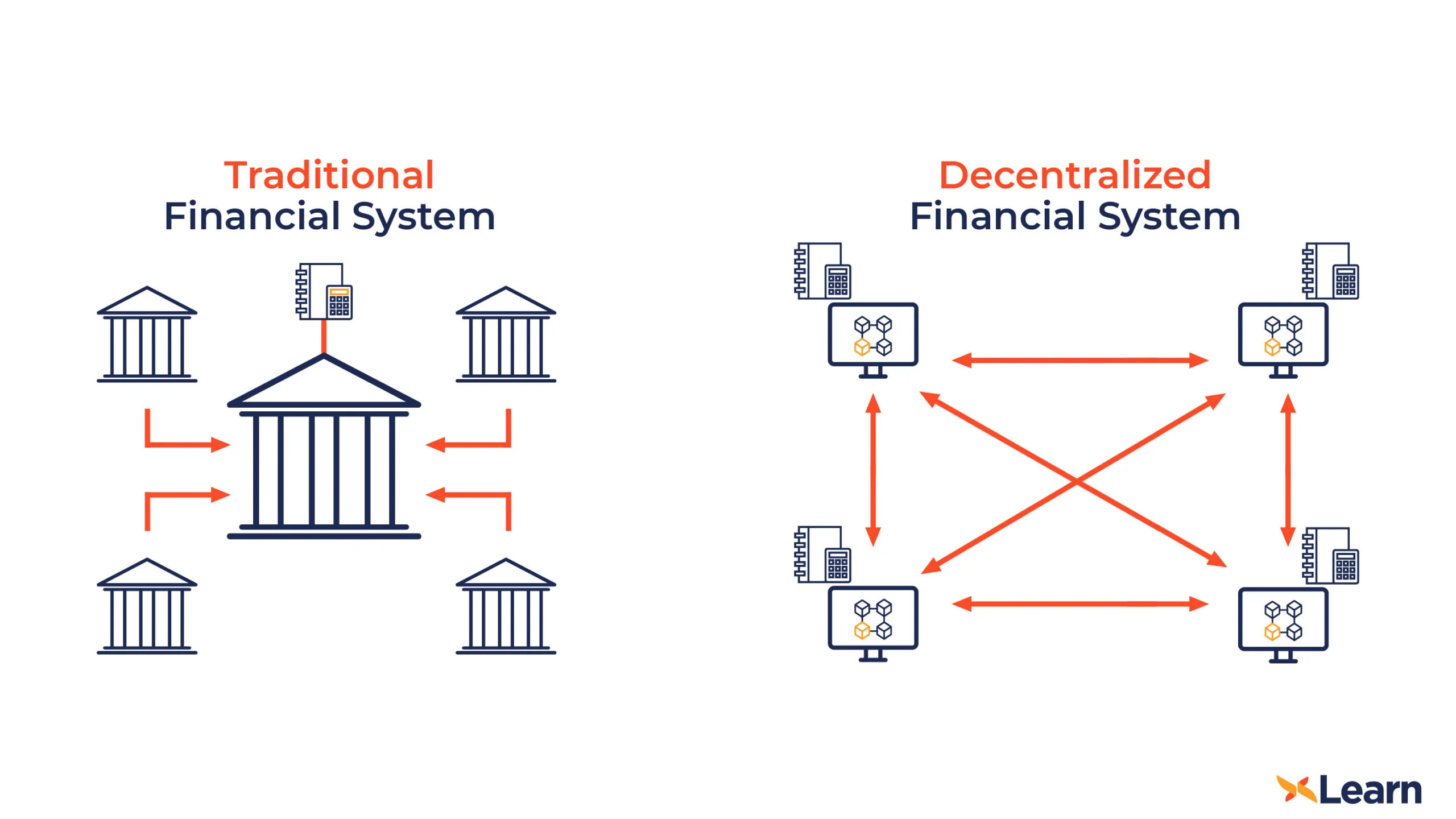
DeFi stands for “decentralized finance” and refers to financial services that are available on blockchains and are therefore not controlled by a centralized party.
These services are built on smart contracts and mean, for example, that cryptocurrency can be lent out, borrowed against or swapped via these automated contracts. The parties don’t need to trust each other or go through a centralized party (such as a bank) when making deals involving digital assets and cryptocurrency.
Compared with today’s society
Trade between two people can take place directly with cash, without any third party being involved: one person pays and the other hands over the goods. The parties trust each other because they are in the same physical place.
Until now, this has been impossible in the digital world, since the parties have had to trust each other – or go through a third party. Cryptocurrencies and smart contracts solve that problem.
NFTs
NFTs are unique digital assets whose ownership is proven using blockchain technology. They are often associated with digital art, but they can be anything from concert tickets and contracts to proof of digital subscriptions. One industry where NFTs have grown extremely fast is gaming.
In gaming, an NFT can be a sword, a car or a playing card – various items used in games. But instead of being registered in the game company’s database, they are registered on a blockchain. This makes it possible to transfer them to someone else, sell them on marketplaces and so on.
Compared with the physical world
Art, clothes and jewelry are just a few examples of how we humans express our personality and show who we are. In the same way, digital forms of expression can be created with NFTs.
To simplify a little, anything that can be created digitally can be owned as an NFT. The difference from cryptocurrencies is that an NFT is unique (non-fungible). In other words, supply is clearly limited. NFTs also work in a way that more closely resembles physical objects.
Tip! Learn more about NFTs here.
Metaverse
The metaverse is usually described as virtual worlds (societies) where users can interact with each other in much the same way as in physical societies. Exactly what the metaverse is, or will become, is however highly uncertain. There is no precise definition of the term, and many companies have used “metaverse” as a buzzword to generate more interest in their products and services.
It is very often said that the metaverse will involve interaction through VR and 3D. That would mean conferences, sports events and more could be experienced in 3D – without being physically present. A larger video game can also be classed as a metaverse, provided the in-game items are NFTs and the players can interact with each other and pay with cryptocurrency. A small digital society with its own rules and terms.
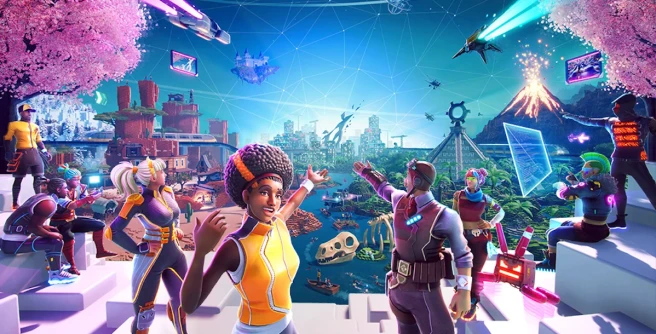
(Image source: Crayta)
Compared with the physical world
Today, people socialize at each other’s homes, at the pub or at a football match, for example. Each place has its own social rules, status symbols, means of payment and ways of interacting. In that sense, they can be compared to small, unique metaverses.
This digital world is to have its own economy, content and experiences, where everything that happens in it takes place “live” / Nicklas Andersson, Avanza.se
Example – How does Web3 work?
If you buy a physical item (such as a phone), you own it. You can use it, lend it out, sell it or throw it away. As the owner, you have full control over that property. You also decide for yourself who you want to talk to and what information you want to share about yourself.
If you buy a digital product in Web 2, however, you don’t have full ownership of or control over the product. If you buy a hammer in the game Roblox, it is registered on Roblox’s servers, and you can’t take it out of the game or remove it from circulation. If you buy a digital image, it is very difficult to prove its authenticity and that you are the sole owner.
All payments also have to go through a third party (the bank), which means transactions to users in other countries are slow, expensive and sometimes difficult. As shown above, companies are in control, whether it concerns ownership, transactions or the handling of information.
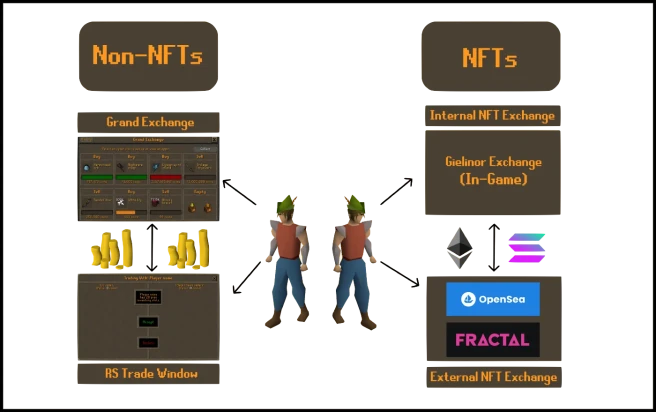
(Image source: uxdesign.cc)
Web3 combines the physical world’s ability to truly own property with borderless digital interaction. You truly own images and avatars and can resell them when you no longer need them.
You can make payments and transfers without going through a third party, and decide which information the tech giants get access to.
Is Web3 the future?
Why some see Web3 as the future of the Internet:
Web3 is the future – but what that future will look like is extremely hard to predict. Just as it was impossible to predict the future of the internet in the early 2000s, it is difficult today to tell how Web3 will develop.
At the same time, Web3 may be a so-called buzzword that some companies use simply to show that they are at the forefront of technological development.
The technology is already here
The technical foundations of Web3 are already in place, with blockchain technology enabling digital ownership of NFTs and cryptocurrencies.
Initially, several tech giants invested heavily in Web3, including Meta Platforms and Microsoft. In recent years, however, several of them have chosen to scale back their efforts. According to a December 2025 Bloomberg report, Meta – which changed its name from Facebook in 2021 to focus on the metaverse – was planning to cut the budget for its metaverse business by up to 30% in 2026 and devote more resources to AI.
The core technology of Web3 – blockchains, smart contracts and crypto wallets – continues to develop, however. Below you can see statistics on the number of monthly active Web3 developers since 2015.
Active developers 2015–2026:
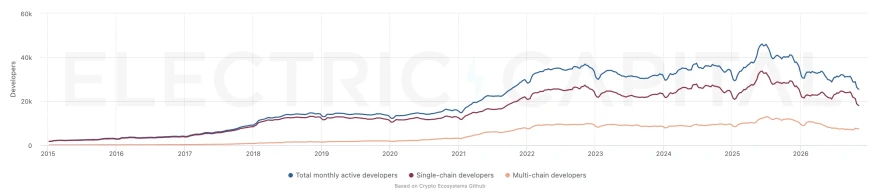
(Image source: Developer Report)
The trend is already here
Digital trends also suggest that Web3 will become the internet of the future. This is especially evident in the gaming industry, where people online happily spend time and money on appearance and status symbols that exist only digitally – in the same way money is spent on clothes, jewelry and vehicles in the “real” world.
The chart below shows the market cap of non-fungible tokens since 2020, based on figures from CoinGecko. The trend has been downward in recent years.
NFT market cap 2020–2026:
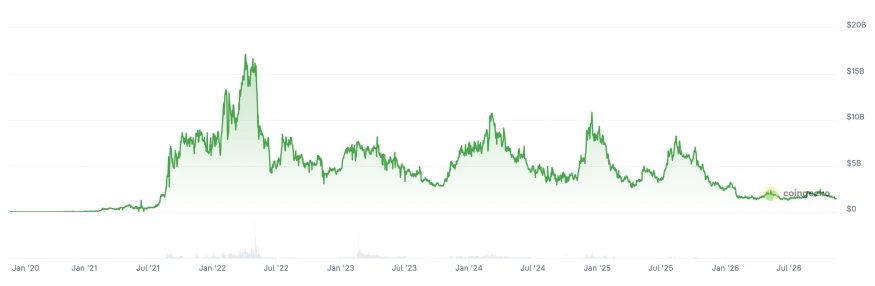
(Image source: CoinGecko)
In Fortnite and Roblox, for example, players spend very large sums on so-called skins that give no gameplay advantage. The way people behave in the physical world is increasingly moving into the digital world. From there, the step to small metaverse worlds isn’t far.
Web3 is the technology that underpins this development. The metaverse, NFTs and cryptocurrencies are building blocks of the new internet that is emerging. An internet 3.0.
Hard to define
Web3 is still very hard to define. Its development can be compared with the internet in the mid-1990s. The foundation, the internet, was in place, but both the technology and its usability needed to develop before it became a natural part of society.
New technology often means “buzzwords”
Web3 is also a “buzzword” – a word that gets a lot of media attention and that companies like to use in both marketing and company presentations. When major technological innovations emerge, it is very common for them to become buzzwords. In the 1990s, every company was supposed to be working with “IT” – regardless of industry and expertise. That’s where the big investments were made, and every newspaper wrote that IT was the future. It ended with the dot-com crash…
Admittedly, the internet did revolutionize society, but a great many of the companies that emerged in the 1990s went bankrupt. A more measured view of IT followed, and the digital infrastructure was allowed to develop gradually.
So in the short term, Web3 can be seen as a buzzword – but in the long term, Web3 is the next step in the internet’s development.
Criticism of Web3
How Ethereum and Bitcoin are trying to go green:
Web3 is a vague concept, and it is hard to predict exactly what the third generation of the internet will look like. This also means that some of the criticism may be justified – while other criticism may be entirely irrelevant in the future. Here are some of the criticisms of Web3.
The environmental aspect
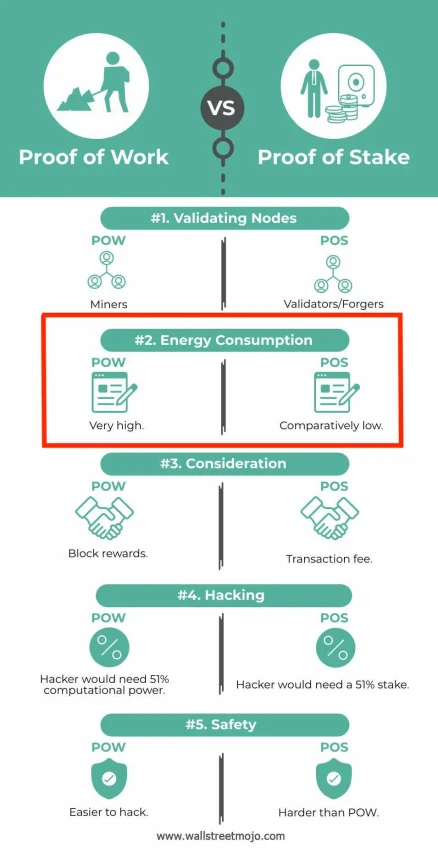
Web3 depends on blockchains, and several of them, including bitcoin, are based on proof-of-work. This requires a lot of energy to run the blockchains, which has drawn considerable criticism. Some consider high energy consumption to mean a larger environmental impact.
In its defense, many blockchains instead use proof-of-stake or other validation methods, which require significantly less energy.
Tax
How should tax be paid on an NFT? How should tax be calculated when cryptocurrencies are used for payments across several different blockchains? The answers depend on the tax rules in the country where you are tax resident.
For NFTs, the tax treatment can depend on what kind of asset the NFT represents. Under the EU directive DAC8, crypto-asset service providers in the EU must also collect data on their customers’ transactions from 2026, with the first reporting to tax authorities in 2027. What remains complicated is calculating your gains when you have made many transactions across several blockchains.
Laws
Who is responsible for a database that is decentralized and where people can interact from all over the world? Unlike the way states can impose requirements on Facebook and Google, difficult legal questions may arise when private individuals can own property digitally.
This is because there is no longer a tech company that can be held accountable. Blockchains also enable anonymous ownership, which makes things even more complicated.

In its defense, regulation has already come a long way in the EU. Since 30 December 2024, the EU’s Markets in Crypto-Assets Regulation (MiCA) has applied in full. It sets requirements for issuers of crypto-assets and stablecoins, as well as for trading platforms and custody services, which need authorization.
In each EU member state, a national competent authority is responsible for authorization and supervision. Fully decentralized services, such as many DeFi protocols, largely fall outside MiCA, however.
Is it needed…
Web3 is often described as a future internet where people socialize via VR headsets in digital 3D worlds – a world very similar to the physical one, with shops, conferences, meeting places and sports arenas. But is it needed? Is there a need and demand for even more extensive digital interaction?
In its defense, development has been heading in that direction for a long time – with a “boost” during the coronavirus pandemic. Having digital meetings, socializing on gaming platforms and paying for digital assets is already part of everyday life. The big leap will come when Web3 is established and digital assets no longer belong to tech giants but are genuinely personal property.
Pros & Cons
Pros of Web3
 Own your digital assets – Until now, digital assets have been tied to a centralized party – such as a game or a brokerage. Companies have the power to freeze your assets or close accounts. With Web3, you own your digital assets the same way you own a piece of clothing, so you decide for yourself what to do with them.The digital world becomes more like the physical one – For many young people, socializing online is as natural as meeting “in real life”. We socialize, work and have more and more of our interactions online. With Web3, ownership will also become digital, making the digital world increasingly similar to the physical one.Less need for Big Tech – The tech giants offer digital services that people all over the world use every day – but at the cost of personal privacy. This can be solved with an internet where services increasingly run on decentralized blockchains instead of centralized corporate databases.
Cons of Web3
 A long way to a complete Web3 – The potential of new technological innovations is very often overestimated, while implementing the technology takes considerably longer than many expect. So it will likely be quite some time before Web3 is the standard on the internet.Unclear legal and tax situation – With ownership, payment options and digital worlds (the metaverse), today’s laws will need to change to apply to this new technology. Just as when the internet emerged, it will take a long time for the regulatory framework to catch up.Do we need a digital world? – The harshest critics of Web3 question the need for it and argue that centralized services are necessary for control and restrictions to be possible online. An internet built on blockchain services is seen as “a lawless alternative”. Here, too, the criticism can be compared with the criticism directed at the internet in its early days.
Frequently asked questions about Web3
Web3, also called Web 3.0, is a vision for a new generation of the internet where users have more control over their data, identity and digital assets – often with the help of blockchain technology and cryptocurrencies.
Web3 is the technological development towards an internet built on blockchains, which makes it possible to own your own digital assets. This technology can be used to create digital worlds (the metaverse).
Web3 means that things on the internet can be personally owned, because they are registered on blockchains rather than in tech companies’ databases. Many also expect Web3 to result in digital societies with their own economic ecosystems.
Web3 is built on decentralized blockchains, and the means of payment on blockchains are cryptocurrencies. That makes them the most convenient means of payment, given that blockchains are used.
It’s impossible to name a specific year when Web3 will be established in society. Technological development is fast, but the concept is also vague. You can use Web3 services today – but there is a long way to go before Web3 has fully replaced Web2.
Web3 is made up of building blocks such as blockchains, cryptocurrencies, the metaverse, DeFi and NFTs. A good place to start is our guide to NFTs.
You don’t necessarily need cryptocurrency to use Web3. You can create a crypto wallet for free and explore many Web3 services without buying anything. However, if you want to make transactions on a blockchain, you usually need a small amount of cryptocurrency to pay the fees, also known as "gas fees".
Yes, blockchains themselves are very hard to manipulate, but there are other risks linked to Web3. Smart contracts can contain bugs, for example, and scams – such as phishing and fake projects – are common. So use established services, test with small amounts and never share your "seed phrase" with anyone.
In the EU, the MiCA regulation applies, which requires crypto exchanges and custody services, among others, to be authorized. In each member state, a national competent authority grants authorization and carries out supervision. How gains on crypto-assets and NFTs are taxed and reported depends on the country where you are tax resident.