

Provably fair is a system that allows you to verify how a casino game result was generated through cryptographic methods. Put simply, you do not need to just accept an outcome. With provably fair you can verify the result yourself, making sure that it's correct and trustworthy. In this guide, consisting of 2,500+ words, we explain the details behind provably fair casinos.
Learn what provably fair is, why it matters and how to choose the best provably fair casinos.
Check out our comparison table/list of provably fair crypto casinos and start playing today.
Jump to any section/chapter in the guide by choosing from the sidebar on the left side.
What is provably fair?
What is provably fair gambling? (And why provablyfair.org exists):
Imagine that you lose a round just as you raise the stakes. Was it bad luck, or might something have happened behind the scenes?
A single loss does not prove anything about cheating. However, the question is valid.
How can you verify a digital result when you can't see what's happening in the background?
Provably fair is a system that allows you to verify how a game result was generated. With the right data, you can recalculate the result afterwards and compare it with what the game displayed. In other words, you have a way to independently audit a game round.
In the context of casino games, the term “provably fair” essentially means that the outcome can be verified using cryptographic methods. For this purpose, mathematical tools are used, among other things, to detect whether information has been altered or not.
How do provably fair casinos work?
The basic idea behind provably fair is that the casino first commits to information to be used in the game. You receive a control value before playing. Later, the information behind the value is revealed, allowing you to verify both the initial commitment and the calculation of the result.
Here is how it works in practice…
1. The casino generates a secret code
First of all, the casino generates a secret code. This is known as the "server seed" and is used to calculate the game result.
Before you play, the casino displays a digital "fingerprint" of the code – a hash. This can later be used to verify that the same code was used.

2. You provide your own code
You also provide your own code, which is known as the "client seed." While it can be generated automatically, you can often change it yourself. Both your code and the casino's code are used in the calculation.

3. Each game round is assigned a number
Each game round is assigned a specific number. This is called a "nonce." This distinguishes between rounds when the same codes are used multiple times.
4. The casino reveals its secret code
Once the code is no longer in use, it becomes available to you. You can then verify that its fingerprint matches the one displayed before the game began.

5. You verify the result
Enter the codes and the round number into the game's verification tool. The tool recalculates the result, allowing you to compare it with your own game history.
Here is a practical example…

Example: A game shows a dice result of 42.17. You enter the round's details into the verification tool. If it also displays 42.17, the result matches the game's published calculation.
In some systems, you need to switch to new codes first in order to verify previous rounds. At Stake, for example, the old casino code is revealed when you switch to a new one.
Why choose provably fair casinos?
The clearest reasons for provably fair are transparency and trust. You do not have to simply accept a claim that a result is correct. If the data and the algorithm are available, the result can be verified even outside the casino's own website.
For those who value transparency, it is a valuable feature. It is particularly useful when something feels odd. A quick check can reveal whether the current round follows the published calculation.
However, it does not make a loss any less real or the next round any more promising. View provably fair as an opportunity to verify the game, and then evaluate the casino's other qualities separately.
Best Crypto Provably Fair Casinos - Top 3 sites, October 2026
Looking for the best Crypto Provably Fair casino? There are plenty of casinos and gambling sites that use cryptocurrencies. Some of them feature up to 500% welcome bonuses, 400+ free spins, and 10,000+ games.




How to choose the best provably fair casinos
What you should check | What to look for |
|---|---|
Published method | A description of the data used and how the result is calculated. |
Hash before gaming | Option to view and save the control value before it is used. |
The player's contribution | Information about how the client seed is selected and whether it can be changed. |
Revealed information | Clear instructions for when the server seed or equivalent information becomes available. |
Verification tool | A tool that supports the specific game and the algorithm in question. |
The scope of the game | Information regarding exactly which games are covered by the verification. |
Odds and payouts | Clear rules, paytables, and information about the house edge or RTP. |
Terms and conditions | Check the operator, relevant license, withdrawal rules, fees, and tools for setting gaming limits. |
Tip! At the top of this page, you can find a comparison table that shows the best provably fair crypto casinos, based on the criteria above. We regularly update the table, making sure that you get the best options.
What is SHA-256 in provably fair?
What is a Bitcoin hash and SHA-256:
SHA-256 is a so-called cryptographic hash function. It is a method that converts information – such as a text – into a long string of letters and numbers. That string is what's called a hash.
You can think of the hash as the text's digital fingerprint. If you enter the exact same text again, you get the same fingerprint. If you change anything in the text, the fingerprint will normally be completely different.
When is SHA-256 useful?
SHA-256 is useful when you want to check whether information has been altered. Below you can see a clear example of how this works in practice.
Example: Let's say that we use the text "hello" – in lowercase and without extra spaces. SHA-256 will then produce the following hash:
"2cf24dba5fb0a30e26e83b2ac5b9e29e1b161e5c1fa7425e73043362938b9824"
If we simply change the first letter to an uppercase "H" – making it "Hello" – we get this instead:
"185f8db32271fe25f561a6fc938b2e264306ec304eda518007d1764826381969"
So, we changed just one letter, yet the hash turned out completely different.
How is SHA-256 used in provably fair?
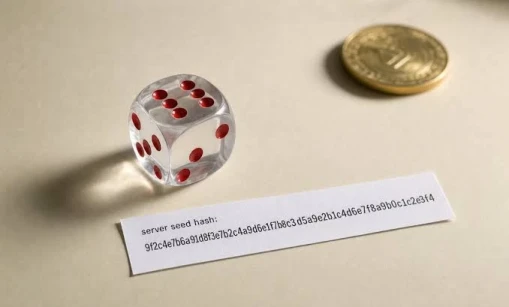
In a standard provably fair system, SHA-256 is used to verify the casino's secret initial value, known as the "server seed".
Before the game, the casino displays the hash of the initial value but keeps the value itself secret.
After the initial value is no longer in use, the casino reveals it.
During verification, you calculate the hash of the revealed initial value and compare it with the one displayed earlier.
If the values match, the revealed initial value corresponds to the casino's earlier verification value. The game's verification tool can then be used to verify the actual game result.
You do not need to understand or memorize these long strings of characters. A tool can calculate and compare them for you.
What you need to check is…
Does the revealed starting value match the previous hash?
Does the game calculation yield the same result as the one you saw?
Provably fair calculator
BitBoss’ Matt Dickson discusses provably fair gambling at CoinGeek Seoul 2019:
A provably fair system is most useful when verification is actually feasible. This is where the calculator comes in. It helps you perform calculations that would otherwise require code or multiple manual steps.
What is a provably fair calculator?
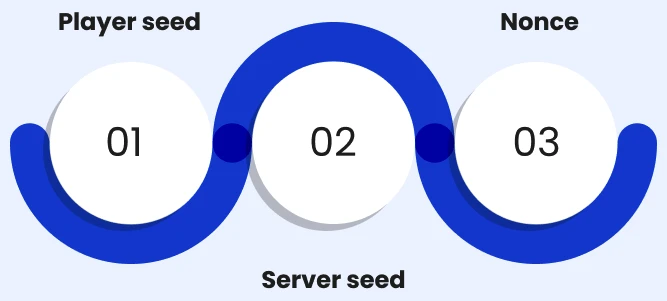
A provably fair calculator is a verification tool that recreates a game result using the data you provide. Common fields include…
the game,
the revealed server seed,
the client seed, and
the nonce.

Important: Different tools support different casinos and games. You must always check for compatibility before you begin. A tool that only calculates SHA-256 can verify a hash but lacks the rest of the logic needed to recreate the game's outcome.
How does a provably fair calculator work?
Once the casino's code has been revealed, you can usually perform the check in a few simple steps. They are shown below:
Open your game history – Select the specific game round you want to check.
Retrieve the round details – Copy the server seed, client seed, and nonce. Use the details associated with the selected round.
Open the appropriate verification tool – The verification tool must support the casino's version of the game.
Enter the details – Select the specific game and paste the codes and the round number.
Compare the results – The tool now calculates a result that you can compare with your own game history.
A practical example…
Example: Let's say that you are playing Dice and have chosen a target of over 50 to win. The game displays 42.17, which means that you lose the round. Now, you want to verify how that result was calculated.
First, you open your game history and locate the round. There, you retrieve your code – the "client seed" – and the round number, known as the "nonce." Let’s assume the number is 12. You also need the casino's code – the "server seed" – which becomes available once the casino reveals it.
The next step is to open a verification tool that supports the specific version of Dice you just played. Select the game and paste in the casino's revealed code, your code, and the number 12. The tool uses this data to perform the calculation once again.
So, if the tool also displays 42.17, the calculated result matches the one in your game history. Thus, you have just verified that the round's data produces the result shown by the game.
If the results do not match, first check that you have selected the correct game round and copied the data correctly. An extra space or an incorrect nonce can produce a different result.
For a complete check, you also need to compare the hash of the revealed casino code with the one displayed before the game. This step verifies that the code matches the casino's earlier commitment.
Provably fair vs traditional online casinos
In order to understand the difference between a traditional and provably fair casino, you have to look at how they are constructed. This is specifically the case when it comes to the possibilities of verifying the outcome of a game.
Differences in how they are structured
Traditional digital casino games
Traditional digital casino games typically use a random number generator, often referred to as an RNG (Random Number Generator). This is a computer program that generates values used by the game to, for example, select a card or determine a winning number.
As a player, you see the result on the screen, but typically not the data required to recalculate it. However, the random number generator and the game's mechanics can be audited by independent testing agencies. In the UK, for instance, such tests are mandatory for RNG-based online games before they can be offered to players.
Provably fair casino games
Provably fair casino games can also use random number generators. However, they also provide you with data that makes it possible to recalculate a past result. This makes it possible for you to compare the result in your game history.
For example, if the game displayed a specific dice value, the verification tool should yield the same value. This allows you to verify for yourself whether the result in the game history matches the game's published calculation.
How are the games checked?
Question | Provably fair casino games | Traditional casino games |
|---|---|---|
Can I check a previous round myself? | Yes, with the right data and a tool that supports the game. | No, typically you do not receive the information needed to reproduce the result. |
Can the games be reviewed by others? | Yes, for example through technical reviews. | Yes, for example by independent testing companies. |
To sum up, a traditional online casino game can be properly tested and adhere to its rules. A provably fair game primarily offers you, as a player, an additional opportunity to verify individual results. It makes provably fair casino games more transparent and trustworthy.
Pros and cons of provably fair casinos
Pros of provably fair casinos
 You can verify the results yourself – The biggest advantage with provably fair casinos is that with the right data and a verification tool, you can recreate a previous game round. You can then compare the result with the one shown in your game history, thus providing greater transparency into how individual results are generated.The check can be performed outside the casino – For some games, external verification tools and public source code are available. This allows the results to be examined using tools other than the casino's own.Greater insight into how the game works – A published description of the calculation makes it easier to understand how the results are generated. You as a player have the opportunity to review the process behind what is displayed on the screen.
Cons of provably fair casinos
 At first sight it can feel complicated – New terms such as server seed, client seed, hash, and nonce can be difficult to understand in the beginning. Even with a verification tool, you need to know which data to use, where and when.It does not guarantee a reliable casino – A verified game result does not show how the casino handles your money or withdrawals. The license, withdrawal terms, and other aspects of the operation always need to be examined separately.You need to keep track of the information – The codes and the round number must belong to the same game round. To verify the casino's prior commitment, you also need access to the hash that was displayed before the game.
Provably fair is a way to make game results verifiable using cryptographic methods. With the of provably fair a player can check previously locked data and recreate the result according to the game's published calculation. In this way, it's easyfor players to check for themselves that the result matches the original data and the game’s published rules.
No, a provably fair calculator only lets you verify past results. It cannot predict upcoming ones. It needs the original server seed, which stays hidden while it is being used. Once that seed is revealed and replaced, you can use it to check previous rounds.
SHA-256 creates a digital fingerprint, called a hash, of the server seed. The casino shows you this hash before you play, while keeping the seed itself secret. Once it is revealed, you can hash it again and compare the two fingerprints. If they match, you can verify that the casino used the seed it committed to before you played.
Yes, a verifiable result does not guarantee any win. The game's odds and payouts can still give the casino a mathematical advantage. The verification feature does not alter the value of a win or a loss.
No, not all online casinos offer provably fair games.
No, not all crypto casinos are provably fair. Accepting cryptocurrency such as Bitcoin or USDT is a payment option. Provably fair is a separate feature that lets players verify game results.
Yes, provably fair Bitcoin casinos exist. For example, BC.GAME accepts Bitcoin and offers provably fair games.
The best Bitcoin casinos can be found here