






Looking for the best Bitcoin wallet? There are many different wallets with varying levels of security and user experience. The Bitcoin wallet you choose for your cryptocurrencies should be easy to use and secure! How hard can it be? We help you compare Bitcoin wallets and choose the best Bitcoin wallet for you! A wallet that works not just with Bitcoin, but also with the other cryptocurrencies you use. Ordering and setting up a secure Bitcoin wallet is quick.
In this beginner’s guide, we teach you all about Bitcoin wallets. You need to secure your cryptocurrencies! Below is our comparison table, where you can choose the best Bitcoin wallet for you.
We answer all your questions in the guide. What is a Bitcoin wallet? How does a Bitcoin wallet work? How do I use a Bitcoin wallet? Protect all your cryptocurrencies with the best Bitcoin wallet. Follow our step-by-step instructions.
Compare Bitcoin wallets.
Protect your cryptocurrencies.
Sleep well at night.
How Do I Choose the Best Bitcoin Wallet?

How do I choose the best Bitcoin wallet for my cryptocurrencies?
Bitcoin works like digital cash, and you need a wallet to store your money. There are many different types of Bitcoin wallets, each with pros and cons. We help you choose the best Bitcoin wallet for all your cryptocurrencies in the comparison table above.
The purpose of a Bitcoin wallet is to protect your cryptocurrencies. In other words, security is the most important factor when choosing a wallet. But there are other things worth checking and comparing. To choose the right wallet, look at the following:
Popularity – How popular a Bitcoin wallet is matters for several reasons, not least security. A digital wallet uses specialized hardware and software to keep it secure. But high popularity is no guarantee of high security. Check that the wallet receives security updates and that the manufacturer has a good reputation.
Reliability – How reliable is the manufacturer? You should not take unnecessary risks when it comes to your money. NOTE! Only buy a Bitcoin wallet from a reliable manufacturer and a well-known company. We update our comparison table regularly. Use it to choose the best Bitcoin wallet.
User Experience – Apart from security, user experience has the greatest influence on our rating. The most important thing is that the Bitcoin wallet is secure. But it also needs to be easy to use.
Cryptocurrencies – Which cryptocurrencies will you keep in the wallet? Support varies between wallets. Always check that the wallet supports both the cryptocurrency and the network you plan to use.
Security – Cryptocurrencies give you more freedom, but also more responsibility for security. IMPORTANT! Read this beginner’s guide to secure your Bitcoin and avoid common mistakes. For example, avoid keeping large amounts on an exchange for a long time. Buy a hardware wallet from the company’s official website or an authorized reseller and follow the manufacturer’s authenticity checks. Never use a wallet with pre-filled recovery words!
Price – Bitcoin wallets are sold at different prices. Compare what is included and whether you need a premium wallet or a package offer. For example, some manufacturers offer more expensive wallets with touchscreens and lower prices when you order several wallets at once. An extra Bitcoin hardware wallet can serve as a spare, but it does not replace a secure backup. Learn more →
What Is a Bitcoin Wallet?

The most common question is: What is a Bitcoin wallet? The short answer →
A Bitcoin wallet is used to manage private keys, send and receive Bitcoin, and list transactions. There are different types of Bitcoin wallets, each with different levels of security.
It is important to know how to manage and store your Bitcoin and cryptocurrencies securely. All Bitcoin wallets have their pros and cons. For that reason, people often use different types of wallets for different purposes.
2.1
How Does a Bitcoin Wallet Work?
To fully understand what a Bitcoin wallet is and how it works, we need to explain how public and private keys work. The long answer →
A Bitcoin address is like an email account, but for digital money. The address is created using cryptographic keys.
The private key works like your password for accessing your email account. The public key is used to create your Bitcoin address. You share your Bitcoin address to receive money in your Bitcoin wallet.
You access your email account by logging in through your browser, and you can send and receive emails. Bitcoin works a little differently. You use your private key to sign transactions to send Bitcoin. Never share your private key with someone who wants to pay you.
2.2
Does That Sound Complicated?
All Bitcoin is recorded in a public, shared ledger on the Bitcoin network. This means that a Bitcoin wallet does not actually store Bitcoin. Instead, it stores private keys that give access to Bitcoin in the ledger.
A keychain would therefore be a better description of Bitcoin wallets than a wallet. It stores private keys so that you can easily transfer Bitcoin and list transactions.
Does it still sound complicated? Don’t worry! You do not need to understand how a Bitcoin wallet works to use it. Everyone uses the internet, even though not everyone understands how it works.
With a Bitcoin wallet, it is easy to manage Bitcoin and the other cryptocurrencies the wallet supports. How do I get a Bitcoin wallet? Below, we go through different types of wallets so that you can choose the best Bitcoin wallet for you →
Different Types of Bitcoin Wallets

There are many Bitcoin wallets that can be divided into different types. In some cases, it can be difficult to tell the different wallets apart. Two important distinctions are who controls the keys and whether the keys are stored on an internet-connected device. A lightweight client and a full client instead describe how the wallet checks information from the Bitcoin network.
NOTE! Below, we explain all the different Bitcoin wallets. But as a beginner, it is enough to understand the difference between an online Bitcoin wallet and a hardware wallet. It is easy to get started with an online wallet, but it has different security risks. A hardware wallet keeps the private keys separate from your computer or phone.
Online Wallet (Hot Wallet) – A hot wallet holds its private keys on an internet-connected device. You can control the keys yourself or let a company hold them for you. The latter is called a custodial wallet and, in that respect, is similar to a bank keeping your money.
Lightweight Client (SPV Client) – A lightweight client, also called a thin wallet, checks that transactions are included in the blockchain without downloading and verifying every transaction. It requires less storage space than a full client. This is not the same as a hardware wallet, which describes how the private keys are stored.
Full Client (Full Node) – Then there are full clients, such as Bitcoin Core. This client downloads and verifies blocks and transactions on the network. The Bitcoin network is secure because full nodes verify all the blocks of transactions that Bitcoin miners create. Downloading and checking the ledger takes time. Storage requirements can be reduced by deleting older, already verified blocks, a process called pruning.
Last but not least, there are physical wallets. For example, you might save your private key on a piece of paper. Security depends on how the key is created and protected. Writing down a wallet’s recovery phrase as a backup is different from creating a separate paper wallet.
Want to learn more? We will go through all the Bitcoin wallets in detail, along with their pros and cons. Want to get started now? At the end of the guide, we help you choose the best Bitcoin wallet!

1. Online Bitcoin Wallet (Server)
Here, we mean an online wallet where a company controls the keys for you, such as an account at an exchange.
This makes it easier to buy and sell Bitcoin, since you can use it on all your devices. At the same time, it brings certain risks because you depend on the company’s security and access to your account.
When buying and selling Bitcoin, almost everyone uses an online Bitcoin wallet, because one is needed on exchanges and trading platforms.
There are hundreds of exchanges and companies where you can buy and sell cryptocurrencies. Almost all exchanges use an online Bitcoin wallet. Compare and choose the best place to buy cryptocurrency →
Risks of an Online Bitcoin Wallet
There are three main risks and drawbacks to an online Bitcoin wallet:
Lower Security – An online wallet is particularly exposed to hackers because it is connected to the internet. Many exchanges use cold storage for part of their holdings. This means that private keys are kept offline, but you still depend on the company.
The Company Could Go Bankrupt – If the company holding your cryptocurrencies goes bankrupt, you risk losing all or part of your Bitcoin and other cryptocurrencies.
It Is Not Anonymous – You cannot use exchanges and their wallets anonymously, since almost all require identification and personal information.
For these reasons, people often use an online wallet together with a hardware wallet. First, you buy or sell cryptocurrencies on an exchange using its online Bitcoin wallet. When you are finished, you transfer your cryptocurrencies to a hardware wallet to store them securely.
Choose the best Bitcoin wallet in our comparison table, or keep reading to learn more →

2. Bitcoin Software Wallet (Mobile)
Another option is a Bitcoin software wallet, which can be an app on your smartphone. If you choose a wallet where you control the keys yourself, they are stored on your own device.
For example, Bitcoin Core Wallet (Bitcoin-Qt), which is a full client, is also a software wallet. After installation, the program downloads and verifies the ledger on the Bitcoin network. This involves a large download, and you should have a fast internet connection. Pruning reduces how much needs to be stored, but not the initial download.
Here you can download Bitcoin Core to your computer. This is not a wallet we recommend to our readers, but it is interesting to see how it works. All Bitcoin transactions are public, and anyone can download them!
Pros and Cons of a Software Wallet
With a Bitcoin software wallet where you control the keys yourself, you do not depend on an exchange to hold them. This has both pros and cons. The biggest advantage is that you control your Bitcoin wallet yourself, but that does not mean you are anonymous. Bitcoin transactions are public and can be linked to an identity. You do not need an exchange account to use the wallet.
Security varies compared with an online Bitcoin wallet. Because cryptocurrency exchanges hold a lot of Bitcoin, they become a target for hackers. At the same time, the company continually works to secure your money.
When you have a software wallet on your phone, you are responsible for security. The most important thing to remember when using your own device is to back up your software wallet.
NOTE! Back Up Your Bitcoin Wallet
It is easy to use a Bitcoin software wallet on your phone as a payment method. To buy Bitcoin with fiat currency, you use an exchange or a buying service within the wallet. Check who handles the purchase and which fees apply.
A software wallet on your computer or phone is user-friendly, but not the most secure option. If you lose your phone or it breaks, you can lose access to your Bitcoin if you do not have a working backup.
So do not forget to back up your Bitcoin wallet! Follow the wallet’s instructions and store your backup securely. This often means writing down a recovery phrase →
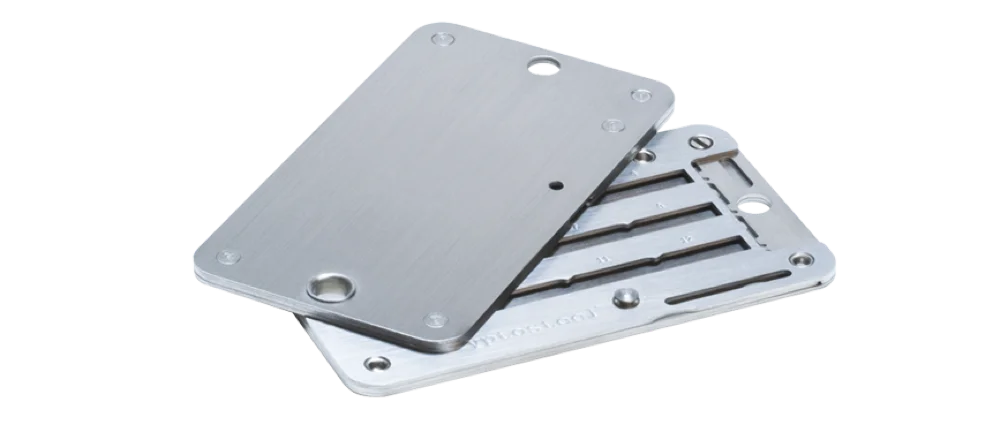
3. Physical Bitcoin Wallet (Paper/Metal)
There are also physical Bitcoin wallets, where you save your private key on paper, metal or a similar material. More commonly, paper or metal is used to back up a wallet’s recovery phrase. It must be protected both from damage and from anyone else gaining access to it.
At the same time, ease of use is worse than with other Bitcoin wallets. If you want to keep Bitcoin in a safe without using it, physical wallets can be a good option. But this depends on the wallet being created securely and on your ability to protect it properly.
Risks of a Physical Bitcoin Wallet
The risk with a physical wallet comes when you create it and when you transfer Bitcoin. If you generate a private key using an unknown web service or an insecure computer, there is a risk that someone else gains access to it.
The same applies when you transfer Bitcoin from the physical wallet. You need software to sign the transaction, and an insecure device may expose the key to malicious code. Never take over a wallet with a key that someone else already knows.
A simpler option is to use a hardware wallet and save its recovery phrase (recovery seed) on paper or metal. The keys are then created in the wallet, while the physical copy is used for recovery.
Bitcoin Paper Wallet
If your only copy of a private key or recovery phrase is destroyed by water or fire, you can lose access to your money. We do not recommend that beginners create separate paper wallets with a web-based generator. Writing down the recovery phrase created by your wallet is, however, a common way to make a backup.
Because you control your own money with a physical Bitcoin wallet, you do not need to let a third party hold the key. At the same time, you have more responsibility for storing and protecting your Bitcoin. Controlling the key yourself is probably the biggest advantage of a physical wallet.
Use metal storage for your backup together with a hardware wallet for better protection against damage! Choose a secure Bitcoin wallet →
Which Type of Bitcoin Wallet Is Best? → Hardware Wallet
What is the best type of Bitcoin wallet? Which is the best choice?
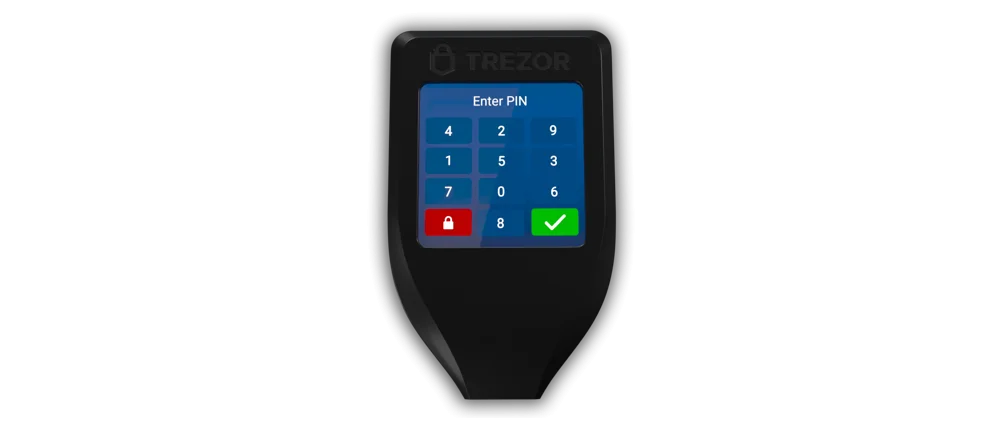
A Bitcoin hardware wallet is a device built solely to function as a wallet. This means that it is designed to be secure.
The private keys are kept separate from the computer, reducing many of the security problems found with ordinary computer wallets. Only install the manufacturer’s official software and security updates.
When using a hardware wallet, you usually connect it to your computer or phone and unlock it with a PIN. Always check the receiving address and amount on the device’s screen before approving a transfer.
The private keys stay on the device when a transaction is signed. This makes it safer against many attacks through your computer, but not risk-free. A fake website, a shared recovery phrase or an incorrectly approved transaction can still lead to losses.
A hardware wallet can provide a good balance between high security and ease of use. It is often a good choice for long-term storage, provided you set it up correctly and protect your backup.
Online Wallet + Hardware Wallet = ★
You should use an online wallet together with a hardware wallet. When you have finished trading on an exchange, transfer your Bitcoin and other cryptocurrencies to a secure hardware wallet.
It is important that the company is reliable so that the wallet is not a scam. Use our comparison table and choose the best Bitcoin wallet on the market.
Online Wallet + Hardware Wallet + Metal Storage = ★★★
When the wallet is delivered to you, follow the manufacturer’s checks to verify that the device is genuine and unused. The recovery phrase is created when you set up the wallet yourself. Never use recovery words that someone else has written down for you.
How do I store Bitcoin? CryptoSteel is one example of metal storage that can be used with your Bitcoin wallet. It stores your recovery phrase and works as a wallet backup! Protect it from unauthorized access, just like a paper copy. Learn more →
Tip! Read our comprehensive guide to Bitcoin hardware wallets.
IMPORTANT! How to Protect Your Bitcoin / Cryptocurrencies

How to Store Your Bitcoin
Everyone needs to know how to store their Bitcoin securely. Whatever Bitcoin wallet you use, you need to know the following:
Do Not Share Your Private Key or Recovery Phrase with Anyone – When you use a custodial Bitcoin wallet, you let a third party protect the keys. When you control them yourself, you are responsible for keeping them out of the wrong hands.
Avoid Large Amounts in a Software/Online Wallet – It is important that your Bitcoin and other cryptocurrencies are stored securely. For long-term storage, a hardware wallet can provide better protection for the keys. All Bitcoin wallets connected to the internet are vulnerable to malicious software and hackers.
Use a Secure Bitcoin Wallet – A hardware wallet keeps your private keys in a separate device. This reduces the risk of computer viruses accessing them. You still need to protect your backup and check the transactions you approve.
Always Back Up Your Wallet – Follow the instructions for your particular wallet. Often, you back it up by writing down a recovery phrase, but some wallets use a backup file. Check that your backup works according to the manufacturer’s instructions. An additional passphrase, if you use one, is also needed for recovery.
Do Not Keep Your Wallet and Backup in the Same Place – Once you have backed up your Bitcoin wallet, keep the copy somewhere else. Lock it away and do not tell anyone where it is.
An Extra Wallet Can Serve as a Spare – A second hardware wallet is optional and does not replace your backup. Two devices with the same recovery phrase give access to the same wallet. They therefore do not protect you if someone steals the phrase.
Secure Your Cryptocurrencies!
Here are the best practices for using a Bitcoin wallet and keeping it secure.
In addition to using hardware wallets with metal storage, there are further security measures. Use a strong, unique password for accounts and apps that support one. We recommend a password longer than 15 characters. The wallet’s PIN and recovery phrase serve different purposes.
Bitcoin also includes a multisignature feature that makes it possible to require several independent approvals before a transaction can be completed. This can be a useful tool for organizations, allowing them to give users access without the ability to withdraw money.
Use Two-Factor Authentication (2FA) Where Supported
Enable 2FA on exchanges and other accounts where it is available!
Companies and exchanges offering online Bitcoin wallets usually use more security measures than just a password. We strongly recommend using two-factor authentication (2FA), which provides extra protection for the account. However, it does not protect your Bitcoin if someone gets hold of your private key or recovery phrase.
It is easy to set up two-factor authentication with Google Authenticator. Depending on the service, there may also be approved withdrawal addresses, email notifications for logins and suspicious activity, and a waiting period for withdrawals.
Avoid Long-Term Storage on an Exchange
Although Bitcoin exchanges devote considerable resources to securing your online wallet, the risk of hackers never disappears. One example is the exchange Mt. Gox, which lost a large amount of Bitcoin.
Keep only the amounts you need for trading in an online Bitcoin wallet. For long-term storage, you can transfer to your own Bitcoin wallet, if you can manage the keys and your backup securely.
Bitcoin is freedom, but you are responsible for security. With great freedom comes great responsibility. Choose the best Bitcoin wallet →
Conclusion: Best Bitcoin Wallet

Which is the best Bitcoin wallet? Which one do you recommend buying?
For long-term storage, we recommend a hardware wallet that supports your cryptocurrencies and a secure backup. Compare the options in the table and choose a wallet that suits your needs.
We recommend having one Bitcoin wallet for sending smaller amounts of Bitcoin and another for storing your Bitcoin. This is because ease of use and security vary.
If you plan to use Bitcoin as a payment method, you can combine a mobile wallet for smaller amounts with a hardware wallet for long-term storage. You do not need an exchange account to send and receive Bitcoin.
We Compare and Rate Bitcoin Wallets
When we rate a Bitcoin wallet, we look at many factors. These include security, ease of use, customer satisfaction, customer support, the total price and more.
Ease of use can be a deciding factor when security is comparable. There are always new wallets to compare and rate.
We update this guide and the comparison table as needed. All Bitcoin wallets have pros and cons. We help you make the right choice!
Secure Your Cryptocurrencies → Order a Wallet
If you want to protect your cryptocurrencies for long-term storage, a hardware wallet can be a good choice. A hardware wallet means that you own and control your own money. You are responsible for storing the keys yourself, a little like keeping gold at home.
A hardware wallet together with a secure backup is a good foundation. Metal storage can protect the recovery phrase against fire and water, depending on the product. A second device is an optional extra, not a requirement.
IMPORTANT! Want to improve security? Secure your Bitcoin/cryptocurrencies with these simple steps:
Step 1: Choose a hardware wallet that supports your cryptocurrencies and buy from the manufacturer or an authorized reseller.
Step 2: Set up the wallet according to the manufacturer’s instructions and choose your own PIN.
Step 3: Write down the recovery phrase offline and check your backup using the wallet’s official feature. Do not photograph it or save it in the cloud.
Step 4: Store your backup securely and separately from the device. Start with a small test transfer and check the address and network before moving larger amounts.
Bitcoin is a digital currency, also called a cryptocurrency. More specifically, Bitcoin is an independent, global and public ledger used to transfer and store value (also known as money).
It is independent, since no government or bank controls Bitcoin.
It is global, since money can be transferred across borders at any time. Fees and confirmation times vary.
It is public, since all transactions are saved in a shared ledger.
Learn more in the guide: What Is Bitcoin?
A hardware wallet is often a good choice for long-term storage. This means that your private keys are kept in a separate device. Your Bitcoin remains on the blockchain.
Security also depends on how you protect your recovery phrase, also called a “recovery seed”, and which transactions you approve. An extra hardware wallet does not replace a working backup.
Compare and choose the safest Bitcoin wallet in the comparison table!
How you use a Bitcoin wallet can vary between wallets. To use a wallet at an exchange, you usually need to register an account and verify your identity.
A hardware wallet can be a good choice for storing your Bitcoin and other cryptocurrencies over the long term. You need to set it up before you can use it. Don’t worry, all the wallets in our comparison table come with simple instructions.
We recommend ordering a Bitcoin wallet that has been reviewed by CryptoRunner. All our reviews contain simple, clear instructions.
If you control the keys to your Bitcoin wallet yourself, you should back it up according to the wallet’s instructions. Otherwise, you risk losing your cryptocurrencies!
This means that you can recover your cryptocurrencies if your wallet is lost or breaks. The recovery phrase can be written on paper or saved in metal storage that supports your backup format. Metal can provide better protection against water and fire, but it does not prevent someone from reading the words. So keep your backup private and secure.
Compare and choose the best Bitcoin wallet for backups in the comparison table!
As with all currencies, its value depends on supply and demand. Bitcoin has a limited supply, but its price is affected by the level of demand. Its limited supply is sometimes compared with precious metals such as gold.
Ordinary fiat currencies such as the dollar and euro do not have the same predetermined maximum supply as Bitcoin. However, that does not mean Bitcoin is guaranteed to protect against inflation. The price can change sharply, and you can lose money.
Getting a Bitcoin wallet is easy and can be done in a few minutes, depending on the type of wallet you want. If you want a mobile wallet, go through the manufacturer’s official website to find the right app in the App Store or Google Play. If you want to buy a hardware wallet instead, you can do so from either Ledger or Trezor.
Yes, Bitcoin transactions are public and can be traced. Addresses do not reveal your name by themselves, but they can be linked to an identity through, for example, information from an exchange or transaction analysis. Bitcoin is therefore pseudonymous, not anonymous.
A cryptocurrency wallet is a digital tool used to store, send and receive cryptocurrencies such as Bitcoin, Ethereum or other tokens. Unlike a bank account, you can control the keys yourself, depending on the type of wallet you choose. The wallet stores your private keys, not the cryptocurrency itself. The key gives you access to your assets on the blockchain.