
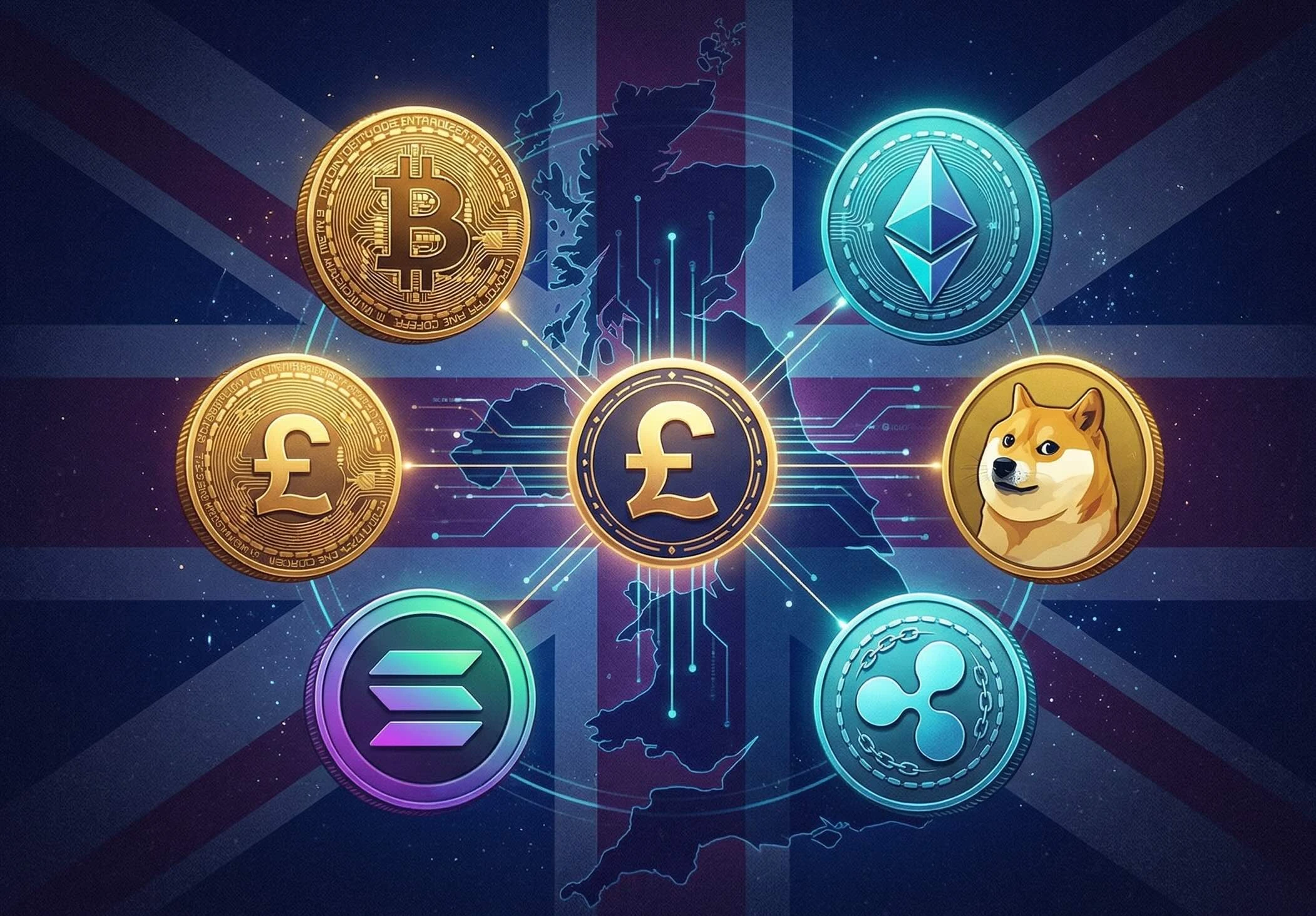
Cryptocurrency trading in the UK has grown steadily over the past decade, moving from a niche interest into a recognised part of the broader financial conversation. While thousands of digital assets exist globally, UK traders tend to concentrate on a relatively small group of well-established cryptocurrencies. These assets benefit from strong liquidity, broad platform support, and familiarity within the UK regulatory and banking environment. This article looks at the cryptocurrencies most commonly traded in the UK and explains why they dominate market activity.
What Shapes Crypto Popularity in the UK?
Before looking at individual assets, it’s worth understanding what typically drives trading activity among UK users. UK traders often prioritise cryptocurrencies that:
- Are widely available on FCA-registered platforms
- Have strong GBP trading pairs
- Are supported by major wallets and services
- Have clear use cases or long-standing market presence
- Are easier to track for tax and reporting purposes
Industry observers and UK-facing exchanges consistently note that familiarity, accessibility, and perceived stability matter more to most traders than novelty.
Bitcoin (BTC)
The Market Benchmark
Bitcoin remains the most traded cryptocurrency in the UK by a significant margin. As the first and most recognisable digital asset, it is often viewed as the entry point into crypto. Bitcoin’s popularity in the UK is driven by:
- High liquidity across GBP markets
- Broad institutional recognition
- Extensive media coverage and public awareness
- Availability on virtually all UK-accessible platforms
For many UK traders, Bitcoin functions as a long-term store-of-value asset rather than a short-term trading instrument.
Ethereum (ETH)
The Leading Smart Contract Platform
Ethereum is the second-most-traded cryptocurrency in the UK and plays a central role in decentralised finance, NFTs, and blockchain applications. UK traders are drawn to Ethereum because:
- It underpins a large portion of the crypto ecosystem
- ETH/GBP trading pairs are widely available
- It benefits from strong developer and institutional interest
- It is deeply integrated into wallets, apps, and exchanges
Ethereum’s versatility often makes it appealing to traders who want exposure beyond simple price speculation.
Dogecoin (DOGE)
From Internet Culture to Active UK Trading Asset
Dogecoin began as a light-hearted experiment, but it has since become one of the most recognisable cryptocurrencies traded in the UK. Despite its origins, DOGE maintains consistent trading volume and is widely supported on UK-facing platforms. UK traders are often drawn to Dogecoin because:
- It is easy to understand compared to more technical projects
- It has high liquidity during active market periods
- It benefits from strong public awareness and media coverage
- It tends to move sharply during sentiment-driven market cycles
Dogecoin does not aim to power complex decentralised applications in the way Ethereum or Solana do. Instead, its value is largely driven by market sentiment, community engagement, and broader retail interest. For UK beginners, Dogecoin often serves as an introduction to how narrative, attention, and speculation influence crypto prices. However, its volatility means it is generally treated as a short-term trading asset rather than a long-term infrastructure investment. Learn how to buy Doge with GBP. As with all cryptocurrencies, DOGE transactions are subject to UK tax rules, and gains or losses must be recorded in pounds sterling for reporting to HMRC.
Stablecoins (USDT, USDC)
Liquidity and Risk Management Tools
Stablecoins such as Tether (USDT) and USD Coin (USDC) are among the most actively used crypto assets in the UK, even though they are not designed for price appreciation. UK traders commonly use stablecoins to:
- Move in and out of volatile positions
- Access liquidity between trades
- Transfer value efficiently across platforms
Although pegged to fiat currencies, stablecoins are treated as crypto assets by HMRC, meaning their use can still trigger taxable events.
Solana (SOL)
A High-Performance Alternative
Solana has become one of the more actively traded alternative cryptocurrencies among UK users. Its appeal lies in its fast transaction speeds and low fees. UK traders often engage with Solana due to:
- Growing ecosystem activity
- Lower transaction costs compared to Ethereum
- Strong availability on major UK-facing exchanges
Solana tends to attract traders comfortable with higher volatility and earlier-stage network risk.
Binance Coin (BNB)
Exchange-Linked Utility
Binance Coin remains commonly traded in the UK, largely due to its role within the Binance ecosystem. While platform access has changed over time for UK users, BNB continues to see activity where supported. Its use cases include:
- Fee discounts on supported exchanges
- Participation in ecosystem services
- Trading exposure to exchange-driven growth
UK traders generally treat BNB as a utility-based asset rather than a core holding.
Ripple (XRP)
Longstanding Market Presence
XRP continues to attract trading interest in the UK due to its long market history and focus on payment infrastructure. Despite regulatory discussions globally, XRP maintains active GBP trading pairs on several platforms. UK traders are often drawn to:
- Its focus on cross-border payments
- High liquidity during market movements
- Strong retail trading interest
How UK Regulation Influences Trading Choices
Practical Considerations Matter
UK traders operate within a framework shaped by the Financial Conduct Authority and HMRC. While crypto assets themselves are not regulated like traditional investments, platforms must meet anti-money laundering standards, and tax rules apply to disposals and gains. This regulatory environment encourages traders to focus on:
- Assets supported by compliant platforms
- Cryptocurrencies with reliable GBP pricing
- Coins with clear transaction histories and reporting tools
Actionable Takeaways for UK Traders
- Most UK trading activity centres on a small group of established cryptocurrencies
- Bitcoin and Ethereum dominate due to liquidity and infrastructure
- Stablecoins play a major role in trading strategy and risk management
- Alternative assets like Solana attract traders seeking growth or lower fees
- Regulation and tax reporting strongly influence asset choice in the UK
Conclusion
While the global crypto market is vast, UK trading activity is concentrated around a handful of well-known cryptocurrencies. Bitcoin and Ethereum remain the backbone of most portfolios, supported by stablecoins and a select group of alternative networks such as Solana and XRP. Accessibility, liquidity, regulatory compatibility, and familiarity all shape these preferences. For UK traders—especially beginners—understanding why certain cryptocurrencies dominate trading volumes is just as important as knowing their names. Popularity is rarely accidental; it reflects trust, infrastructure, and suitability within the UK financial landscape.
Disclaimer: This article is for informational and educational purposes only and does not constitute financial, investment, or tax advice. Cryptocurrency markets are volatile and carry risk. Readers should conduct their own research and consider their individual circumstances before making any financial decisions. Where relevant, seek advice from a qualified professional.
